When do the leaves change in Bariloche & the Argentine Lakes?
Lenga and coihue forests ring Nahuel Huapi and the Seven Lakes Route in red and gold from April, with Bariloche's chocolate shops and lake steamers marking the shoulder season.
Forecast coming soon
Weather data for Bariloche & the Argentine Lakes lands with the next model run. Meanwhile, explore the map.
Known for
Things to do in fall in Bariloche & the Argentine Lakes
1 iconic stop, including scenic drives, farms, haunts, and the views locals plan their October around.
Cerro Campanario
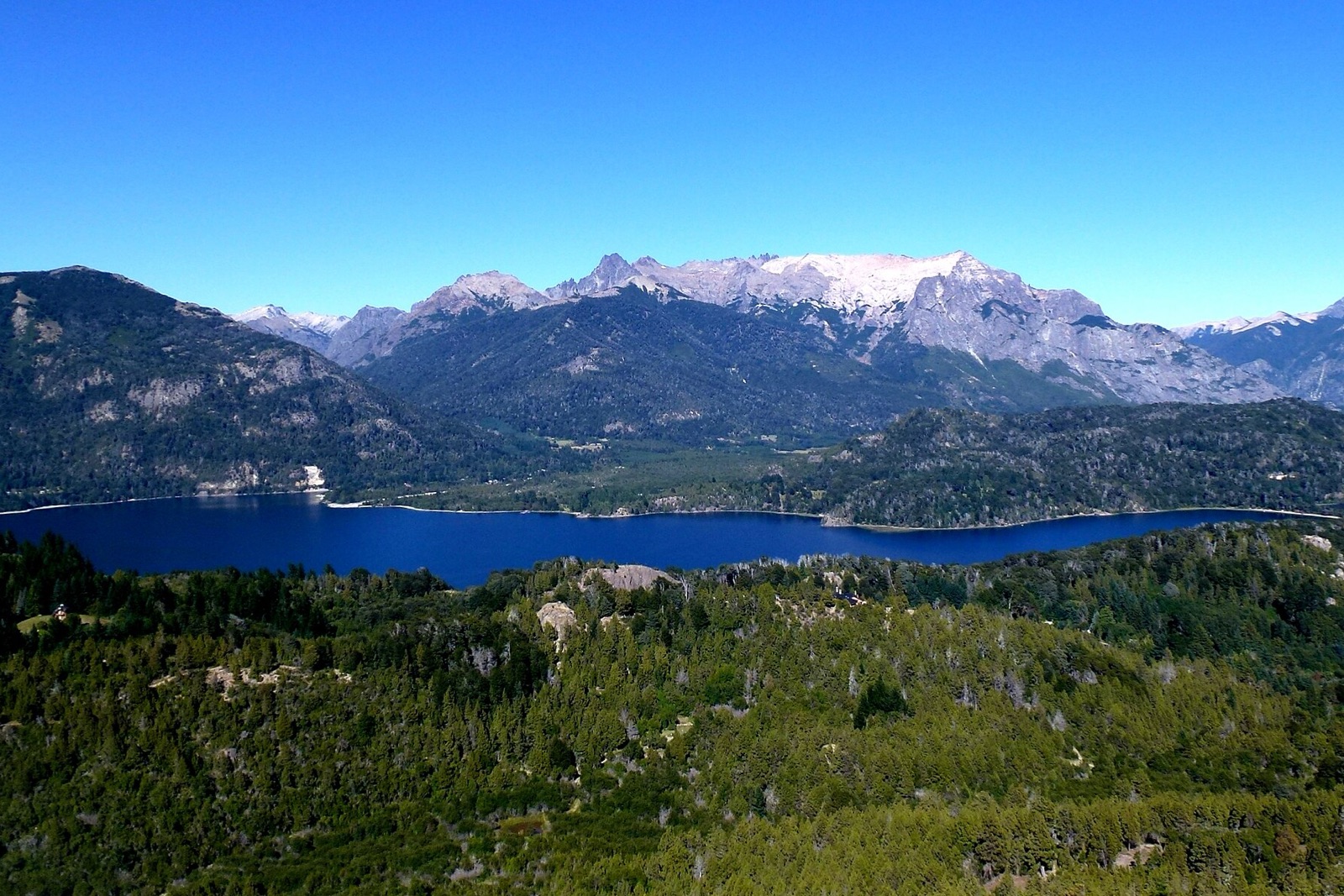
ViewpointA chairlift outside Bariloche climbs to a 360-degree panorama once ranked by National Geographic among the world's best views: lakes and…
Guides
Bariloche & the Argentine Lake District in Autumn: The Complete Guide
Argentina's Lake District runs on the opposite clock from New England or Europe: autumn here is March through June, and the lenga and ñire beech forests ringing Nahuel Huapi turn a deep red-orange while the rest of the fall-foliage internet is talking about spring. It's the same color, the same chill, six months rotated.
A season most leaf-peepers never think to book
If you've built your sense of "fall color" entirely around the Northern Hemisphere, the first adjustment in Bariloche isn't the scenery, it's the calendar. Autumn here runs from March through June, driven by the same shortening days and cooling nights that color the Northeast in October, just experienced on the opposite side of the year. The Southern Andes' deciduous beeches, principally lenga and the smaller ñire, respond the way sugar maples do: chlorophyll breaks down, and the reds and oranges that were masked all summer come forward. The mechanism doesn't care which hemisphere it's running in, only that days are shortening and nights are cooling, which is exactly what's happening across northern Patagonia from March onward even as the Northern Hemisphere is warming back up. The site's Southern Hemisphere autumn guide covers this seasonal flip in more depth if you're planning a broader trip across South America, and why leaves change color explains the biology behind the show, which is identical on both sides of the equator even though the months are reversed.
Bariloche & the Argentine LakesLenga and ñire: what's actually turning
Lenga (Nothofagus pumilio) is the dominant deciduous beech at mid-to-high elevation around Nahuel Huapi, and it's the tree responsible for most of the hillside color you see from Bariloche's lakefront: a red that deepens toward maroon as the season progresses, mixed with orange where the canopy gets more sun. Ñire (Nothofagus antarctica), a smaller, gnarlier beech that tolerates poorer soil and windier exposure, fills in lower slopes and forest edges with a color that leans more toward gold and rust. Between the two, and against the evergreen coihue that never loses its leaves, the mountainsides above the lake read as a patchwork rather than a single uniform sweep, which is part of what makes the Seven Lakes Route drive so visually layered compared to a single-species forest. From the Bariloche waterfront the effect is immediate: the near shoreline still holds summer green in the coihue and radal, while the ridgelines behind it run warm red-orange, and the color line creeps steadily downhill as the season advances toward its coldest weeks.
Driving the Ruta de los Siete Lagos
The Seven Lakes Route (Ruta de los Siete Lagos) connects Bariloche to San Martín de los Andes along a chain of glacial lakes, each with its own color and character, and it's the single best driving day in the region for autumn foliage. Lago Correntoso, near Villa La Angostura at the route's southern end, and Lago Lácar, ringing San Martín de los Andes at the northern end, bookend the drive and are worth slowing down for even if you skip every other pullout. The road threads through native lenga and coihue forest with pullouts at most of the major viewpoints, and because it's a point-to-point drive rather than a loop, plan on either arranging one-way transport or treating it as a there-and-back over two days with an overnight in San Martín. Traffic thins dramatically once ski season hasn't yet started and the summer trekking crowds have gone home, which means autumn pullouts that would be packed with cars in January are often empty enough to park directly across from the view. Paved sections have expanded over the years, but stretches still turn to gravel in places, so a full day rather than a rushed half-day is the realistic pace, especially with the short autumn daylight window.
Villa La Angostura and the arrayán forests
Villa La Angostura sits at the north end of the route, on a peninsula reaching into Nahuel Huapi, and it's built its identity around Parque Nacional Los Arrayanes, a forest made almost entirely of arrayán, a cinnamon-barked myrtle with a smooth, cool trunk that looks more like something sculpted than grown. The arrayán themselves are evergreen, so the draw in autumn isn't their own color change but the contrast: their deep green and papery orange-red bark set against the turning lenga and ñire on the surrounding hillsides. The park is reachable by boat from the village or by a longer hiking trail along the peninsula, and either approach works well as a half-day add-on to a Seven Lakes drive. The boat crossing is the easier option with limited time, gliding past shoreline lenga already turning while the arrayán grove itself stays a fixed, cool green at the walk's end; the hiking approach takes longer but lets you watch the forest composition change underfoot as you go, from mixed beech down into the pure arrayán stands near the point.
Cerro Catedral: the view worth the chairlift
Cerro Catedral, Bariloche's ski mountain in winter, runs its chairlifts through autumn specifically for hikers and sightseers, and the ride up delivers one of the region's best panoramic views: Nahuel Huapi spread out below, the turning forest wrapping the lower slopes, and the jagged Catedral massif that gives the mountain its name rising behind you. Even without hiking further, the top-of-lift viewpoint is worth the trip on a clear day, and it's a good option for travelers who want the big vista without committing to a full day on the trail. Hikers with more time can continue on foot along the ridge past the top of the lift, where the trail runs above the treeline and the autumn color drops away below in a single wide band rather than the closer, filtered views you get from inside the forest itself.
Chocolate town culture
Bariloche's identity as Argentina's chocolate capital dates back to Swiss and German immigrants who settled the area in the early 20th century and brought Alpine confectionery traditions with them, and the town leans into it fully: Mitre street downtown is lined with chocolate shops, names like Rapa Nui and Mamuschka among them, several running their own small factories visible from the sidewalk, and autumn's cooler weather makes a slow chocolate-and-coffee stop after a cold morning hike feel less like a tourist stop and more like the correct response to the climate. It's a small thing, but it sets Bariloche apart from other Patagonian gateway towns that don't have the same café culture to retreat into between outdoor days. The Swiss-Alpine architecture along the lakefront, all steep roofs and dark timber, only reinforces the feeling that the town was built with exactly this kind of cold, colorful season in mind.
Fly fishing season closing out
Patagonia's rivers and lakes around Bariloche, San Martín de los Andes and the broader Nahuel Huapi basin are internationally known trout water, and the regulated season on most fisheries closes partway through autumn. Anglers planning an early-to-mid autumn trip generally still have a fishing window, but the season's later weeks push right up against and past most closing dates, so anyone building a trip specifically around casting a line should confirm the current dates for the exact river or lake they're targeting rather than assuming the whole autumn is open water. Guides in Bariloche and Junín de los Andes can confirm current regulations for specific rivers before you commit dates. For non-anglers this closing window is worth knowing about too, since it means the lodges and guide operations built around fishing season quiet down noticeably as autumn progresses, one more piece of the region's shift from a busy summer footing to a slow, foliage-focused one.
Why the shoulder season is the good season
Autumn falls in the gap between Patagonia's two loud seasons: the summer trekking rush that fills Nahuel Huapi's trails and campsites from December through February, and the ski season that takes over Cerro Catedral from July. That gap is the whole appeal. Refugios that require reservations weeks out in summer often have same-day space in April. Restaurants in town don't have a wait. The Seven Lakes Route's pullouts aren't lined with tour buses. If you've read the site's leaf-peeping road trip guide for Northern Hemisphere routes and wished the crowds were smaller, Bariloche's autumn shoulder season is close to what you're picturing: full color, thin crowds, and towns that are still fully open for business without being overrun.
Bariloche & the Argentine LakesDay hikes: Cerro Llao Llao and Refugio Frey
Two hikes anchor most autumn visits. The Cerro Llao Llao circuit, out near the historic Llao Llao hotel at the western edge of town, is a shorter half-day loop through mixed forest with lake views at several points, an easy add-on for travelers without a full day to spare and a good introduction to the region's forest color at an approachable pace. The hike to Refugio Frey is the more serious outing: a steady climb through lenga forest up to a granite cirque and alpine lake ringed by the spires that make this range popular with climbers, with the refugio itself serving as a lunch stop or, for those with more time, an overnight base. Trail conditions change fast once autumn advances toward the season's cooler end, with overnight frost and occasional early snow at elevation, so check current conditions before a Frey attempt in the later part of the season and pack layers regardless of the forecast at trailhead level. Both trails start from marked trailheads reachable by local bus or taxi from central Bariloche, so neither requires a rental car on its own, only a car if you're combining the hike with a Seven Lakes day. The site's fall day hike packing list is written for Northern Hemisphere elevations and temperatures but the layering logic travels well to an Andean autumn: a warm base layer for the cold start, something waterproof for the region's famous fast-changing weather, and enough insulation to sit still at a viewpoint without getting cold in the time it takes to eat lunch.
Andean autumn day-hike kit
- Waterproof shell for fast-moving mountain weather
- Warm layer for wind above the treeline
- Sturdy boots for gravel and occasional early frost
- Trekking poles for steep, wet sections
- Cash for refugio meals and hut stays
Planning it against the rest of the Lake District and Patagonia
Bariloche makes an efficient base for the immediate Seven Lakes region, but the same autumn color extends well beyond it. Across the Andes, the Chilean Lake District runs on an almost identical calendar with its own volcano-backed lenga forests around Villarrica and Osorno, and it's a reasonable add-on if you're already crossing the border corridor. South toward Patagonia's more dramatic peaks, El Chaltén and Santa Cruz offer a shorter, more intense color window under Fitz Roy before winter closes the trekking season down entirely. If your route runs north instead, Mendoza pairs its own autumn vineyard color with the tail end of wine harvest, a very different kind of fall trip but one that fits naturally into the same shoulder-season logic: travel when the light and the color are both good and the crowds haven't caught up yet. All three make sense as a longer Patagonian autumn loop with Bariloche as the hub, since domestic flights and long-distance buses connect the region's gateway towns without forcing you back through Buenos Aires between each leg.
Bariloche rewards exactly the kind of unhurried trip that a Northern Hemisphere leaf-peeper already knows how to plan, just shifted six months and one hemisphere over. Come for the lenga turning on the mountainsides above Nahuel Huapi, stay for a shoulder season with room to actually enjoy it.
Frequently asked
- When is autumn in Bariloche?
- Autumn runs March through June in the Southern Hemisphere, with the most reliable color from mid-April into May as lenga and ñire beech turn through red, orange and gold across the mountainsides above Nahuel Huapi.
- Is Bariloche in autumn a good trip if I've only seen Northern Hemisphere fall color?
- Yes, and the biggest adjustment is mental rather than practical: the calendar says April or May, everything else about the light, the chill mornings and the turning canopy will feel like a familiar October.
- Is Bariloche crowded during peak color?
- No, and that's one of the season's main draws. Autumn falls between the summer trekking rush and the ski season, so trails, refugios and restaurants that are booked out in January or July are easy to get into in April.
- Can I still fish in Bariloche during autumn?
- The regulated trout season on most Argentine Patagonia rivers and lakes closes partway through autumn, so early-to-mid season visitors can usually still fish while later travelers should confirm exact closing dates for the specific water they want.
- Do I need a car to see the Seven Lakes Route?
- A car gives you the most flexibility to stop at overlooks and detour into Villa La Angostura, but regular bus service connects Bariloche and San Martín de los Andes along the same route if you'd rather not drive.
Nearby & similar
Cities in Bariloche & the Argentine Lakes
Local peak timing and things to do in fall, computed for each city.