5 Leaf-Peeping Road Trips for 2026
By Benjamin Janes · Published
· 5 min read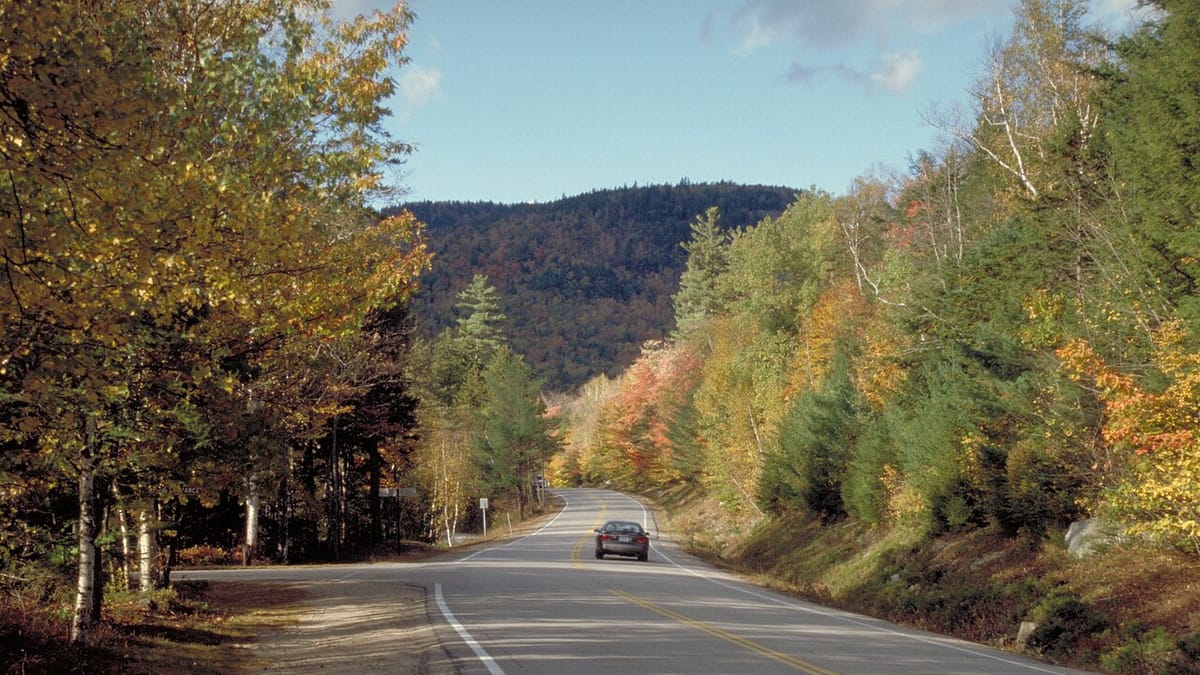
Some fall trips are built around one big drive rather than one big hike. These five routes, from a Vermont back road to a highway along the edge of the Bavarian Alps, are proven leaf-peeping trips for 2026, each with its own feel, its own standout stops, and a realistic number of days to give it.
Vermont's Route 100: the state's back-road spine
Route 100 runs nearly the length of Vermont, threading the valley between the Green Mountains' two ranges through ski towns, working dairy farms, and covered bridges without ever turning into a highway. It passes close enough to Camel's Hump and the Mad River Valley that you can turn a driving day into a hiking day without much of a detour. See our guide to the best fall hikes in New England if a trailhead sounds better than another scenic pullout. The drive rewards going slow: farm stands selling cider and apples, small-town greens ringed in sugar maple, and enough gaps in the tree cover to catch a distant ridge lit up gold. Give it three to four days if you want to actually stop at the places that make the drive worth it, pairing a night near Stowe with a night further south around Weston or Ludlow. Check October 7–October 11, 2026 (forecast) before locking in dates: this drive is entirely about timing.
Colorado's San Juan Skyway: the Million Dollar Highway
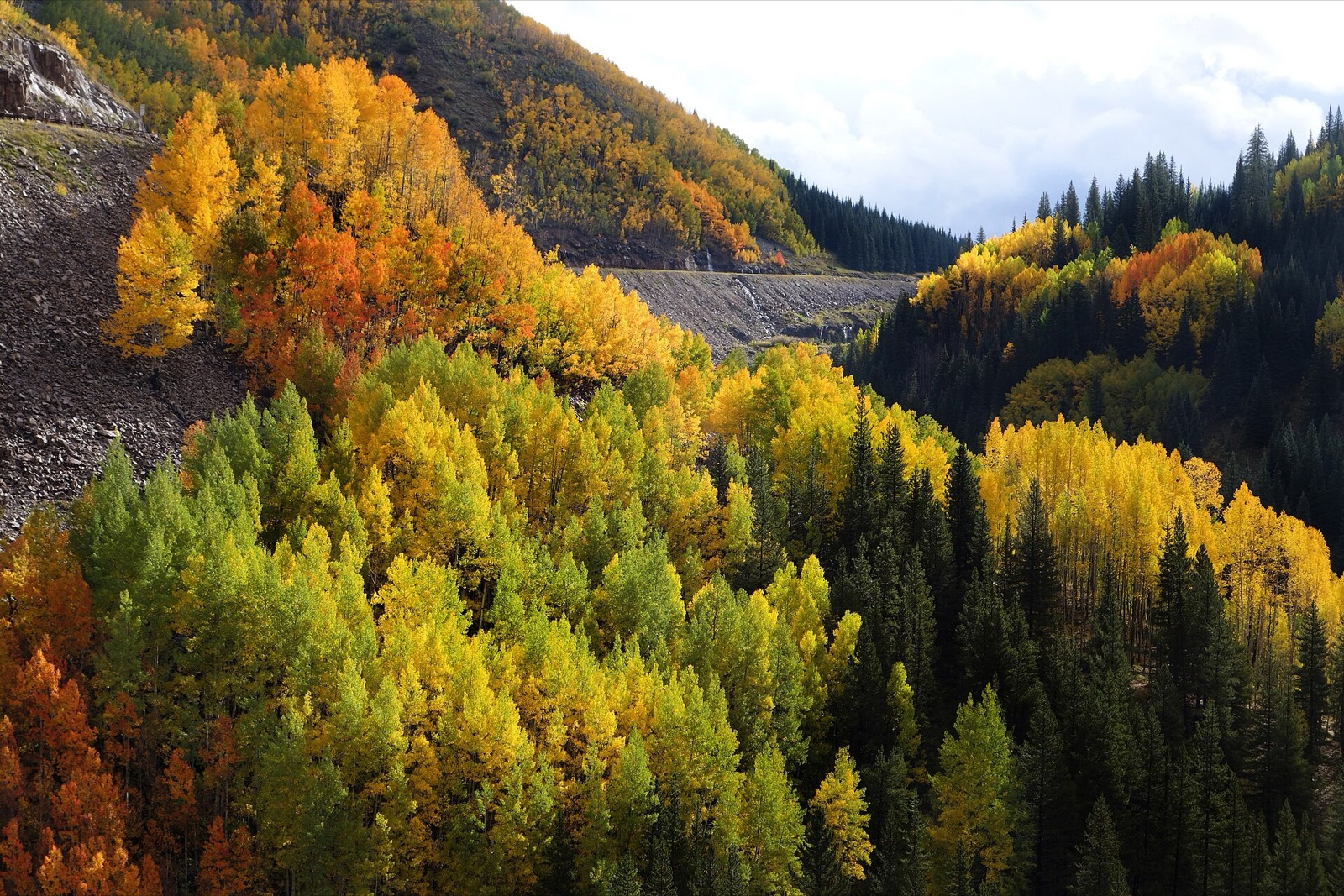
The San Juan Skyway loops through some of the tallest, most dramatic terrain any fall road trip in the country crosses, linking Durango, Silverton, Ouray, and Telluride through old mining country in the Colorado Rockies. Its most famous stretch, the Million Dollar Highway between Ouray and Silverton, climbs a narrow shelf road with hairpin switchbacks cut into cliffs above old mine workings. It's spectacular, and not a drive to attempt distracted or in a hurry. What you're driving for here is aspen, not maple: whole mountainsides of quaking aspen turning gold against dark evergreen and bare rock, a completely different palette from New England's reds.
Plan four days minimum to do the full loop without rushing the passes, and build in flexibility: an early mountain storm can close a pass or change plans with little warning this time of year.
.jpg)
The Blue Ridge Parkway: ridge after ridge of color
The Blue Ridge Parkway is the classic slow road: a ridge-top route with no commercial traffic and a pull-off at nearly every good view, running the spine of the Blue Ridge and the Virginias south toward the Smokies. Unlike a highway trip, the parkway itself is the destination: overlooks stacked one after another, split-rail fences, and old mountain farmsteads preserved along the route, with stops like Peaks of Otter and Mabry Mill giving you a real reason to get out of the car. Color rolls through in waves here, starting high on the ridgelines and working down into the valleys over several weeks, so the same weekend can put you right at peak on one section and a week early on another just a few hours south. Budget four to five days if you're driving a meaningful stretch of it rather than a single overlook-hopping afternoon, and build slack into the schedule: this is not a road to rush.
Michigan's Tunnel of Trees: a short, narrow, unforgettable stretch
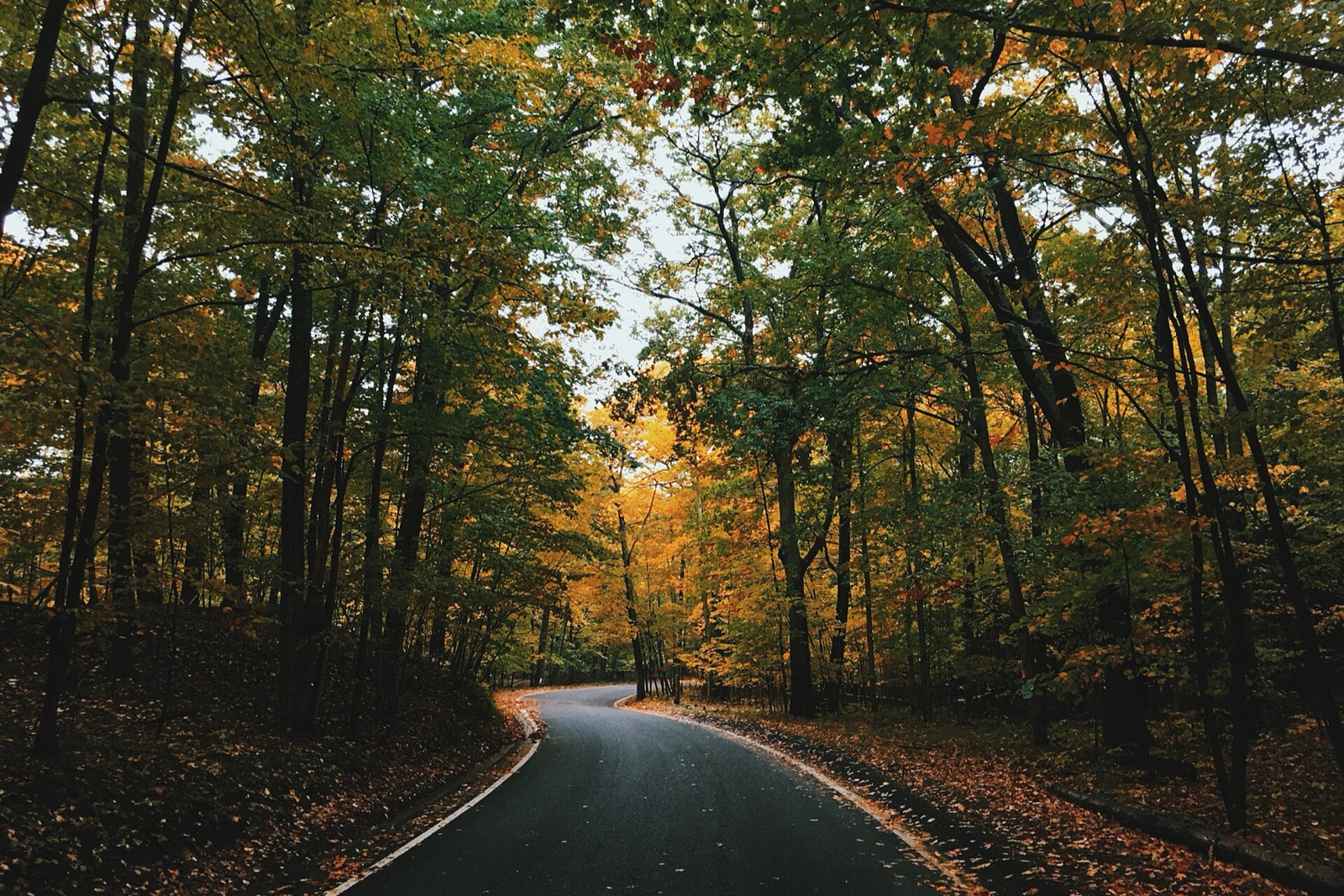
M-119's Tunnel of Trees is the shortest drive on this list and arguably the most singular: a narrow, winding two-lane road along the Lake Michigan bluffs between Harbor Springs and Cross Village in Michigan, with hardwood canopy closing overhead for long stretches and glimpses of the lake opening up between the trees. It's a drive best done slow, ideally with the windows down, and it pairs naturally with a longer loop around the top of the Lower Peninsula (Petoskey, Mackinaw City, maybe a ferry out to Mackinac Island) rather than standing alone as a full trip. Two to three days covers a solid loop that includes the Tunnel of Trees itself plus a few of the small towns and lookout points nearby. It's an easy add-on to a longer Midwest itinerary rather than a destination that needs a dedicated week.
.jpg)
Germany's Deutsche Alpenstraße: the Alps' northern edge
The Deutsche Alpenstraße, or German Alpine Road, traces the northern foothills of the Alps the length of Bavaria, from Lake Constance in the west toward Berchtesgaden near the Austrian border in the east. It's less a single dramatic pass than a long string of postcard stops (lake towns around the Chiemsee, the fairy-tale silhouette of Neuschwanstein Castle, the mountain village of Oberammergau) with beech and larch coloring the foothills against still-green Alpine peaks behind them. Larch is the color to watch for here: unlike the maples driving the rest of this list, it's a conifer that turns gold and drops its needles, giving the high slopes a completely different fall look than anything in North America. The full route is a genuine week-long trip if you're stopping properly at the lakes and castles along the way, though a determined traveler could see the highlights in four or five days.
Picking your 2026 trip
All five of these trips reward the same basic approach: build slack into the schedule, since foliage timing shifts year to year and you want room to wait out a slow week or chase color that's running early. Pack for a wide temperature swing between a warm car and a cold overlook (our fall day hike packing list covers the layering logic even if you're mostly staying near the car), and bring a real camera plan if photos are part of the point; our fall foliage photography guide is worth reading before any of these drives. And if you find yourself missing the season entirely because a trip fell through, remember autumn happens twice a year on this planet: our southern hemisphere autumn guide covers the destinations worth chasing color in around what would otherwise be spring back home.
Frequently asked
- Which of these road trips is best for combining driving and hiking?
- Vermont's Route 100 is the easiest to pair with a hike, since it runs close to trailheads like Camel's Hump without requiring much of a detour off the route.
- Is the Million Dollar Highway safe to drive with kids or if I don't like heights?
- It's a narrow, cliff-edge road with real exposure in places, so nervous drivers or passengers should expect a genuinely intense stretch, not just a scenic overlook or two.
- How many days should I budget for the full Blue Ridge Parkway?
- Four to five days lets you actually stop at the overlooks and historic sites rather than just driving through. Doing it in less turns a scenic road into a long commute.
- Is the Tunnel of Trees worth a dedicated trip on its own?
- It's better as part of a longer northern Michigan loop than as a standalone destination, since the drive itself only takes up a portion of a day.
- What's different about fall color in Bavaria compared with New England?
- Conifers like larch play a bigger role, turning gold and dropping their needles instead of staying green, which gives the high Alpine slopes a different palette than deciduous New England forests.