Holidays & Celebrations
Día de los Muertos: Marigolds, Ofrendas, and Remembering Well
By Benjamin Janes · Published
· 4 min read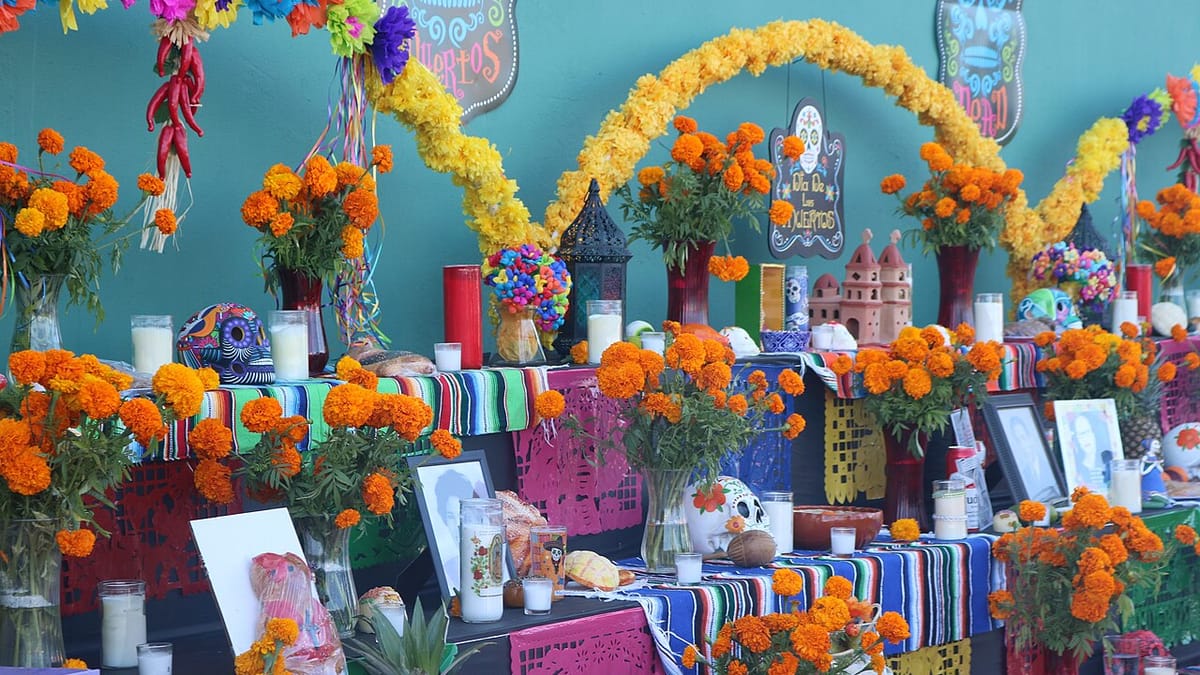
Día de los Muertos looks like Halloween's Mexican cousin from a distance: skulls, marigolds, candlelit altars. Look closer and it's a different holiday entirely, one built to welcome the dead home for a visit rather than ward them off, blending Indigenous ancestor veneration with the Catholic calendar Spain brought to the Americas.
Two roots grown together
Long before Spanish ships reached the Americas, Mesoamerican peoples, including the Aztec, or Mexica, and the Purépecha, held their own ceremonies honoring the dead, overseen in Aztec belief by Mictecacihuatl, the goddess who ruled over the afterlife known as Mictlán. These weren't somber affairs; the dead were understood to remain part of the community, owed a visit and an offering rather than a permanent goodbye. When Spanish colonizers brought Catholicism and its own calendar of remembrance, All Saints and All Souls among them, missionaries and Indigenous communities didn't simply replace one tradition with the other. Over generations the two blended into something new, a holiday with a Catholic skeleton and an Indigenous heart, which is why Día de los Muertos looks unlike any remembrance holiday imported directly from Europe.
Two days, two kinds of dead
Tradition divides the observance across the first two days of November, echoing the Catholic calendar's All Saints and All Souls. The first day is generally set aside for Día de los Angelitos, remembering children who have died, and the second for the adults, though the exact split varies by region and family. Many households treat the whole stretch, often starting the evening before, as one continuous observance rather than two hard-edged days, the same way the edges of most calendar-based holidays tend to blur in practice.
The marigold's job
The marigold, or cempasúchil, is the flower most associated with the holiday, and its role isn't just decorative. Its bright orange and yellow petals and strong scent are believed to guide spirits along the path from the cemetery back to the family home, and petals are often scattered in a trail leading to the ofrenda for exactly that reason. The flower blooms in autumn on its own schedule, which is part of why it became the holiday's flower in the first place: it was simply what was blooming and available at harvest time, long before anyone had assigned it symbolic meaning.
Building an ofrenda
An ofrenda, the home altar built for the holiday, layers together a specific set of objects, each with its own job. Photographs of the deceased anchor the altar, alongside their favorite foods and drinks, so the visit feels personal rather than generic.
What a traditional ofrenda typically includes
- Photographs of the deceased
- Pan de muerto and the person's favorite foods and drinks
- Marigold petals leading a path to the altar
- Sugar skulls, or calaveras, often marked with names
- Salt, water, and candles representing the four elements
- Papel picado, cut paper banners representing wind
Nothing on the altar is generic. A family builds their ofrenda around the specific person they're remembering, which is part of why no two altars look quite alike even when they share the same basic elements.
A celebration, not a mourning
The tone is the detail most often lost outside Mexico. Families clean and decorate graves, sometimes spending the night at the cemetery with music, food, and stories about the person being remembered. Laughter is expected, not suppressed. Sugar skulls are cheerful rather than macabre, often inscribed with a living person's name as a good-natured joke about mortality rather than a memento mori meant to unsettle. The holiday treats death as something to talk about openly, with the specific person's favorite dish or drink placed on the altar as an actual point of pride, not a gesture performed out of obligation.
Not Mexico's Halloween
Because the two holidays land in the same season and both involve skulls and the dead, they get conflated constantly outside Mexico, but the lineages don't overlap. Halloween descends from the Gaelic festival of Samhain and centers on warding off or placating wandering spirits; Día de los Muertos centers on welcoming familiar ones home. Even the now-famous Día de los Muertos parade through Mexico City has a stranger origin than most people assume: no such parade existed until one was staged for a James Bond film, and Mexico City's government liked the spectacle enough to adopt it as a genuine annual event the following year. UNESCO recognized the holiday as an Intangible Cultural Heritage practice in 2008, an acknowledgment of a tradition considerably older and more specific than its recent global visibility might suggest.
Where the tradition runs deep north of the border
Large Mexican-American and Indigenous communities have kept the holiday alive well north of the border for generations. New Mexico, with some of the oldest continuous Hispanic and Indigenous communities in the country, holds some of the most established observances anywhere in the United States, and California follows close behind, with long-running public altars and processions in cities with deep Mexican-American roots. Both states treat the holiday as a living, actively practiced tradition rather than an imported novelty, which shows in how many families still build a full ofrenda every year rather than a token one.
For the season's other holidays built around memory, light, and harvest, the autumn holidays hub tours the full range, and the interactive foliage map can show you what the season looks like in New Mexico or California while you're there.
Frequently asked
- What is Día de los Muertos?
- A Mexican holiday honoring deceased loved ones, blending Indigenous Mesoamerican ancestor veneration with the Catholic calendar brought by Spanish colonizers. Families build home altars called ofrendas, visit and decorate graves, and treat the observance as a joyful welcome for the dead rather than a somber occasion.
- Is Día de los Muertos the same as Halloween?
- No. Halloween descends from the Gaelic festival of Samhain and traditionally centers on warding off wandering spirits. Día de los Muertos has separate Indigenous and Catholic roots and centers on welcoming specific, named ancestors home for a visit. The two holidays simply share a season.
- What is an ofrenda?
- An ofrenda is a home altar built for the holiday, layered with photographs of the deceased, their favorite foods and drinks, marigold petals, candles, and often sugar skulls marked with names. Every ofrenda is personal, built around the specific people a family is remembering that year.
- Why are marigolds associated with Día de los Muertos?
- Marigolds, or cempasúchil, bloom in autumn around harvest time and have a strong scent and bright color that tradition holds guide spirits from the cemetery back to the family home. Petals are often scattered in a trail leading directly to the ofrenda for that reason.
Regions in this article
More in Holidays & Celebrations
Holidays & Celebrations
Autumn Holidays Around the World: Harvest, Light, and Remembrance
A tour of the world's autumn holidays and the three things nearly all of them share: bringing in the harvest, lighting up the dark, and remembering the dead.
2026-07-17 · 7 min read
Holidays & Celebrations
Diwali: Why the Festival of Lights Falls in Autumn
Diwali's festival of lights is timed to the darkest, moonless night of the Hindu month of Kartik, which is why the holiday lands in autumn nearly every year.
2026-07-17 · 4 min read
Holidays & Celebrations
From Samhain to Trick-or-Treat: The Real History of Halloween
Halloween's roots run through the Gaelic fire festival Samhain, the Christian All Hallows' Eve, and the nineteenth-century Irish immigration that carried it to America.
2026-07-17 · 4 min read