Foliage Timing & Seasons
False Fall: Why Some Leaves Turn in Late Summer
By Benjamin Janes · Published
· 5 min read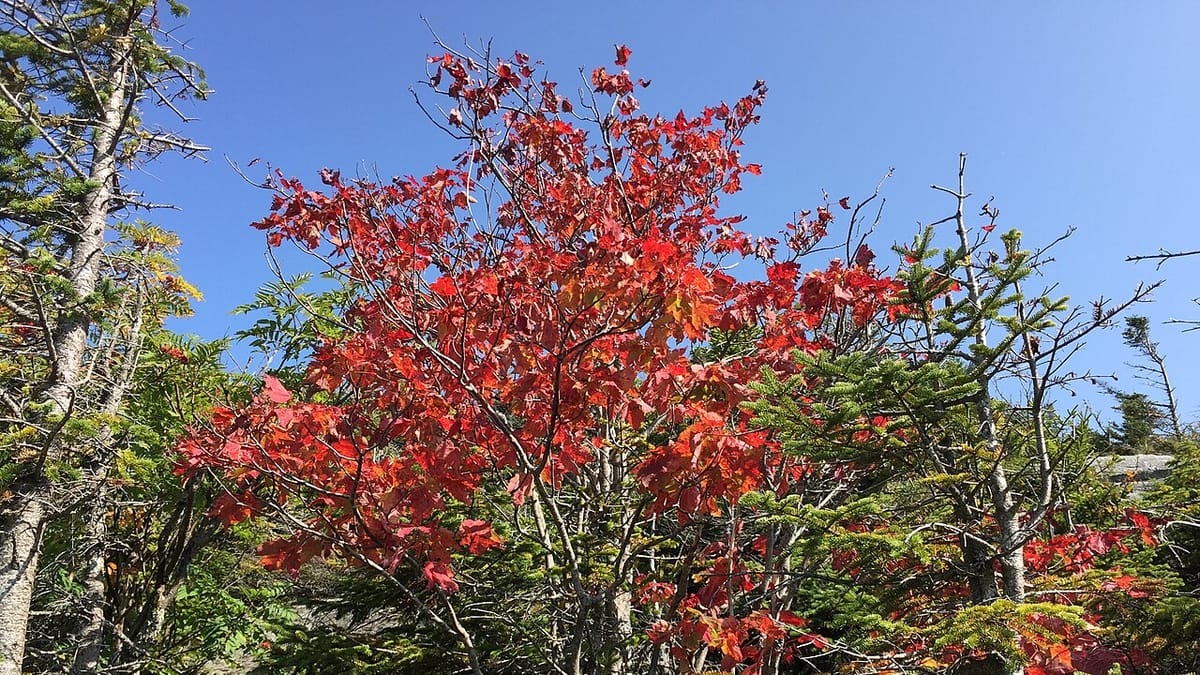
Spot a red maple in late summer heat and it is easy to assume fall is arriving early. Almost always, it isn't. That tree is telling you it's stressed, not that the season has moved up its schedule.
Two different processes that look alike
Real fall color and stress color start from completely different triggers, even though the end result, a colored leaf, looks similar from the road. Real seasonal color is a controlled, healthy process that begins once a tree reads enough consecutive long nights to trip its internal clock. Stress color is closer to an emergency response, a tree shutting a leaf or a branch down early because something, usually drought, damage, or disease, has made keeping that tissue running not worth the cost anymore. One is the plant executing a plan it has run every year of its life. The other is closer to a plant cutting a loss.
Both processes end with the tree producing similar hormones and eventually dropping the leaf, which is exactly why they get confused from a distance. Up close, the difference is more about pace and cause than mechanism: a genuinely seasonal leaf is winding down on schedule alongside its neighbors, while a stressed leaf is being sacrificed early, out of step with everything around it, because the tree needs to cut its losses somewhere.
The telltale signs of a stress turn
A few patterns separate the two once you know to look for them. Stress color tends to show up isolated: one tree standing out against neighbors of the same species that are still fully green, or one branch or one side of a canopy turning while the rest of the same tree looks normal. The color itself often skews duller than a real seasonal turn, more brown or a washed-out yellow than the saturated reds a healthy tree produces later on its own schedule. Timing is the other giveaway. Stress color can show up in high summer, well before any real color has appeared anywhere nearby, because it isn't waiting on the night-length trigger at all. It's worth checking the base of a stressed tree too. Construction nearby, a recently cut trench, exposed roots, or trunk damage are common, mundane causes, and a tree fighting one of those problems can turn color months ahead of an identical, undamaged tree just down the street.
Real early species aren't false at all
Not every early splash of red is a stress signal, though. A handful of species are genuinely early by nature, without anything wrong with them. Certain trees along swamp edges and forest margins reliably show color well before most of the surrounding canopy, every year, in roughly the same spot. Sumac along roadsides does something similar, turning a bright red long before the maples and oaks around it stir. These aren't false alarms. They're simply species with an earlier threshold, doing exactly what they do every single year, and their early color is a normal landmark for foliage-watchers rather than a warning sign about the season overall.
Experienced foliage-watchers learn to treat these early species as a kind of calendar in their own right, a reliable first note in a much longer piece of music. Once you know which patch of sumac or which stand of swamp trees always goes first in a given spot, its early color stops being a surprise and starts being a useful, low-stakes signal that the real season is only weeks away, not a sign that anything has gone wrong or arrived ahead of schedule.
A roadside case study
Virginia sees a fairly common version of this every late summer, usually along highway medians and compacted urban soil rather than out in undisturbed forest. A dogwood or a red maple planted in a narrow strip of ground between pavement, with roots fighting for both water and oxygen, will often show real color a full season ahead of a healthy tree of the same species growing in an open yard nearby. Drivers notice it and understandably wonder whether the whole state is running early. It generally isn't; that particular tree is dealing with a much harder environment than the forest a few miles off the highway, and its early color reflects its growing conditions rather than the region's actual schedule.
When soil, not the season, is the trigger
The same pattern shows up wherever soil is compacted or poorly drained, which is common anywhere development has narrowed a tree's root zone. In parts of Maryland, older street trees planted decades ago in tight urban plots can show real color weeks before their counterparts in nearby parks and undisturbed woods, simply because their roots have spent the whole growing season working harder for less water. It's worth remembering that a stressed tree in a hard spot is not a preview of the region's forest. It's a preview of what that one tree has been dealing with all summer. The same street can tell two completely different stories about the season depending on which side you're looking at: a struggling parking-lot tree already bare, and a well-rooted specimen in a nearby yard still weeks from its real turn.
So is the season actually arriving early?
Usually not, and the surest way to tell is to stop judging by any single tree and look at the broader pattern instead. Real seasonal color moves in a coordinated wave across whole hillsides of the same species, driven by the same night-length trigger everywhere at a given latitude, and the interactive map tracks that actual wave rather than any one roadside outlier. If you're trying to figure out whether this particular year is running ahead of schedule for real reasons, weather is usually the better place to look than a single stressed maple; the weather that makes or ruins a foliage year covers how drought and heat can shift an entire region's timing, as opposed to just one tree's.
A useful habit, if you see an early red tree and start to wonder, is to check two or three other trees of the same species nearby before drawing any conclusion about the season. If they're still green, you're almost certainly looking at one tree's bad summer, not a preview of everyone else's fall. If the whole stand is turning together, that's a different story, and worth watching closely as the real season builds in behind it.
Frequently asked
- Why are some leaves already turning red in late summer?
- It's usually a stress response, not the start of fall. Drought, root damage, disease, or soil compaction can push an individual tree or branch into an early, partial color change that has nothing to do with the night-length trigger driving the real season weeks later.
- How can I tell false fall from the real season starting?
- Look at the pattern. A stressed tree usually turns alone, isolated from its neighbors, and the color tends to be dull or brown rather than vivid. Real seasonal color shows up across whole hillsides of the same species at close to the same time, driven by night length rather than one tree's condition.
- Does false fall mean the whole season will start early that year?
- No. A stressed tree's early color says something about that specific tree's health, not about the region's night-length schedule, which barely shifts year to year. A scattering of early red maples along a dry roadside doesn't move the actual foliage season earlier.
- Are any trees supposed to turn color early, without being stressed?
- Yes. A handful of species are simply early by nature and reliably show color before most of the canopy around them, without any sign of stress. Their early color is a genuine, healthy part of their own schedule, not a warning sign, and it shows up in roughly the same spot every year.
- What causes drought to trigger early leaf color?
- A tree low on water often shuts down leaves early as a survival move, cutting its losses rather than continuing to support tissue it can't fully hydrate. That early shutdown skips the slower, more vivid color-building process a well-watered tree goes through, producing duller, faster color instead.
Regions in this article
More in Foliage Timing & Seasons
Foliage Timing & Seasons
How Fall Foliage Forecasts Actually Work
Fall color forecasts combine a fixed seasonal trigger with weather that has to be estimated. Here's how the underlying model actually predicts a peak.
2026-07-18 · 6 min read
Foliage Timing & Seasons
The Weather That Makes (or Ruins) a Great Foliage Year
Warm days, cool nights, and just enough rain make a vivid fall. Drought, wind, and an early hard freeze can flatten the same season fast.
2026-07-17 · 5 min read
Foliage Timing & Seasons
What Is Peak Foliage? How Peak Is Defined and Forecast
Peak foliage isn't the single most colorful tree or day. It's the point when the widest share of a region's canopy is in full color at once.
2026-07-17 · 5 min read