Activities & Food
Pumpkin Season: From Patch to Jack-o'-Lantern to Pie
By Benjamin Janes · Published
· 5 min read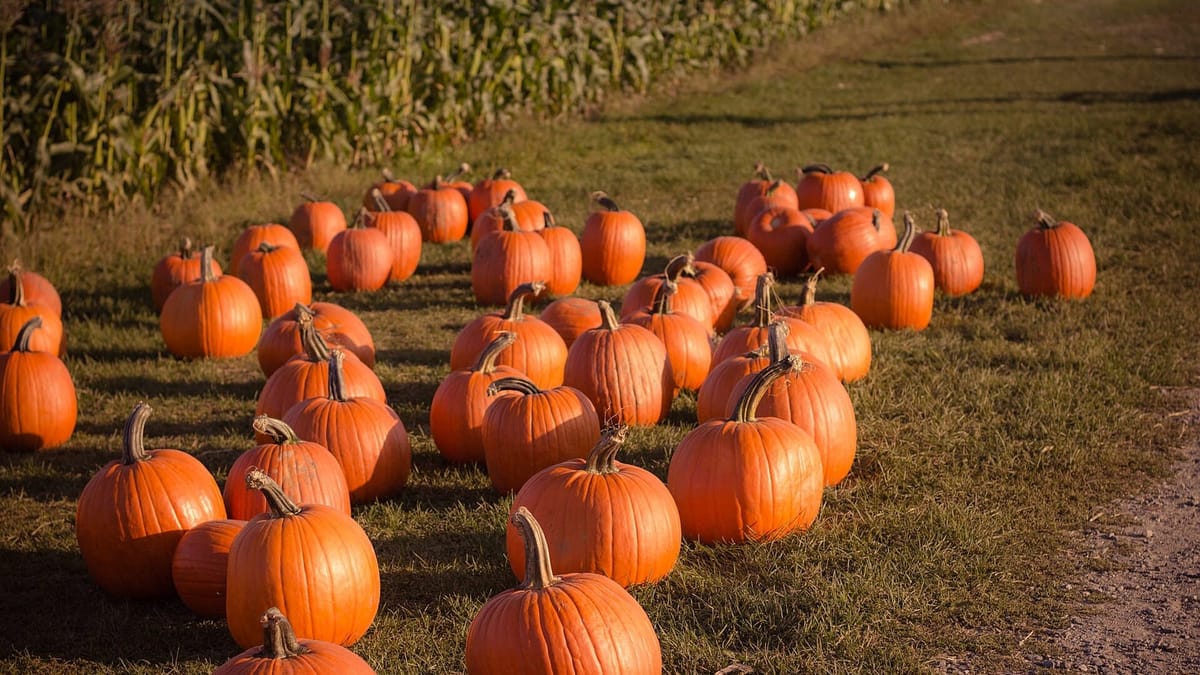
Pumpkins dominate the last stretch of fall for a reason: they store well, they photograph well, and they double as both décor and dinner. Here's how a patch actually works, which pumpkin to grab for carving versus baking, and the carving science that decides whether a jack-o'-lantern lasts the season or collapses in a week.
Why pumpkins own the back half of fall
Pumpkins are a genuinely late-season crop. The vines need a long, warm stretch to fill out, and the fruit keeps improving in storage right up until frost forces the harvest. That timing puts pumpkins right at the point in the calendar when apple orchards are winding down and Halloween is coming into view, which is most of why pumpkin patches feel like the season's second act rather than something running alongside apple picking the whole way through. A hard, thick-walled shell that formed over a long growing season is also exactly what lets a pumpkin sit on a porch for weeks without collapsing, unlike most of what else came out of the garden that year.
How a pumpkin patch actually runs
Most pick-your-own pumpkin patches let you walk the field and choose your own, sometimes from a wagon that hauls visitors out to the rows and sometimes on foot from the start. Vines sprawl, so a patch can look chaotic up close even when it's perfectly organized from the farmer's side, with bigger show pumpkins usually kept in a separate roped-off section from the ones meant for cutting loose and hauling to the car. Illinois grows a serious share of the country's processing pumpkins, the type that ends up canned rather than carved, and it's also home to plenty of patches built purely for the pick-your-own crowd. Ohio takes its pumpkins seriously enough to build an entire town festival around the harvest each year in Circleville.
Giant pumpkins are a different hobby entirely
The pumpkins that show up at weigh-off competitions each fall have almost nothing in common with the ones grown for carving or pie, beyond sharing a species. Competitive growers work almost exclusively with giant varieties bred for size over generations, feeding and pruning a single vine down to one fruit so all of the plant's energy goes into that pumpkin instead of a normal-sized harvest of several. The results routinely dwarf anything sold at a farm stand, which is exactly the point: weigh-offs are judged on scale, not on how the thing would carve or taste. It's a genuinely separate hobby from the pick-your-own patch down the road, closer to competitive vegetable growing than to anything most visitors are doing on a fall weekend, but the biggest specimens are usually put on public display at fairs and festivals for anyone who wants to see just how large a pumpkin can get.
Picking a good carving pumpkin
Look for a pumpkin with a section of stem still attached, not because the stem does much once it's off the vine, but because a broken or missing stem usually means a wound where rot can start early. Tap the shell: a good one sounds solid rather than hollow or soft in spots. Set it down and check that it sits flat without wobbling, since a lopsided pumpkin makes carving a face considerably harder than it needs to be. Size matters less than wall thickness. A huge pumpkin with thin walls carves worse and rots faster than a smaller one with a thick, sturdy shell.
The science of a jack-o'-lantern that actually lasts
Once you cut into a pumpkin, you've opened a wound, and everything that happens next is really about slowing decay. Cutting the opening in the bottom rather than the top keeps the stem intact and lets the carved lid sit flush, which matters less for looks than for keeping air, and mold spores, out of the interior. Thinning the wall down to a consistent, moderate thickness where you plan to cut details lets more light through and gives the knife less resistance, which is why pumpkin-carving kits push scraping over brute force. After carving, a light coating of petroleum jelly on all the cut edges slows moisture loss and keeps mold from taking hold nearly as fast as it would on an uncoated pumpkin. Keeping the finished jack-o'-lantern somewhere cool and out of direct sun does more for its lifespan than almost anything else, since heat and light are what speed up rot once the shell's been breached.
Carving pumpkins are not pie pumpkins
The big, hollow-fleshed varieties bred for carving are watery and stringy compared to the smaller varieties grown specifically for eating, usually sold as pie pumpkins or sugar pumpkins. Pie pumpkins run denser and sweeter, with less water to cook out and a smoother texture once roasted and pureed, which is why a can of pumpkin puree at the store is almost never made from the same variety sitting on your porch. If you want to actually cook what you picked, look for the smaller, denser pumpkins the patch usually keeps in a separate section from the big carving stock, and ask. A lot of farms will point you straight to them.
Seeds, guts, and not wasting the pumpkin twice
Roasted pumpkin seeds are one of the few parts of the pumpkin-carving ritual worth keeping instead of scraping into the trash: rinse the stringy flesh off, let them dry, toss with a little oil and salt, and roast until they're crisp. The rest of the flesh from a carving pumpkin is edible too, even if the variety isn't bred for flavor, and works fine simmered down for soup if you don't mind a milder result than a proper pie pumpkin would give you.
Where the whole pumpkin ritual comes from
Carving a face into a hollowed vegetable didn't start with pumpkins at all. It traveled over from turnip lanterns carried during the Gaelic festival that eventually became Halloween, a history covered in full in the real history of Halloween. Pumpkins won out once the tradition reached North America simply because they were bigger, softer to carve, and everywhere. For the rest of the season's activities around this one, from orchards to hayrides, our field guide to classic fall activities covers the full calendar, and the live foliage map is worth checking the same week if a patch trip doubles as a color trip.
Frequently asked
- When do pumpkin patches open?
- Pumpkins need a long, warm growing stretch and keep improving right up until frost forces the harvest, which puts most patches at their best late in the season, around the same stretch when apple orchards are winding down and Halloween is coming into view.
- How do I pick a good carving pumpkin?
- Look for a pumpkin with its stem still attached, a shell that sounds solid rather than hollow when tapped, and a flat base so it won't wobble once you start carving. Size matters less than wall thickness. A smaller pumpkin with a thick, sturdy shell carves better and lasts longer than an oversized, thin-walled one.
- Are carving pumpkins and pie pumpkins the same variety?
- No. Carving pumpkins are bred to be big with watery, stringy flesh that carves easily, while pie or sugar pumpkins are smaller, denser, sweeter varieties bred specifically for eating. Store-bought pumpkin puree is almost never made from the same big variety sold for carving.
- How do I keep a jack-o'-lantern from rotting quickly?
- Cut the opening in the bottom instead of the top to keep the stem intact, coat all cut edges with a thin layer of petroleum jelly to slow moisture loss, and keep the finished pumpkin somewhere cool and out of direct sun. Heat and sunlight are what speed up rot the fastest.
- Can I eat the seeds from a carving pumpkin?
- Yes. Rinse the stringy flesh off the seeds, let them dry, toss with a little oil and salt, and roast until crisp. It's one of the few parts of carving a pumpkin worth keeping rather than scraping straight into the trash.
Regions in this article
More in Activities & Food
Activities & Food
A Field Guide to Classic Fall Activities
The full canon of fall activities, from the first orchard weekend to the last jack-o'-lantern, organized by how the season actually unfolds on the ground.
2026-07-17 · 7 min read
Activities & Food
Apple Picking, Explained: Timing, Varieties, and Orchard Etiquette
How apple picking timing actually works, which varieties ripen early versus late, and the orchard etiquette that keeps pick-your-own farms running smoothly.
2026-07-17 · 5 min read
Activities & Food
How to Preserve Autumn Leaves: Pressing, Wax, and Glycerin
Three real methods for preserving fall leaves, pressing, wax, and glycerin, with what each one keeps and what it trades away in the process.
2026-07-17 · 5 min read