Holidays & Celebrations
From Samhain to Trick-or-Treat: The Real History of Halloween
By Benjamin Janes · Published
· 4 min read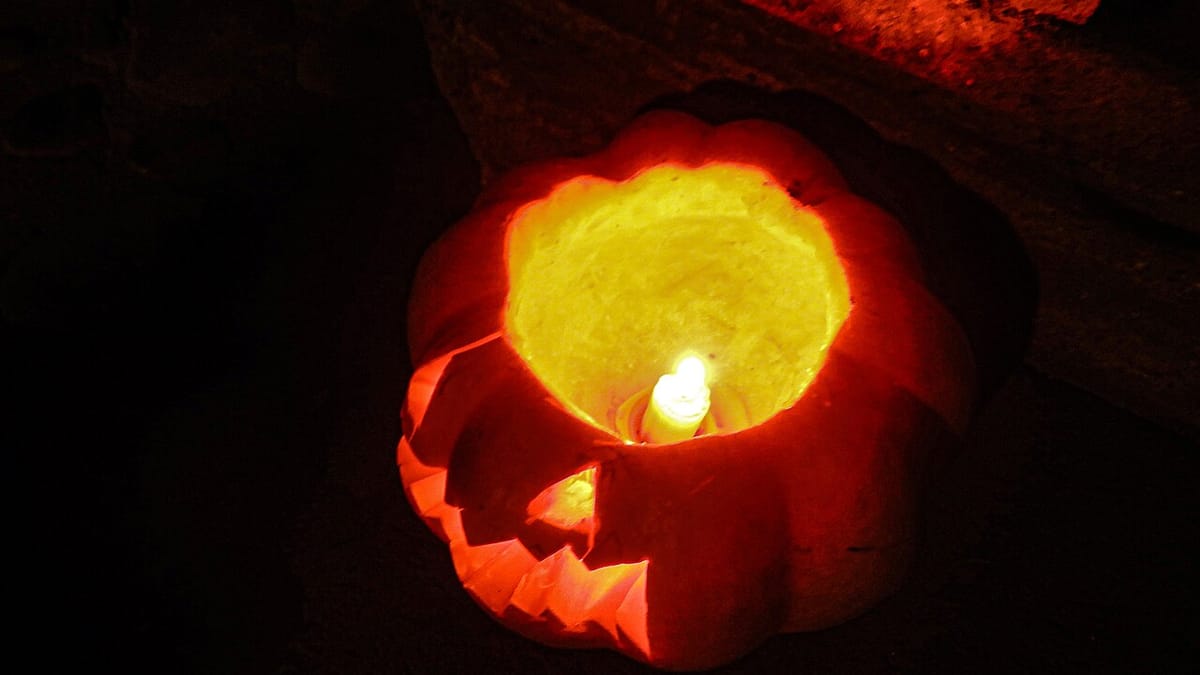
Halloween looks like an American invention: costumes, candy, plastic pumpkins on porches. Its roots are two thousand years older and considerably less commercial, running through a Gaelic fire festival, a Christian holy day, and a wave of nineteenth-century immigration that carried the whole tradition across the Atlantic.
A fire festival at the edge of winter
Long before Halloween, the Gaelic peoples of what are now Ireland and Scotland kept Samhain, one of four seasonal festivals marking the turning points of their farming year. Samhain fell at the border between the light half of the year and the dark half, when the last cattle were driven down from summer pasture and the harvest had to be fully in before the ground turned hard. Communities lit bonfires on hilltops, sometimes putting out the hearth fire in every house beforehand and relighting it from the shared communal flame, a way of starting the dark half of the year from one common source of light. The Celtic calendar treated Samhain as a genuine hinge point, on the idea that a threshold between two halves of the year is also a threshold between worlds.
When the dead were expected to visit
That belief in a thin boundary is the piece of Samhain that survived best. People believed the spirits of the dead, along with less friendly beings from Gaelic folklore, could cross over more easily on this one night than any other. Households set out food and drink for wandering souls, and people disguised themselves in costumes, animal skins, or masks, partly to blend in with whatever might be passing through and partly to play tricks on neighbors under cover of anonymity. Divination games were common too: apple-based fortune-telling and other rituals meant to reveal who you would marry or how long you would live, questions that mattered more on a night when the normal rules seemed suspended.
The church arrives without clearing out the fire
Christian missionaries spreading through Celtic Europe didn't so much cancel Samhain as build over it. The church had already been experimenting with a feast honoring all the saints and martyrs, and within a few centuries that feast had been fixed to the first day of November across much of Western Christendom, with a related day set aside to pray for souls in purgatory right after. Historians differ on exactly how deliberate the overlap with Samhain was, but the effect was the same either way: a Christian holy day landed squarely on top of a Gaelic one the local population already treated as significant. The evening before All Saints' Day, "All Hallows' Eve," contracted over centuries into Halloween, and a good deal of Samhain's original texture, the disguises, the bonfires, the sense of a boundary thinning, rode along inside the new Christian frame rather than disappearing with the old one.
Turnips before pumpkins
The jack-o'-lantern has its own folklore, tied to a stingy, trickster figure named Jack who is said to have outwitted the devil and ended up wandering the earth with only a burning coal inside a hollowed-out turnip to light his way. Irish and Scottish households carved turnips and other root vegetables into grim faces and set them in windows or by doors, both to represent Jack's wandering light and to frighten off whatever else might be out on Samhain night. Pumpkins entered the tradition only after the custom crossed the Atlantic. They were native to North America, larger, softer, and far easier to hollow and carve than a turnip, and immigrant communities adopted them almost immediately. The grinning pumpkin most people picture today is an American substitution for a much older, much smaller turnip lantern.
How a Gaelic festival became an American holiday
Halloween's biggest transformation came with the wave of Irish and Scottish emigration through the 1800s, driven above all by the Great Famine of the 1840s, which sent well over a million people across the Atlantic in a single decade. They carried Samhain-descended Halloween customs with them into cities like Boston and New York, in what is now Massachusetts, where Irish immigrant neighborhoods kept the practices alive even as they adapted to a new country. Nineteenth-century American Halloween leaned heavily on pranks and mischief, tipped outhouses and soaped windows among them, enough of a public nuisance that by the early twentieth century many towns began organizing safer, community-sponsored alternatives to keep young people occupied. Trick-or-treating as a door-to-door candy exchange took its now-familiar shape over the following decades, formalized enough by mid-century that it had become the default way most American children kept Halloween.
What the ocean crossing kept and what it left behind
Some of Samhain's original character made the trip and some didn't. The costumes stayed, the sense of a slightly dangerous, boundary-blurring night stayed, and the idea of going house to house in disguise stayed, even as its old meaning turned into a script for candy collection. The hilltop bonfires mostly stayed home. In Ireland, they never fully went away, and in Scotland's capital, a modern Samhuinn Fire Festival now runs through the streets of Edinburgh every year, torches and drumming and a procession that plays at the same old idea of summer surrendering to winter, deliberately staged as a revival rather than an unbroken tradition. The American holiday and the Gaelic one it grew from are still recognizably the same festival, just carrying different weight on opposite sides of the Atlantic.
For the season's other holidays built on the same instinct to mark the turning dark, the autumn holidays hub covers harvest festivals and festivals of light alongside Halloween's own story. And if you'd rather see the turning itself than just read about it, the interactive foliage map tracks color across Ireland, New England, and everywhere else this piece touched on.
Frequently asked
- What is Samhain and how is it connected to Halloween?
- Samhain was a Gaelic festival marking the boundary between the light and dark halves of the year, when bonfires were lit and people believed the barrier between the living and the dead grew thin. Halloween descends directly from these beliefs and customs, later layered with Christian and American influences.
- Why do people carve pumpkins for Halloween?
- The custom began with turnips carved into lanterns in Ireland and Scotland, tied to the folklore of a wandering trickster named Jack. Irish and Scottish immigrants switched to pumpkins after arriving in North America, since pumpkins were native, larger, and far easier to hollow and carve than a turnip.
- When did trick-or-treating become part of Halloween?
- Door-to-door customs existed earlier in forms like souling and guising, but the modern trick-or-treat routine took shape gradually in American towns through the early-to-mid twentieth century, partly as an organized alternative to the property damage caused by unsupervised Halloween pranks in the decades before.
- Is Halloween originally an American holiday?
- No. Its roots trace to the Gaelic festival of Samhain in Ireland and Scotland, later merged with the Christian All Hallows' Eve. It became the holiday recognized today largely through nineteenth-century Irish and Scottish immigration to North America, where American culture reshaped it into its current form.
Regions in this article
More in Holidays & Celebrations
Holidays & Celebrations
Autumn Holidays Around the World: Harvest, Light, and Remembrance
A tour of the world's autumn holidays and the three things nearly all of them share: bringing in the harvest, lighting up the dark, and remembering the dead.
2026-07-17 · 7 min read
Holidays & Celebrations
Día de los Muertos: Marigolds, Ofrendas, and Remembering Well
Día de los Muertos explained: how Indigenous ancestor veneration and the Catholic calendar combined into a joyful, marigold-scented holiday of remembrance.
2026-07-17 · 4 min read
Holidays & Celebrations
Diwali: Why the Festival of Lights Falls in Autumn
Diwali's festival of lights is timed to the darkest, moonless night of the Hindu month of Kartik, which is why the holiday lands in autumn nearly every year.
2026-07-17 · 4 min read