Leaf Science
Evergreen vs. Deciduous: Why Some Trees Keep Their Leaves
By Benjamin Janes · Published
· 4 min read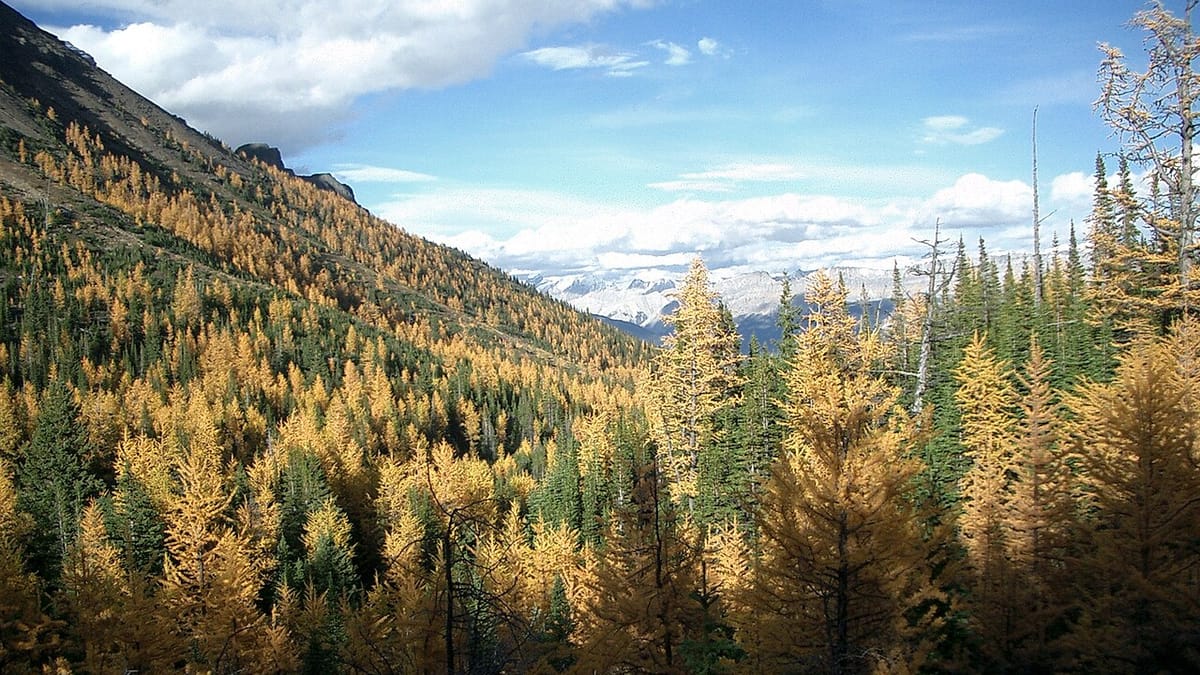
Every tree faces the same annual bill: build leaves, run them all summer, then decide what happens in the cold months. Deciduous trees drop everything and start over each spring. Evergreens keep their needles through winter and photosynthesize whenever conditions allow. Both are working solutions to the same problem, priced differently.
The bill a leaf runs up
A leaf isn't free. Building one costs the tree sugar, nitrogen, and other nutrients pulled from the soil, and a broad, thin deciduous leaf is relatively cheap to construct compared to a tough evergreen needle. That cheapness comes with a tradeoff: a thin leaf has little defense against hard freezing, and its large surface area loses water quickly through transpiration. In winter, with the ground frozen and roots unable to pull up replacement water, a leaf that size would dry out and die on the branch anyway. Rather than pay to protect tissue that can't do much useful photosynthesis under weak winter light, a deciduous tree cuts its losses, drops the whole canopy, and rebuilds fresh the following spring.
Needles are built for the opposite bet
Evergreen conifers price the same problem differently. A needle is small, thick, wrapped in a heavy waxy cuticle, and keeps its stomata (the pores a leaf breathes through) recessed and mostly closed through winter, all of which cuts water loss dramatically compared to a broad leaf. That construction costs more sugar and nutrients up front than a deciduous leaf of similar size would. The payoff is durability: a single needle can survive several winters attached to the tree, so the conifer doesn't have to rebuild its whole photosynthetic surface every year the way a maple or oak does.
That durability pays off fastest in places where the growing season is short or the soil is thin and nutrient-poor, conditions where growing an entire new canopy every single year would eat too much of a tree's limited annual budget. It's part of why conifers dominate at high elevation, on rocky or sandy ground, and across much of the boreal north, while broadleaf deciduous trees tend to win out on richer soil with a longer frost-free stretch, where their faster photosynthesis and cheaper leaf replacement pay off before winter forces the shutdown anyway.
The larch breaks its own family's rule
Larch and tamarack (different common names for trees in the same genus) complicate the tidy split. They grow soft needles that look, at a glance, exactly like a conifer's, but every fall they run the full deciduous program anyway: the needles turn gold, cut loose at an abscission layer, and drop completely, leaving the tree as bare as any oak until a fresh crop of needles fills back in come spring.
The advantage seems to run through light rather than cold tolerance alone. Larches grow in some of the harshest, shortest-summer, high-latitude and high-elevation sites any tree tolerates, places where winter light is thin for months at a stretch and a needle sitting in near darkness under snow load isn't earning its keep regardless of how well it resists freezing. Dropping the needles anyway, and rebuilding a cheap new set each spring, apparently pencils out better there than paying to protect foliage that can't do much useful photosynthesizing through the darkest months. It's the deciduous logic applied to a needle-shaped leaf instead of a broad one, further proof that the evergreen and deciduous strategies aren't a hard rule about leaf shape so much as two competing answers to the same cost problem.
A third category, for mild winters
The evergreen-versus-deciduous split isn't only about needles versus broad leaves either. In regions with mild, wet winters rather than hard freezes, some broadleaf trees stay evergreen too: hollies, live oak, and southern magnolia all keep thick, waxy, broad leaves through winter instead of dropping them. Their leaves are built more like a tough evergreen needle than a typical deciduous leaf, coated and reinforced enough to survive winter rain and the occasional light freeze without the water-loss problem that would kill a thin maple or oak leaf under the same conditions. Where winters rarely freeze hard, dropping and rebuilding an entire canopy every year is a cost with no real payoff, so evergreen broadleaf trees skip the deciduous strategy the same way a conifer does, just with a different-shaped leaf doing the work.
Reading the split on a mountainside
Colorado shows the whole spectrum on a single drive: aspen going gold in the deciduous broadleaf stands lower down, spruce and fir holding steady green through the same slopes, and if you catch the right high-elevation basin, a stand of subalpine larch turning gold and dropping needles right alongside the aspen. Farther north in Alberta — Canadian Rockies, larch stands at treeline put on one of the more overlooked shows of the season, gold needles against bare rock well after most broadleaf color has already finished. The trigger driving all of this timing, in both needle-bearing larches and broadleaf trees alike, is the same night-length clock covered in how trees know it's autumn; what differs is only what each species decides to do once that clock fires. The interactive foliage map is a good way to see the mix play out in practice, since it tracks color change across conifer-heavy and broadleaf-heavy regions side by side as the season moves through each of them.
Frequently asked
- Why do deciduous trees drop their leaves in fall?
- Broad, thin deciduous leaves would freeze and lose water through the surface all winter, while frozen soil keeps roots from replacing that water. Rather than pay to protect leaves that can't function much in winter light anyway, deciduous trees drop them and rebuild a new set the following spring.
- Why don't evergreen trees lose their leaves?
- Conifer needles are small, thick, and coated in wax, built to resist freezing and water loss well enough to survive winter attached to the tree. That durability is expensive to grow, so evergreens keep each needle for several years rather than rebuilding an entire canopy annually like deciduous trees do.
- Is a larch or tamarack an evergreen or deciduous tree?
- Deciduous, even though it looks like a conifer. Larch and tamarack grow soft needles instead of broad leaves but drop all of them every fall and regrow a full new set each spring, making them needle-leaved exceptions to the general rule that conifers keep their foliage year-round.
- Which strategy is better, evergreen or deciduous?
- Neither wins outright; each fits different conditions. Deciduous leaves are cheap and photosynthesize fast, favoring a longer growing season and richer soil. Evergreen needles are durable and let a tree start photosynthesizing the moment it warms up, favoring short growing seasons, poor soil, or harsh winters where rebuilding a canopy yearly would cost too much.
Regions in this article
More in Leaf Science
Leaf Science
Anthocyanins, Carotenoids, and Chlorophyll: Leaf Pigments Explained
Yellow and orange leaves were hiding under the green all summer. Red is different: most trees build that pigment fresh every fall. Here's the chemistry behind both.
2026-07-17 · 4 min read
Leaf Science
How to Identify Trees by Their Fall Leaves
A field method for naming trees by autumn leaves: check the branching pattern first, then leaf shape, then color, and most common species sort themselves out fast.
2026-07-18 · 6 min read
Leaf Science
How Trees Know It's Autumn: The Science of Shorter Days
Fall color isn't triggered by cold. Trees measure night length with a pigment called phytochrome, then seal off each leaf at the abscission zone.
2026-07-17 · 8 min read