Traditions Around the World
Chuseok: Korea's Autumn Thanksgiving
By Benjamin Janes · Published
· 4 min read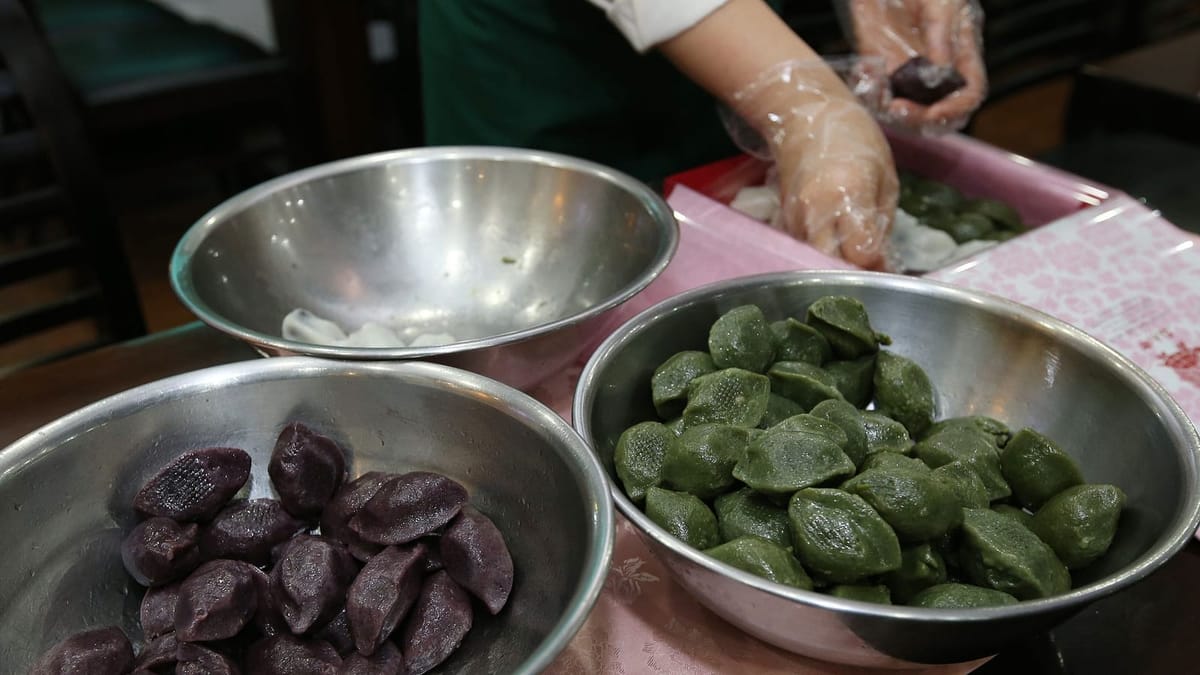
Chuseok is Korea's biggest holiday, and it isn't really about a single day. It's a multi-day pilgrimage home, built around thanking ancestors for the harvest, tending family graves, and sharing rice cakes shaped like a half moon. Most of the country travels for it, all at once.
A holiday timed to the moon, not the calendar
Chuseok falls on the full moon of the eighth lunar month, which means it moves against the fixed calendar most Western readers are used to. Korea, like much of East Asia, still tracks major traditional holidays by a lunar calendar layered on top of the solar one used for everyday business. The harvest moon itself sets the date: the biggest, brightest full moon of the season, at the point in the year when the grain harvest is largely finished and there's finally time to travel, cook, and gather.
That lunar timing isn't a technicality. It's the reason Chuseok can't be pinned to a fixed weekend the way some holidays are; the date has to be recalculated against the moon each year, and it drifts across the early-autumn stretch of the solar calendar as a result.
Charye: honoring the ancestors before the feast
Before the meal, most families perform charye, a memorial rite held at a home altar or ancestral shrine, offering food to deceased parents and grandparents in a set order that's been passed down largely unchanged for generations. Rice, soup, fruit, and freshly made songpyeon all have a customary place on the table, and the ceremony itself follows a structure many families could recite without needing to be told what comes next. It's less a solemn funeral echo than a working part of the holiday, a ritual so folded into the day that skipping it would feel like skipping the meal itself.
Many families also visit ancestral graves around the holiday to clear overgrown grass and tidy the site, a practice called beolcho. It's physical work, done in the last real warmth of the year, and it sits alongside the indoor rites as part of the same broader obligation: showing up for family, living and gone.
Songpyeon: the rice cake shaped like a half moon
Songpyeon is the food most closely tied to Chuseok, a small rice cake filled with sesame, chestnut, or sweetened bean paste, folded into a half-moon shape, and steamed over a bed of pine needles that leaves a faint, resinous scent behind. Making songpyeon is often a family project, done together the evening before the holiday rather than bought ready-made, and an old piece of folk belief holds that whoever shapes the prettiest cake will have good fortune, historically tied to finding a good spouse or bearing a beautiful child. Nobody takes the superstition too seriously anymore, but the shaping contest still happens at plenty of kitchen tables regardless.
More than one rice cake on the table
Songpyeon gets the attention, but it's only one dish in a much larger Chuseok spread. Households fry jeon, savory pancakes made from meat, fish, or vegetables dipped in egg batter, in quantities that assume a house full of relatives dropping by over several days. Japchae, glass noodles stir-fried with vegetables, and a rotating cast of banchan side dishes round out the table, along with rice wine poured out for both the living guests and, in smaller cups, for the ancestors honored at the morning's rites.
The holiday has its own games too, some old enough to predate written record. Ganggangsullae, a circle dance traditionally performed by women under the full moon, links hands and voices into a single moving ring, a custom old enough to carry UNESCO recognition as intangible cultural heritage today. Ssireum, a form of traditional wrestling, draws tournament crowds and a regular television broadcast around the same holiday, treated with the same seasonal inevitability as a harvest football game elsewhere in the world.
The great migration home
Chuseok triggers one of the heaviest bursts of domestic travel anywhere in the world, concentrated into just a few days. Millions leave Seoul and other major cities at roughly the same time, headed for ancestral hometowns across South Korea, and highways that normally move freely turn into multi-hour crawls in both directions. Korean news coverage treats the traffic itself as a recurring seasonal story, tracking projected peak congestion the way other countries track a storm system. For a holiday built around family obligation, the traffic jam has become part of the ritual too, an annual proof that people are willing to sit in a car for hours to be at the right table.
A holiday shared, in different key, across East Asia
Korea isn't alone in building a holiday around the harvest moon. China marks the same lunar date with its own Mid-Autumn Festival, centered on mooncakes and moon-viewing gatherings, a tradition explored in our full guide to the Mid-Autumn Festival, including how the custom plays out in hill country around Beijing. The color in China's own autumn hills, including the Beijing Hills — Fragrant Hills region, tends to arrive around the same weeks that families there are gathering for their own version of this same holiday. Japan runs a quieter, more solitary cousin of the custom too, tied to its own long tradition of watching the autumn sky and the maples together, covered in our guide to momijigari, Japan's centuries-old leaf-viewing custom.
What distinguishes Chuseok within that shared family of holidays is the sheer weight of obligation behind it: not just a nice evening watching the moon, but a real trip home, a real grave to tend, and a real ceremony that doesn't get skipped because the drive was long. If you want to see how the fall color in Korea lines up with the holiday itself, our interactive foliage map tracks the season's progress well beyond Korea, across every region this site covers.
Frequently asked
- What is Chuseok?
- Chuseok is Korea's major autumn holiday, centered on giving thanks for the harvest, honoring ancestors, and gathering with family. It falls on the full moon of the eighth lunar month and typically anchors a multi-day holiday period during which much of the country travels to ancestral hometowns.
- Why does the date of Chuseok change every year?
- Chuseok follows the lunar calendar rather than the fixed calendar most Western holidays use, landing on the fifteenth day of the eighth lunar month, the night of the full harvest moon. Because lunar months don't line up evenly with the solar year, the corresponding date shifts from one year to the next.
- What is songpyeon?
- Songpyeon is a half-moon-shaped rice cake made for Chuseok, filled with ingredients like sesame, chestnut, or sweetened beans and steamed over a bed of pine needles for fragrance. Families often make songpyeon together the night before the holiday, and folk belief holds that a well-shaped cake brings good fortune to its maker.
- Is Chuseok the same as China's Mid-Autumn Festival?
- They share timing and roots but aren't identical. Both fall on the full moon of the eighth lunar month and both center on family and harvest, but Chuseok emphasizes ancestral rites and a working trip back to family hometowns, while China's Mid-Autumn Festival leans more heavily on moon-viewing and mooncakes.
- How do Koreans travel for Chuseok?
- Chuseok triggers one of the largest domestic travel surges of the Korean year, as much of the country's population heads to ancestral hometowns at the same time. Highways and rail lines see multi-hour delays for days around the holiday, a predictable seasonal crunch that Korean media covers every year like a recurring weather event.
Regions in this article
More in Traditions Around the World
Traditions Around the World
Bonfire Night and Conkers: Britain's Autumn Rituals
From playground conker matches to fire festivals and the fifth of November, how Britain marks the end of the harvest and the start of the dark months.
2026-07-17 · 4 min read
Traditions Around the World
Harvest Festivals Through History: From Lammas to the County Fair
How England's Lammas bread and corn dollies evolved into Harvest Home suppers and, eventually, the modern American county fair.
2026-07-17 · 4 min read
Traditions Around the World
Harvest Wine and Cattle Parades: How the Alps and Europe Do Autumn
From Alpine cattle drives to wine-harvest blessings and Munich's agricultural roots, how Switzerland, Austria, and much of Europe mark the turn to autumn.
2026-07-17 · 5 min read