When do the leaves change in Seoul?
Seoul is ringed by granite peaks that catch fire in autumn, and Bukhansan's maples are visible from downtown streets. Inside the city, ginkgo rows around the old palaces and the Deoksugung stone wall road turn deep gold, and half the city seems to be out hiking with the color as the excuse.
Peak: October 25–November 10
Climatological window from published records. The weather model doesn’t cover South Korea yet, so this is the long-run normal rather than a season-specific forecast.
Fall activities in Seoul
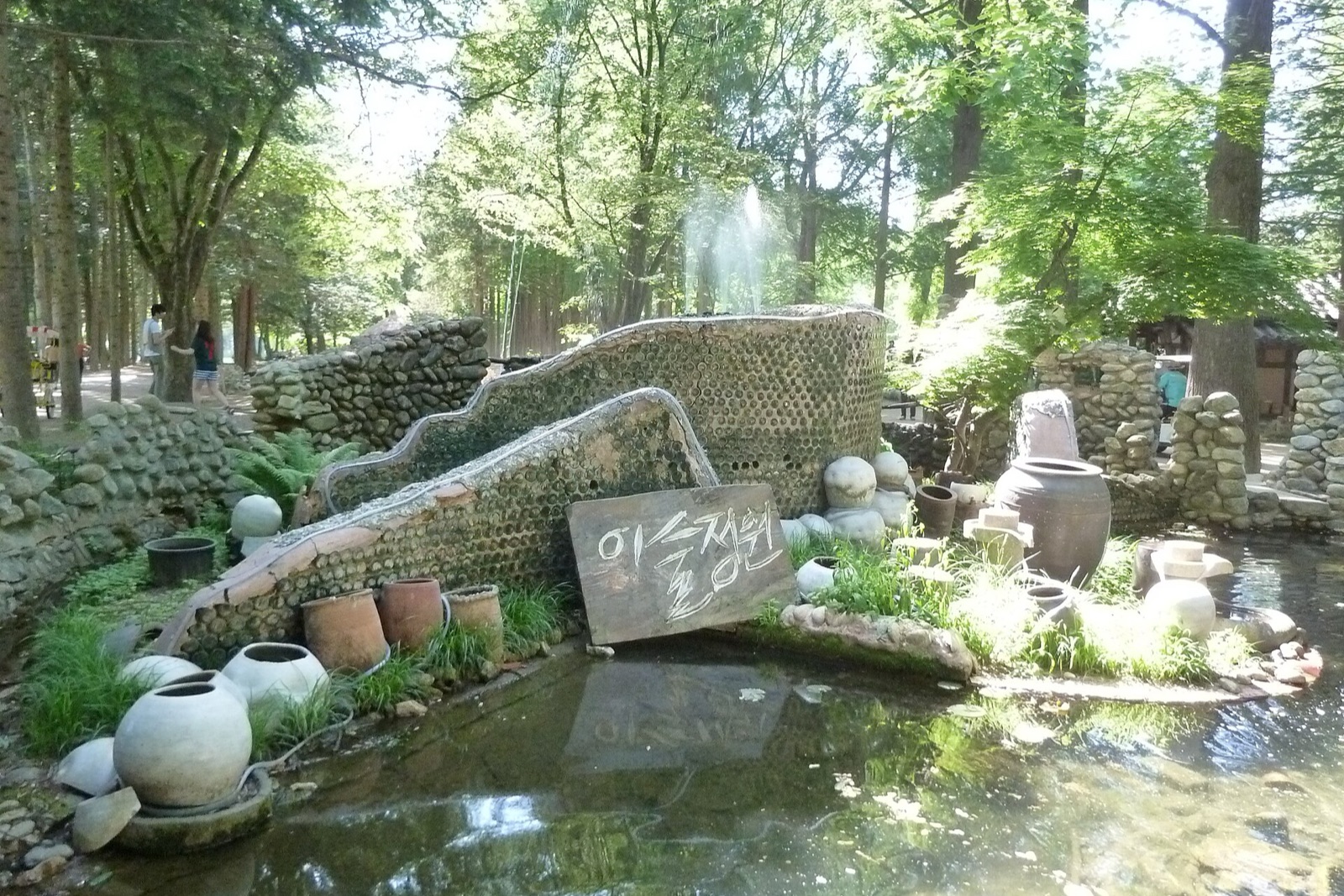
Nami Island
55 kmGarden
A half-moon island in the Han River planted with tree-lined avenues.
in South Korea
Plan a longer trip
Where locals go
Seoul in Autumn: Ginkgo Streets, Palaces, and Peaks
Seoul compresses a granite national park, five royal palaces, and some of Asia's best ginkgo streets into one subway network, and autumn, danpung season, is when the whole arrangement pays off. This guide covers the avenues, the palace gardens, the in-city mountains, the day trips worth a dawn start, and what to eat between them.
The ginkgo streets
Seoul turns gold at street level before anything else. The most famous walk is Deoksugung Doldam-gil, the lane that follows the palace's old stone wall, where ginkgo canopies lean over the stonework and the whole street glows for a couple of weeks; the city's own window, October 25–November 10 in a typical year, is essentially the schedule for this walk. North of Gyeongbokgung, the cafe streets of Samcheong-dong run gold against hanok rooflines, and over on Yeouido the long riverside rows near the National Assembly draw half the city on peak weekends. Two local truths worth knowing. First, the fall is fast: a windy night after peak carpets the sidewalks in gold, and Seoulites rate the fallen week as highly as the standing one, so a late arrival is not a failed one. Second, ginkgo gold comes with ginkgo fruit, and on a warm afternoon the smell is part of the deal, in Seoul as in every ginkgo city.
Changdeokgung and the Secret Garden
If you hold one timed ticket in Seoul, make it this one. Changdeokgung is the most graceful of the palaces, built into its hillside rather than onto a grid, and Huwon, the Secret Garden behind it, is a wooded valley of pavilions and lotus ponds that was designed for precisely this season. Maples lean over the square pond at Buyongji, ginkgo light up the pavilion courtyards, and the paths climb through what feels like a private forest in the middle of the capital. Entry is by guided tour only, with limited slots each day, and autumn dates sell out well in advance, so book online the moment your dates are fixed. The tour moves at the guide's pace, which frustrates photographers; the practical answer is to shoot fast at the stops, linger legally at the back of the group, and take the general palace grounds, a separate walk-up ticket, at your own speed afterward.
The other palaces, morning to dusk
Gyeongbokgung is the grand one, and it wants the morning: the mountain backdrop stands sharpest in early light, and the pavilion pond at Hyangwonjeong, ringed in color, is calmest before the midday tide of hanbok-rented visitors arrives, a spectacle that is honestly part of the fun. Changgyeonggung, next door to Changdeokgung, is the quiet sibling, with open lawns, an old greenhouse, and a fraction of the foot traffic under the same trees. Deoksugung, small and downtown, stays open into the evening, which makes it the natural end of a day: palace roofs against lit office towers, then out the gate and straight onto the stone-wall walk. If you plan to collect several palaces, a combined palace ticket covers the set for less than the sum of the gates, and every one of them is a short walk or a couple of subway stops from the next.
Namsan above the color
Namsan is the wooded hill in the middle of the map, and in danpung weeks its paths turn into ribbons of maple and cherry color climbing toward N Seoul Tower. Walk up from the Myeongdong side or ride the cable car, but time it for late afternoon: the color goes warm as the sun drops, the city lights come up while you are still on the summit terraces, and the descent through lit woods is the best free evening in Seoul. The paths are paved and stair-stepped, sneakers are plenty, and the crowds thin dramatically once you are more than a few minutes from the cable car station. For the reverse angle, the old fortress wall sections on the hill's flanks give you Namsan's own colored slopes with the tower above them, and the northern paths drop you conveniently back toward the palaces for an evening gate.
Bukhansan: a national park on the subway
Bukhansan is Seoul's flex: a genuine national park of granite peaks and fortress walls inside the city limits, with trailheads at the end of subway lines and short bus hops. Baegundae, the summit most first-timers aim for, is a real hike, stone staircases and a cable-assisted final scramble to a bare granite crown with the whole city spread below the color line. Koreans hike in enthusiastic numbers, especially on autumn weekends, so start early or go midweek, and expect to be the least equipped person on the mountain no matter what you bring; the national uniform is full alpine kit. What you actually need fits in a small pack, and the fall day-hike packing list covers it. The institution you must not skip is the descent meal: pajeon and makgeolli at the restaurants clustered near the trailheads, earned the traditional way.
Bukhansan day kit
- Water and a snack for the summit push
- Grippy shoes for granite slabs
- Light gloves for the cable sections
- T-money card for subway and bus
- Cash for trailside pajeon
Nami Island and the Gapyeong day
East of the city, Gapyeong county bundles Korea's most photographed autumn trees into one day trip. Nami Island, a half-moon islet in the river, is planted with long lanes of metasequoia and ginkgo that turn copper and gold in sequence, reached by a short ferry or, for the committed, a zip line over the water. The Garden of Morning Calm, deeper into the county, adds a designed-garden version of the season. This is a beloved domestic outing, not a hidden one, so treat it like locals do: earliest train out, weekday if you can manage it, and lunch on the island's grilled chicken galbi before the tour groups land. It pairs the wilder side of Korea's autumn with an easy same-day return to the city.
The Seoraksan direction
Korea's season starts at Seoraksan, the granite range near the northeast coast, and its turning is a national event; the color then rolls south and downhill for weeks before it reaches Seoul's streets. The regional window, South Korea, leads the city, so a short early trip should chase the mountains while a later one can relax into the boulevards. Seoraksan works as an ambitious day trip by express bus, but it is far better as an overnight in Sokcho: cable car and valley temples the first afternoon, a proper trail at dawn, seafood by the harbor after. If your dates run late instead, look south rather than east; the maple valleys in the southern half of the peninsula carry the season on after the capital peaks, with Naejangsan the most famous name among them.
Street food that tracks the temperature
Seoul's street food calendar changes with the leaves. The cold-weather canon, hotteok griddle pancakes running with brown-sugar syrup, bungeoppang fish-shaped pastries filled with red bean, roasted chestnuts and sweet potatoes sold from drum-barrel carts, cups of scalding eomuk broth at pojangmacha tents, arrives on the streets at almost exactly the moment the ginkgo peak does, which is not a coincidence so much as a shared response to the first cold nights. Build the pairings into your walking: a sleeve of roasted chestnuts on the Deoksugung wall walk, hotteok in Samcheong-dong, eomuk and tteokbokki as the reward for a palace-to-palace afternoon. For the sit-down version, Gwangjang Market's mung-bean bindaetteok, fried in a din of ladles and shouted orders, is the definitive cold-evening meal in the old center, best with a bottle of makgeolli and no dinner plans afterward.
A three-day shape, and sequencing East Asia
Day one, the royal core: Gyeongbokgung early, Samcheong-dong and Bukchon at midday, your booked Secret Garden slot in the afternoon, Deoksugung and the stone wall at dusk. Day two, up: Bukhansan for the full hike, or Namsan plus a slow shitamachi-style wander through Seochon if your legs vote no. Day three, out: Gapyeong for the tree lanes, or the first leg of a Seoraksan overnight. If Seoul is one stop on a larger autumn, the timing works cleanly in one direction: Korea's capital colors ahead of Japan's warm basins, so run Seoul before Tokyo and well before Kyoto, whose temple maples close out the continent's season. Start where the cold arrives first and follow it south.
Frequently asked
- When do leaves peak in Seoul?
- In a typical year, Seoul peaks around October 25–November 10. A computed forecast for Seoul arrives when the model's coverage expands beyond the US.
- When is fall foliage season in Seoul?
- Seoul colors during autumn (September to November), and in a typical year the window lands around October 25–November 10. That comes from https://english.visitkorea.or.kr/svc/contents/contentsView.do?vcontsId=231292 rather than the weather model, which does not sample this city yet.
- Do I need to book the Changdeokgung Secret Garden in advance?
- Yes. The Secret Garden is visited only on guided tours with limited daily slots, and autumn dates sell out well ahead. Book online as soon as your travel dates are fixed; the general palace grounds are a separate, walk-up ticket.
- When does autumn color peak in Seoul?
- The city's streets and palace grounds typically peak from late October into early November, weeks after Seoraksan starts Korea's season in the high northeast. The live window on this page tracks Seoul itself.
- Is Nami Island worth visiting in autumn?
- Yes, for its lanes of metasequoia and ginkgo, which are among the most photographed trees in Korea. It is a beloved domestic trip too, so go on a weekday and catch an early train to stay ahead of the crowds.
- Can you hike Bukhansan using public transit?
- Easily. Trailheads sit at the end of subway lines and short local bus hops, which is the point of the park: a genuine granite-peak national park inside the city limits, no car required.
- What street food is in season during Seoul's autumn?
- Cold-weather classics arrive with the color: hotteok pancakes filled with brown sugar, bungeoppang fish-shaped pastries with red bean, roasted chestnuts and sweet potatoes from drum-barrel carts, and cups of hot eomuk broth at street tents.