What to Pack for a Fall Day Hike
By Benjamin Janes · Published
· 5 min read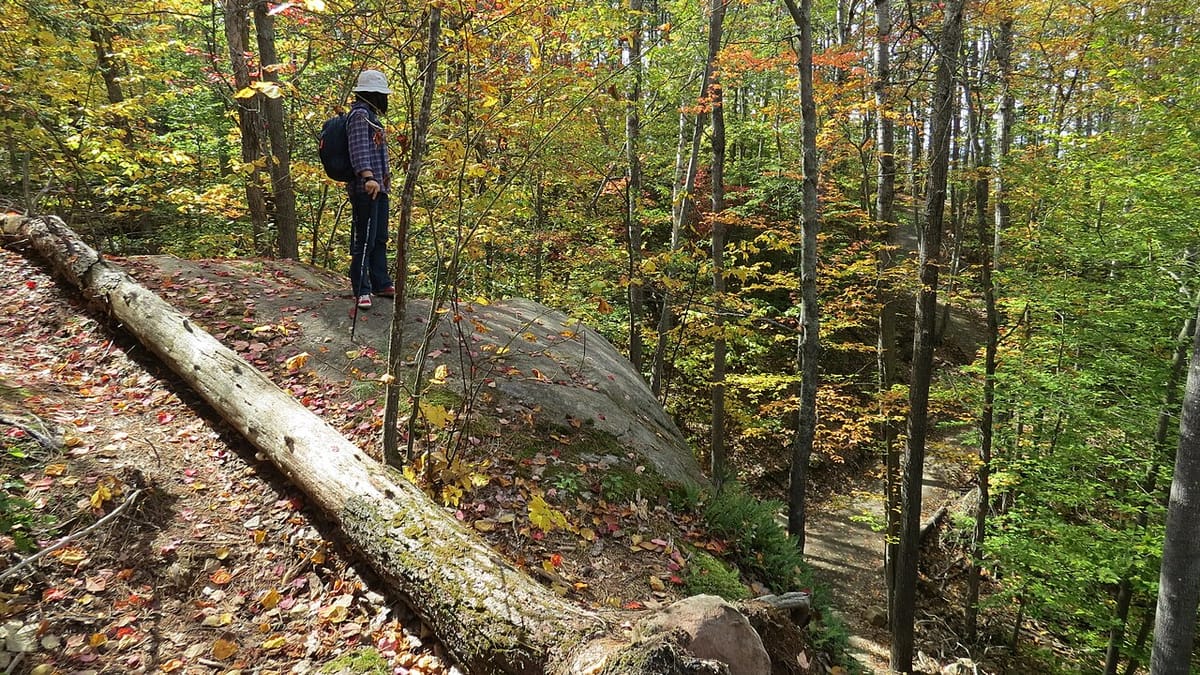
Fall day hikes swing from frosty trailhead to sweaty climb to cold, dark descent, often in the same afternoon. Here's what actually earns space in your daypack this season: a layering system for a 20-degree range, a headlamp you'll actually need, hunter orange, and traction for trails that look dry but aren't.
Why fall gear is its own category
Fall hiking gear solves a problem summer gear doesn't have: the same trail can run from near-freezing to shirt-sleeve warm and back again before you're back at the car. A trailhead at 38 degrees and fog can open into full sun an hour in, then drop hard again once the sun clears a ridge or ducks behind it mid-afternoon. That's a real temperature swing, sometimes worse at elevation, and it happens within a single hike rather than across a season. The fix isn't heavier gear, it's more of it, arranged so you can add and shed layers without stopping to dig through your pack. Think of your fall kit less as "what to wear" and more as "what you'll be carrying at 2pm that you weren't wearing at 9am." That's the layer that actually gets used.
Layering for a 20-degree swing
Start cold. If you're comfortable standing still at the trailhead, you're overdressed for the climb: you'll warm up fast once you're moving and want to shed a layer within the first fifteen minutes. A non-cotton base layer, a midweight fleece or wool layer for stops and summits, and a wind or rain shell that packs small cover almost every fall condition. The shell matters more in fall than in any other season: wind cuts hard through bare branches with no leaf canopy left to block it, and wet weather at 45 degrees is a faster way to get cold than dry weather at 30. Gloves and a hat are worth the extra ounce even if you don't expect to need them: pockets are for layers you're not currently wearing, not for the ones you left in the car.
Daylight is shrinking, and the headlamp is not optional
Daylight shrinks fast once the calendar turns toward October and November, losing several minutes every day, and a hike that started in bright morning sun can end in genuine dusk earlier than you'd plan for. A headlamp is the one item on this list with no real substitute: a phone flashlight burns your battery and needs a hand, and "we'll just hike faster" is not a plan on uneven, leaf-covered trail. Carry it even on a hike you're sure you'll finish by early afternoon. Turned ankles, wrong turns, and long lunches at a summit all eat daylight faster than you expect, and the last mile back is far worse to do without light than with it.
Wear orange: you're sharing the woods
Fall hiking season overlaps with hunting season across most of the country, and multi-use public land doesn't stop being multi-use just because you're on a marked trail. Blaze orange (a hat, a vest, even a bright bandana tied to your pack) makes you visibly human at a distance in brush and low light, which is the entire point. Check the specific hunting seasons and requirements for wherever you're hiking, since they vary by state, by land type, and sometimes by weapon. It costs nothing to wear it, and it's one packing decision on this list that isn't really optional once the season opens.
Wet leaves are more dangerous than they look
A leaf-covered trail hides everything underneath it (roots, rocks, mud, ice on a shaded slope), and wet leaves on packed dirt or bare rock are close to as slick as ice underfoot. Slow down on descents especially, where most of the sliding happens, and treat any leaf-covered slope on a ledge or stream crossing as if you can't see what's beneath it, because you can't. Trekking poles help more in fall than in any other season, giving you two extra points of contact exactly where footing gets least predictable. If your route includes exposed rock (granite ledges, stream-crossing slabs), that footing gets measurably worse once the leaves start coming down and the morning dew hasn't burned off yet.
The thermos is not a luxury
Hikers from New England to the Rockies treat a thermos of something hot as core fall kit, not an extra: a summit break in cold wind is a different experience with hot coffee, cider, or soup than without. It's also a real safety margin: a warm drink and a few hundred calories at a windy overlook can be the difference between a comfortable rest and the start of a slow slide toward being too cold to think clearly. Pack it in an insulated bottle rather than a disposable cup, and treat the summit thermos break the way you'd treat any other rest stop: a chance to check layers, check the time against remaining daylight, and confirm everyone in your group is still warm, not just still moving.
Core daypack checklist
- Non-cotton base layer
- Midweight fleece or wool layer
- Wind or rain shell
- Hat and gloves
- Headlamp with fresh batteries
- Blaze orange hat or vest
- Trekking poles
- Insulated thermos
- Map or offline trail app
- Extra water
Nice-to-have extras
- Hand warmers
- Lightweight puffy jacket for long breaks
- Gaiters for wet leaves and mud
- Extra pair of socks
- Small first-aid kit
- Trail snacks with real calories
- Portable phone battery
Before you head out
None of this needs to be expensive or new: a lot of fall hiking kit is just knowing which three things from your closet to bring, and in what order you'll put them on. Check the weather at elevation, not just at the trailhead town, since ridgelines and summits run colder and windier than the valley forecast suggests. If you're heading somewhere with real elevation gain, our guide to the best fall hikes in New England has specific trail notes worth reading before you commit to a route, and if foliage is the whole point of the trip, our fall foliage photography guide is worth a look before you pack your camera bag too. From the White Mountains to the aspen groves of the Colorado Rockies, the fundamentals here hold regardless of which range you're headed into, and around October 7–October 11, 2026 (forecast), or the equivalent window wherever you live, they're worth having dialed in before the first cold morning catches you in a t-shirt.
Frequently asked
- How many layers do I actually need for a fall day hike?
- Most hikers do fine with three: a non-cotton base layer, a midweight insulating layer like fleece or wool, and a wind or rain shell you can add and remove as the trail and weather change.
- Do I need a headlamp if I plan to finish before dark?
- Yes. Fall daylight disappears faster than most hikers plan for, and delays like a wrong turn, a long summit break, or a tired hiking partner can easily push you past sunset.
- Is blaze orange necessary on an official hiking trail?
- On multi-use public land during hunting season, yes. Marked trails don't separate hikers from hunters, and blaze orange is the simplest way to stay visible in brush and low light.
- Are trekking poles worth carrying in fall specifically?
- They're more useful in fall than in summer, since wet leaves hide uneven footing and slick rock, and two extra points of contact meaningfully cut your risk of a slip.
- What temperature swing should I actually plan for?
- A 20-degree difference between trailhead and summit, or between morning and mid-afternoon, is common in fall. Pack for the coldest, windiest point on your route, not the forecast for the trailhead town.