Holidays & Celebrations
Autumn Holidays Around the World: Harvest, Light, and Remembrance
By Benjamin Janes · Published
· 7 min read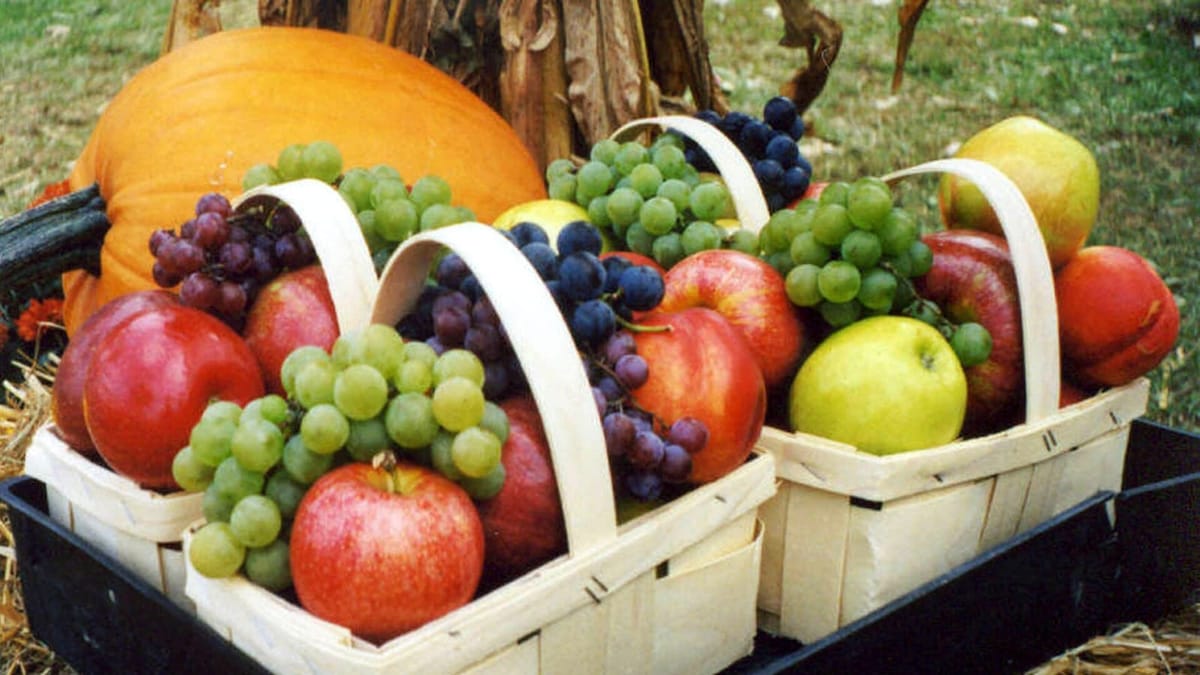
Almost every culture that watches the seasons change has built a holiday around this one. Harvest gets brought in, the nights get darker faster, and somewhere in there people start thinking about the dead. Three threads run through the world's autumn holidays: gratitude for the harvest, light against the dark, and memory.
A season built for ceremony
Across the Northern Hemisphere, autumn is the one stretch of the calendar where the sky changes fast enough to notice week to week. Nights lengthen, the light goes low and gold in the afternoon, and for most of human history that shift meant one thing above all: the harvest had to come in before the cold did. Grain got stored, animals were slaughtered or moved to lower pasture, fruit was picked and preserved, and the last outdoor work got finished while there was still daylight to do it in. Communities that depended on that timing built rituals around it, because getting the harvest wrong meant a hard winter. Long after most of us stopped growing our own food, those rituals kept their shape. That's why autumn, more than any other season, is stacked with holidays that trace back to the same handful of old anxieties: will there be enough food, will the light hold, and what happens to the people we've lost.
The equinox starts the clock
Nearly every holiday in this piece sits somewhere in the six or so weeks after the September equinox, the point where the Northern Hemisphere tips from days longer than nights to nights longer than days. That crossing point isn't just a symbolic marker. After the equinox, the rate at which daylight disappears actually speeds up, day by day, faster than at any other point in the year, before slowing again as the winter solstice approaches. People living without electric light felt that acceleration directly: the walk home got dark days earlier than it had the week before, over and over, for weeks running. A holiday calendar that clusters this tightly in the weeks right after the equinox isn't a coincidence. It's a direct response to the fastest-moving stretch of the whole year's light cycle, and it's why so many of the traditions below feel urgent about beating the dark rather than simply observing it.
Harvest: settling accounts with the year's work
The most literal autumn holidays are thanksgivings in the plain sense, days built around a shared meal that marks a harvest finished. The United States and Canada each keep one, on different calendars and for reasons rooted in geography rather than culture; the full explanation of why the two split by weeks lives in Two Thanksgivings. East Asia keeps its own version under a full moon rather than a fixed weekday: the Mid-Autumn Festival, when families gather to split a mooncake and watch the year's brightest moon together, on almost the same lunar week Korea empties its cities for Chuseok, its own homeward migration and ancestral rite. Jewish communities mark their own harvest festival, Sukkot, by building a temporary shelter and eating meals under a roof open to the sky, a nod to a harvest that could just as easily have failed. European harvest homes, from English corn dollies to German Erntedankfest, follow the same instinct in local dress: the work is done, so eat, and say so out loud. In the Alps, entire villages still mark the season's other harvest, herds walked down from high summer pasture in a procession called Almabtrieb, cattle crowned with flowers and bells for the descent, a ceremony about livestock rather than crops but built from the same underlying relief that the outdoor work of the year is finally done.
Light against the lengthening dark
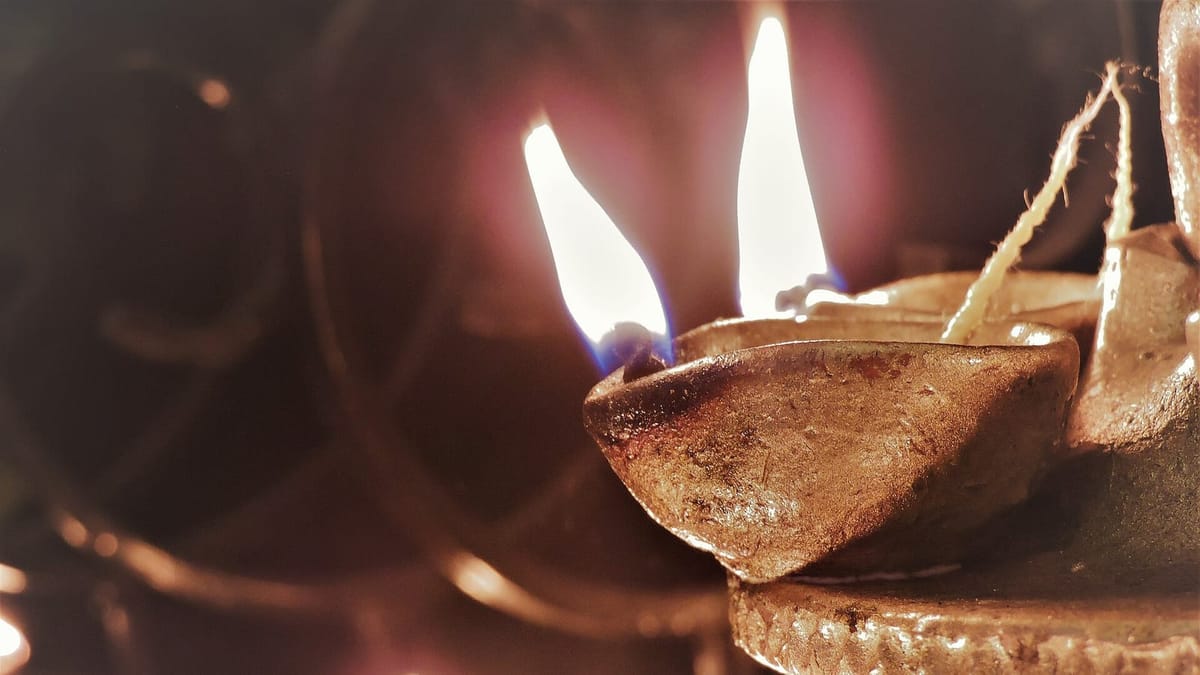
Where harvest holidays answer the physical need to eat, a second set of autumn holidays answers a more psychological one: the discomfort that comes with losing daylight fast. Diwali, the Hindu, Jain, and Sikh festival of lights, is timed to the darkest night of its lunar month on purpose, oil lamps lit specifically because that's the one night with no moonlight to help. Southeast Asia keeps its own lantern holiday on a related lunar schedule: Thailand's Loy Krathong sends small floating baskets of flowers and candles out onto rivers and canals after dark, while its northern cousin, Yi Peng, fills the sky over Chiang Mai with paper sky lanterns released by the thousand, both of them built around the same instinct to put light somewhere the dark would otherwise win. Britain keeps its own fire holiday, Bonfire Night, when bonfires and fireworks mark the failed Gunpowder Plot with flames big enough to be seen for miles, a custom historians think absorbed older harvest and pre-winter bonfire traditions that were already in place before the plot gave them a new excuse. Ireland's old Gaelic festival did something similar centuries earlier: bonfires lit on hilltops as the year turned, a tradition described in full in the real history of Halloween. Fire, in an autumn without electric light, was never just decoration. It was how a community pushed back against the year's longest stretch of dark before winter made things worse.
Days for remembering the dead
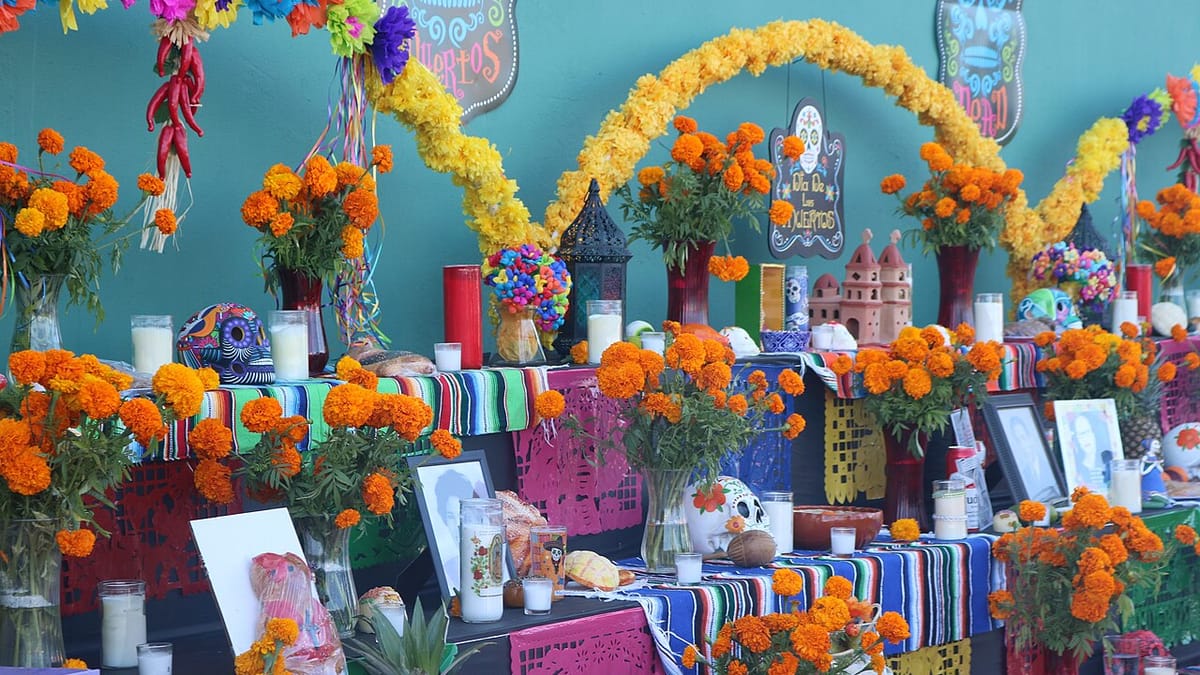
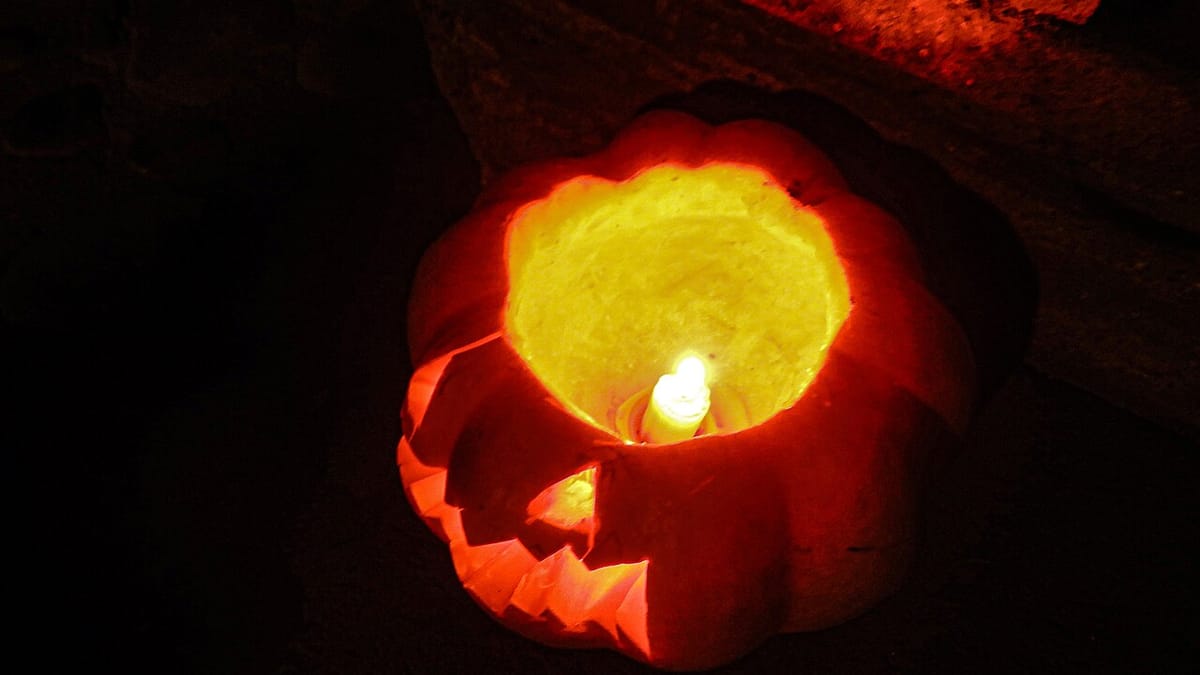
The same lengthening dark that inspired festivals of light also produced the season's holidays of memory. Samhain, the Gaelic festival behind Halloween, marked the point in the Celtic year when the boundary between the living and the dead was thought to be at its thinnest, and people left out food, wore disguises, and told stories to keep whatever came through that boundary friendly. Christianity later layered All Saints' and All Souls' Day onto the same stretch of the calendar, giving the season an official reason to remember the departed that has stuck for over a thousand years. In much of Catholic Europe, that day still empties into the cemeteries rather than the pews: Polish families keep Zaduszki by visiting family graves, cleaning headstones, and lighting candles until entire cemeteries glow after dark, a quieter cousin of the same impulse that drives the next holiday further south. Mexico's Día de los Muertos grew out of a related but distinct root: Indigenous Mesoamerican ancestor veneration fused with the Catholic calendar the Spanish brought with them, producing a holiday that treats grief as something to celebrate rather than only mourn. It's worth saying plainly that Halloween and Día de los Muertos aren't the same holiday wearing different costumes. They share a calendar neighborhood and a season, not a lineage.
Why some of these dates never sit still
One reason the season feels so crowded is that several of its holidays aren't fixed to the Gregorian calendar at all. Diwali and the Mid-Autumn Festival both follow lunar calendars, tied to a specific phase of the moon in a specific lunar month rather than a numbered day on the calendar hanging in your kitchen. That's why both holidays drift by weeks from one year to the next when mapped onto the solar year the rest of the world uses for scheduling. Thanksgiving in the US and Canada, by contrast, is defined by weekday rather than date: a particular Thursday, a particular Monday, chosen so the holiday always lands on a long weekend no matter what the moon is doing. Halloween is the odd one out, fixed to a specific point on the solar calendar because it grew out of a seasonal turning point rather than a lunar one.
Where the season's color and its holidays overlap
Because so many of these holidays are tied to the turn of the season rather than to a fixed spot on the calendar, they tend to land right in the middle of the same weeks the leaves are doing their own thing. In Québec — Laurentians & Eastern Townships, Thanksgiving dinner often happens with the maples still holding color, an overlap the American holiday, timed weeks later, usually misses entirely. In Ireland, the hills where Samhain bonfires once burned turn gold and rust around the same point in the year, long before Halloween became the costume-and-candy holiday most people know now. And in Munich, the harvest thanksgiving called Erntedankfest sits in the same season as Oktoberfest's later weeks, both of them older, quieter cousins of the beer-tent version most visitors picture. If you want to see how any of this lines up in a given year, the interactive foliage map tracks color across every region mentioned here in something close to real time.
Japan takes a different approach to marking the season, less holiday than practiced ritual: momijigari, or leaf hunting, treats the turning color itself as the thing worth traveling for and observing closely, a custom explained in Momijigari: Japan's thousand-year art of leaf hunting. Not every culture needed a saint's day or a lunar phase to justify pausing for the season. Sometimes the trees were reason enough.
Six holidays, three reasons
Pull back far enough and the season's crowded calendar stops looking random. Every autumn holiday on this list answers one of three questions a community without modern food storage, electric light, or grief counseling had to answer for itself every year: how do we make it through winter fed, how do we make it through the dark lit, and how do we carry the people we've lost. Halloween and Día de los Muertos answer the last question in two unrelated ways. Diwali answers the second. Two Thanksgivings and the Mid-Autumn Festival both answer the first, an ocean apart, without ever comparing notes. None of them needed to. The season asked the same questions everywhere it went.
Frequently asked
- Why does autumn have more holidays than any other season?
- Preindustrial communities depended on getting the harvest in before the cold set in, while the same weeks brought rapidly shrinking daylight. Nearly every culture built rituals around feeding the community, pushing back the dark with fire or light, and remembering the dead, which stacks more holidays into autumn than any other season carries.
- Are Halloween and Día de los Muertos the same holiday?
- No. They share a calendar neighborhood, both rooted in a stretch of the year associated with the dead, but they come from different lineages: Halloween descends from the Gaelic festival of Samhain, while Día de los Muertos blends Indigenous Mesoamerican ancestor veneration with the Catholic calendar Spanish colonizers brought to the Americas.
- Why do Diwali and the Mid-Autumn Festival fall on different dates each year?
- Both follow lunar calendars, tied to a specific moon phase within a specific lunar month rather than a numbered day on the solar calendar most of the world uses for scheduling. That mismatch means their dates drift by weeks from one year to the next once placed on a Gregorian calendar.
- Does fall foliage color line up with any autumn holidays?
- Often, yes, since several of these holidays are timed to the turn of the season rather than a fixed date. Canadian Thanksgiving regularly overlaps with peak color in eastern Canada, and the Gaelic hills behind Halloween's origins turn color around the same weeks Samhain was once celebrated there.
- What do harvest festivals like Thanksgiving and the Mid-Autumn Festival have in common?
- Both mark the end of a harvest with a shared meal and family gathering, and both developed independently on opposite sides of the world from the same basic worry: that a full harvest deserved acknowledgment before winter made food scarce again. Neither tradition influenced the other.
Regions in this article
More in Holidays & Celebrations
Holidays & Celebrations
Día de los Muertos: Marigolds, Ofrendas, and Remembering Well
Día de los Muertos explained: how Indigenous ancestor veneration and the Catholic calendar combined into a joyful, marigold-scented holiday of remembrance.
2026-07-17 · 4 min read
Holidays & Celebrations
Diwali: Why the Festival of Lights Falls in Autumn
Diwali's festival of lights is timed to the darkest, moonless night of the Hindu month of Kartik, which is why the holiday lands in autumn nearly every year.
2026-07-17 · 4 min read
Holidays & Celebrations
From Samhain to Trick-or-Treat: The Real History of Halloween
Halloween's roots run through the Gaelic fire festival Samhain, the Christian All Hallows' Eve, and the nineteenth-century Irish immigration that carried it to America.
2026-07-17 · 4 min read