Leaf Science
Anthocyanins, Carotenoids, and Chlorophyll: Leaf Pigments Explained
By Benjamin Janes · Published
· 4 min read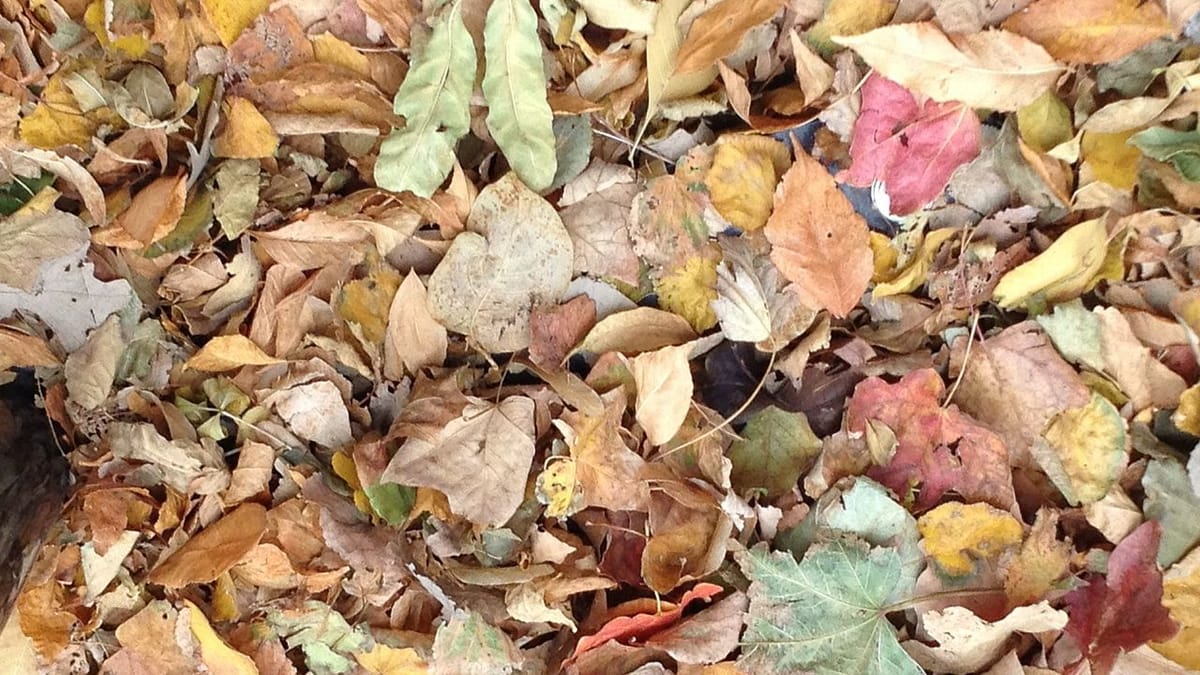
Fall color comes from three families of pigment, and only one gets built new each year. Chlorophyll and carotenoids sit in every leaf all summer, the green simply hiding the rest. Anthocyanin, the pigment behind true red, mostly doesn't exist yet. Most trees manufacture it from scratch every autumn.
Green was covering something else
Chlorophyll runs a leaf's whole operation: it captures sunlight and turns it into the sugars a tree lives on. To keep that machine going, a leaf remakes chlorophyll continuously through the growing season, and there's so much of it that its deep green swamps out every other pigment in the cell. Nothing else gets a turn.
Autumn breaks that cycle. Once a tree's internal night-length clock trips its seasonal shutdown, it stops investing in new chlorophyll and starts pulling nitrogen and other nutrients back out of the leaf before the leaf falls. The chlorophyll already in place keeps degrading under ordinary sunlight with nothing rebuilding it, and within a couple of weeks the green thins out enough that whatever else was in the leaf finally shows through.
Yellow and orange were there the whole time
That whatever-else is mostly carotenoids, the same pigment family that colors carrots and egg yolks. Carotenoids aren't decoration. They absorb wavelengths of light chlorophyll can't use well and help protect the leaf's machinery from getting damaged by too much sun. A leaf builds and holds carotenoids all season as working equipment, not a fall costume.
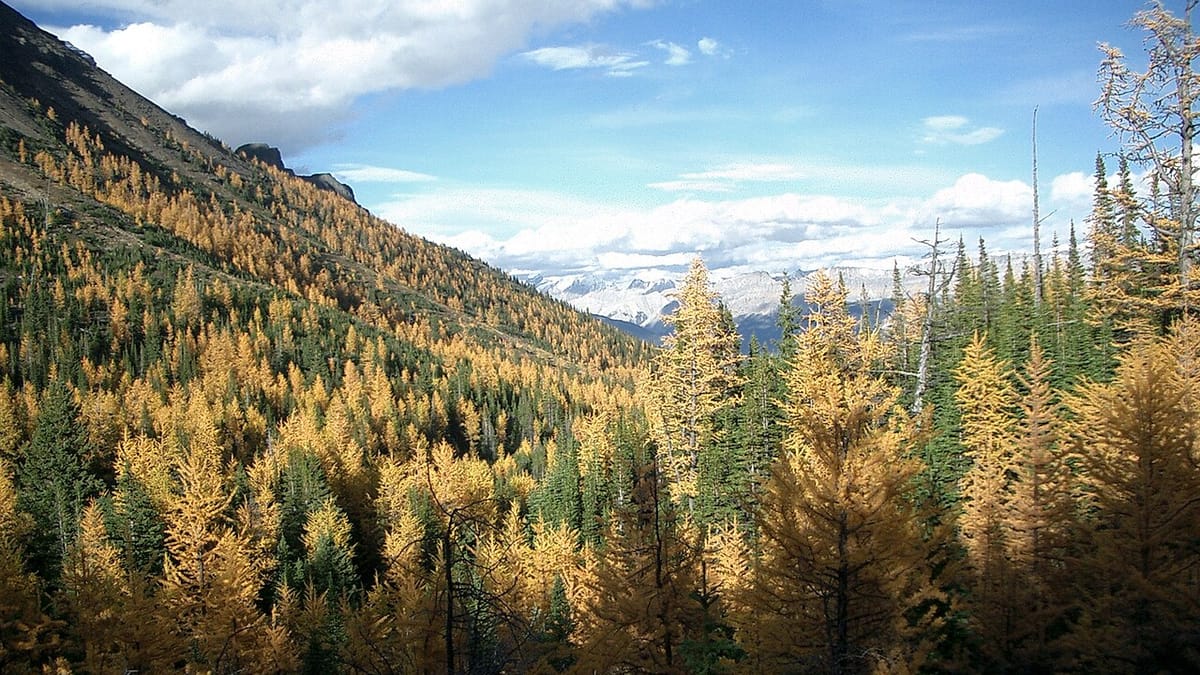
Two carotenoid types split the color between them: carotenes, which lean orange, and xanthophylls, which lean yellow. Both are chemically sturdy and hold up well after chlorophyll has already broken down, which is why they read as clean, even color rather than a fading gray-green. Birches, hickories, aspens, and tulip poplars all lean on this same unmasking. What you're seeing on a golden birch hillside was sitting in every one of those leaves back in July, waiting for the green on top of it to go away.
Red gets manufactured, not revealed
Anthocyanin plays by different rules. Most species don't keep it around in summer leaves at all (a few ornamental cultivars, bred specifically for color, are the exception). It's a water-soluble pigment the tree builds fresh in the cell sap each fall, using sugar as the raw material, and it only shows up where the conditions are right.
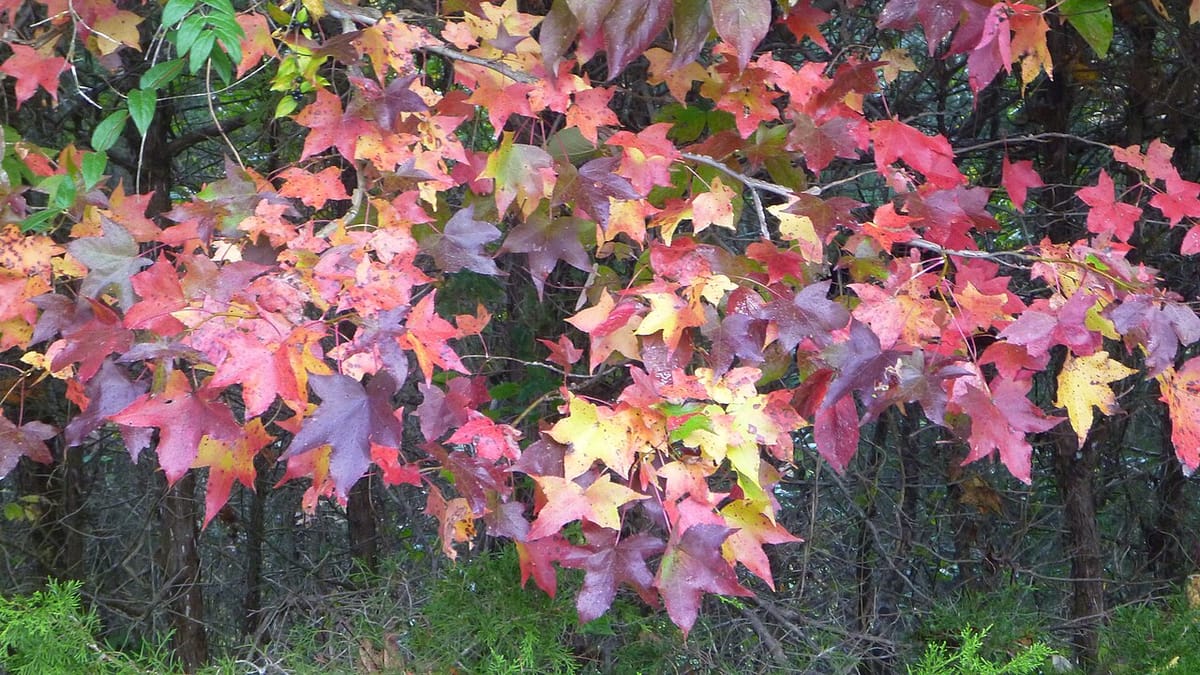
Here's where those conditions come from. As the leaf's base starts sealing shut at the abscission zone, sugar the leaf is still producing has nowhere to go; it backs up inside the leaf instead of flowing out to the rest of the tree. Strong sunlight hitting that trapped sugar triggers anthocyanin synthesis. That's why the reddest leaves on a single maple tend to be the ones catching full sun on the south or west side of the crown, while leaves tucked in shade on the same tree turn yellow-orange instead, or drop with barely any color at all. For the species and site factors behind that split, see why some maples turn red and others turn yellow.
Why build a pigment for two weeks of use
Scientists still argue over why a tree would spend energy making a pigment it's about to drop along with the leaf. A few hypotheses lead the field, none of them fully settled. One holds that anthocyanin works as sunscreen, protecting leaf tissue from light damage while the tree finishes pulling nutrients back out. Another treats it as an antioxidant, mopping up reactive molecules produced as the leaf's internal chemistry winds down. A third, more contested idea suggests bright red signals to certain insects that a tree isn't a good place to lay eggs for the winter. Any of them, or some mix of all three, would explain why the trait persists even though the leaf carrying it has only weeks left.
Brown is what's left when the show ends
One more pigment rounds things out: tannins, bitter astringent compounds that many leaves, oaks especially, carry in real quantity. Tannins don't fade on the same schedule as chlorophyll or anthocyanin, so once the brighter pigments have broken down or never developed much in the first place, tannin's browns and russets are what's left on the branch. That's a large part of why an oak's fall color usually reads as more muted and earthy than a maple's, even on a tree standing right next to it.
Seeing all three at once
The clearest place to watch this chemistry sort itself out is a hillside with more than one species on it. In Vermont, a sugar maple gone deep red will often stand next to a paper birch running pure gold, two completely different pigment stories playing out side by side in the same light. Push north into New Hampshire and you'll find the same contrast on ridge after ridge, sometimes with an oak's brown holding on at the tree line below both of them. The New England fall foliage guide maps out where to find that mix, and the full rundown of what triggers the color change in the first place is in why leaves change color.
Frequently asked
- What causes fall leaves to turn yellow?
- Carotenoid pigments that were already in the leaf all summer, doing work alongside chlorophyll. Chlorophyll's green normally overwhelms them, so once chlorophyll breaks down in fall, the yellow and orange underneath simply becomes visible. No new pigment gets made; the leaf was carrying it the whole time.
- Why do only some leaves turn red?
- Red comes from anthocyanin, a pigment most leaves don't carry in summer at all. Trees build it fresh in autumn, and only in leaves that catch strong sun while sugar gets trapped behind the closing leaf stem. Shaded leaves on the same tree often skip red and go straight to yellow.
- Does the same tree turn the same color every year?
- Not exactly. Anthocyanin production responds to sunlight and trapped sugar, so a run of bright, cool days tends to produce deeper red than a cloudy, mild stretch. The tree's genetics set the range of colors it's capable of; the weather in a given year decides how far into that range it gets.
- What pigment makes leaves brown?
- Tannins, a bitter compound already present in many leaves, especially oaks. Tannins don't fade the way chlorophyll and anthocyanin do, so once the brighter pigments break down or never fully develop, the tannin's brown and russet tones are what's left standing at the end of the season.
Regions in this article
More in Leaf Science
Leaf Science
Evergreen vs. Deciduous: Why Some Trees Keep Their Leaves
Dropping every leaf each fall looks wasteful, and keeping them through winter looks risky. Both strategies work, and the tradeoff comes down to leaf economics.
2026-07-17 · 4 min read
Leaf Science
How to Identify Trees by Their Fall Leaves
A field method for naming trees by autumn leaves: check the branching pattern first, then leaf shape, then color, and most common species sort themselves out fast.
2026-07-18 · 6 min read
Leaf Science
How Trees Know It's Autumn: The Science of Shorter Days
Fall color isn't triggered by cold. Trees measure night length with a pigment called phytochrome, then seal off each leaf at the abscission zone.
2026-07-17 · 8 min read