Leaf Science
Why Some Maples Turn Red and Others Yellow
By Benjamin Janes · Published
· 5 min read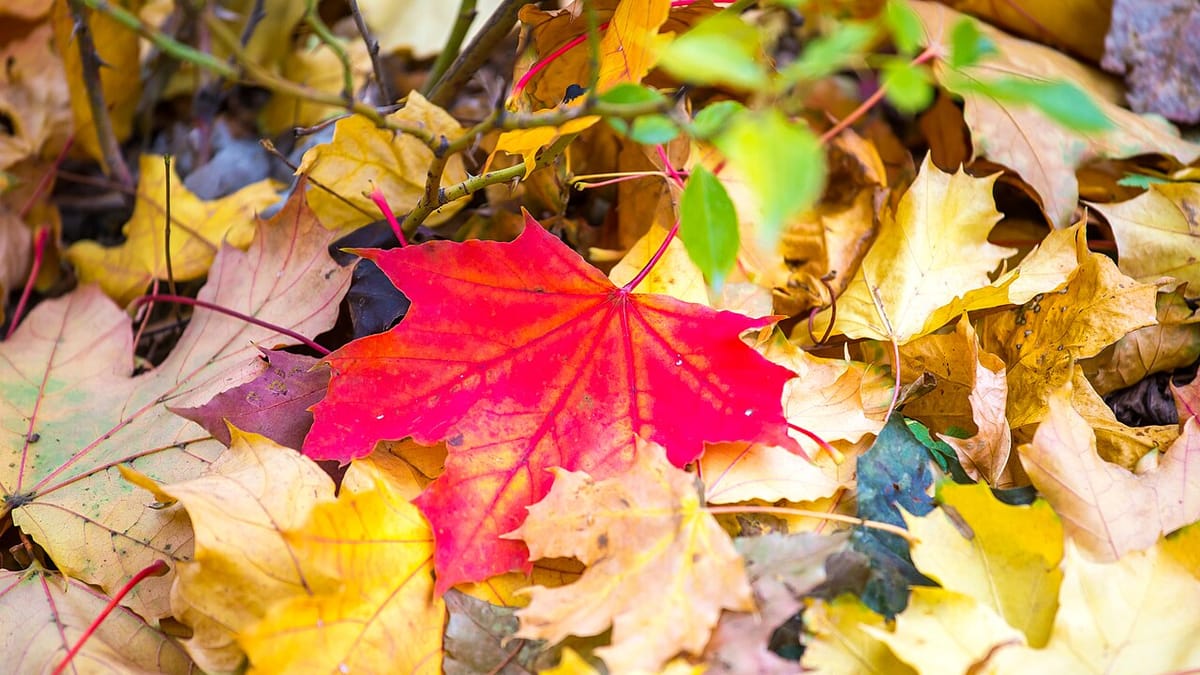
Two sugar maples on the same block can finish fall looking like different species: one blazing red, one honey gold. The gap isn't random. It comes from a mix of species genetics, individual genetics within that species, how much sun each tree's leaves catch, and what's happening in the soil underneath.
The same genus runs a different pigment budget
Not every maple is built to turn red. Sugar maple (the classic New England species) can run anywhere from gold through orange into a deep red-orange, and often does all three on one tree at once. Red maple, despite the name, is the least predictable of the common species: some individual trees turn a reliable, brilliant scarlet every year, while others grown from the same batch of seed go yellow or a muted orange instead. Silver maple, common along rivers and in older neighborhoods, is a weak color performer generally, drifting to a pale, washed-out yellow most years. Norway maple, planted widely as a street tree but not native to North America, tends to finish in plain yellow too, and in some years barely colors at all before dropping.
The leaves themselves offer a shortcut for telling these species apart before any of them color. Sugar maple has a classic five-lobed leaf with smooth, rounded gaps between the points, the shape on the Canadian flag. Red maple's leaf is smaller, usually three-lobed with sharper, saw-toothed edges. Silver maple cuts even deeper between its lobes and flashes a pale, silvery underside when the wind turns the leaf over, which is where the name comes from. Once you can call the species from the leaf shape alone, its fall color stops looking random and starts looking like exactly what that species usually does.
Ornamental Japanese maple sits apart from all of them. Many popular cultivars have been bred specifically to hold anthocyanin, the red pigment, through much of the growing season rather than manufacturing it only in fall, which is why some stay reddish purple from spring straight through to leaf drop. That's selective breeding for a trait the wild species only shows briefly, not a different fall process.
Why "red maple" doesn't guarantee red
Red maple's unpredictability comes down to genetics within the species rather than anything about site or weather. A seed-grown red maple carries a mix of genes from two parent trees, so its fall color is close to a coin flip, weighted by whatever its parents happened to produce. Growers who want a guaranteed red tree skip seed altogether and propagate from cuttings taken off a proven, reliably scarlet parent tree, which is why nursery cultivars like October Glory or Red Sunset color the same way every single year. A seed-grown red maple planted by a previous homeowner decades ago carries no such guarantee, which is part of why one yard's "red maple" can turn a disappointing yellow while the neighbor's, an actual cultivar, goes brilliant red on schedule.
Same tree, two colors at once
Even within one reliably red-turning tree, color depends on exactly which branch you're looking at. Anthocyanin only forms where sugar built during the day gets trapped in the leaf, behind an abscission layer starting to close, and where strong sunlight then acts on that trapped sugar. A maple's outer, south-facing branches typically get both ingredients in full: plenty of sun and a leaf's own sugar backed up with nowhere to go. The tree's shaded, interior branches, or the side facing a building or a denser neighbor, often skip red almost entirely and go straight to the yellow-orange of carotenoids that were there all along. The chemistry behind both pigments gets a fuller treatment in leaf pigments explained, including why yellow is a color that was hiding in the leaf all summer while red gets built fresh each fall.
What the soil is doing underneath
Site conditions shift the balance too. Maples growing in drier, leaner, slightly acidic soil often turn redder than the same species planted in rich, well-watered ground, likely because leaner conditions concentrate sugar in the leaf rather than diluting it. Mild drought stress earlier in the growing season can push in the same direction. Severe stress works the other way: a tree struggling hard enough may drop its leaves early, brown and undercolored, before the anthocyanin-building process has time to finish. A little hardship seems to sharpen maple color; a lot of it cuts the display short.
Weather layers on top of all this tree by tree. A fall with warm, sunny days and cool nights tends to favor the reddest maples in a stand, since that combination builds sugar fast during the day and keeps it locked in overnight when a leaf's own respiration would otherwise burn some of it off. A gray, mild, rainy stretch during the same weeks can leave even a proven red cultivar duller than usual that particular year, though it will typically be back to form the next fall once the weather cooperates again.
Where to watch the split play out
Vermont is sugar maple country almost by definition, and a single ridge there can show the full range from gold to scarlet in the same stand, tree to tree, branch to branch. North across the border, Québec — Laurentians & Eastern Townships leans on the same species along with a heavier mix of red maple, and Montreal parks like Mount Royal put both species close enough together to compare directly on one walk. The interactive foliage map tracks color progression across both regions if you want to time a visit around whichever maple mix you're chasing.
Frequently asked
- Why do some maple trees turn red while others turn yellow?
- It comes down to which pigment a tree emphasizes and how much sun its leaves catch. Red maples and sugar maples can both manufacture anthocyanin for red color, but only in leaves getting strong sun and trapped sugar. Species like silver maple and Norway maple rarely build much anthocyanin at all, so they default to the yellow of carotenoid pigments underneath.
- Does red maple always turn red in fall?
- No, despite the name. Red maple color is genetically variable from tree to tree; some individuals reliably go brilliant scarlet while others from the same seed source turn yellow or orange. Nurseries get around this by propagating named cultivars from cuttings of proven red trees rather than growing from seed.
- Does soil affect maple fall color?
- It can. Drier, less fertile, slightly acidic soil tends to concentrate sugar in the leaf and push a tree toward redder color, while rich, well-watered soil often produces milder yellow-orange tones. Severe stress works against color instead, since a struggling tree may drop leaves early before full pigment develops.
- Why do two maples of the same species look different in fall?
- Sun exposure is usually the reason. Anthocyanin, the red pigment, needs strong direct light plus sugar trapped inside the leaf to form. A maple's sunniest, most exposed branches typically turn redder than its shaded, interior branches, so one tree can show two different colors at once.
Regions in this article
More in Leaf Science
Leaf Science
Anthocyanins, Carotenoids, and Chlorophyll: Leaf Pigments Explained
Yellow and orange leaves were hiding under the green all summer. Red is different: most trees build that pigment fresh every fall. Here's the chemistry behind both.
2026-07-17 · 4 min read
Leaf Science
Evergreen vs. Deciduous: Why Some Trees Keep Their Leaves
Dropping every leaf each fall looks wasteful, and keeping them through winter looks risky. Both strategies work, and the tradeoff comes down to leaf economics.
2026-07-17 · 4 min read
Leaf Science
How to Identify Trees by Their Fall Leaves
A field method for naming trees by autumn leaves: check the branching pattern first, then leaf shape, then color, and most common species sort themselves out fast.
2026-07-18 · 6 min read