Leaf Science
Why Leaves Change Color: The Science of Fall
By Benjamin Janes · Published
· 5 min read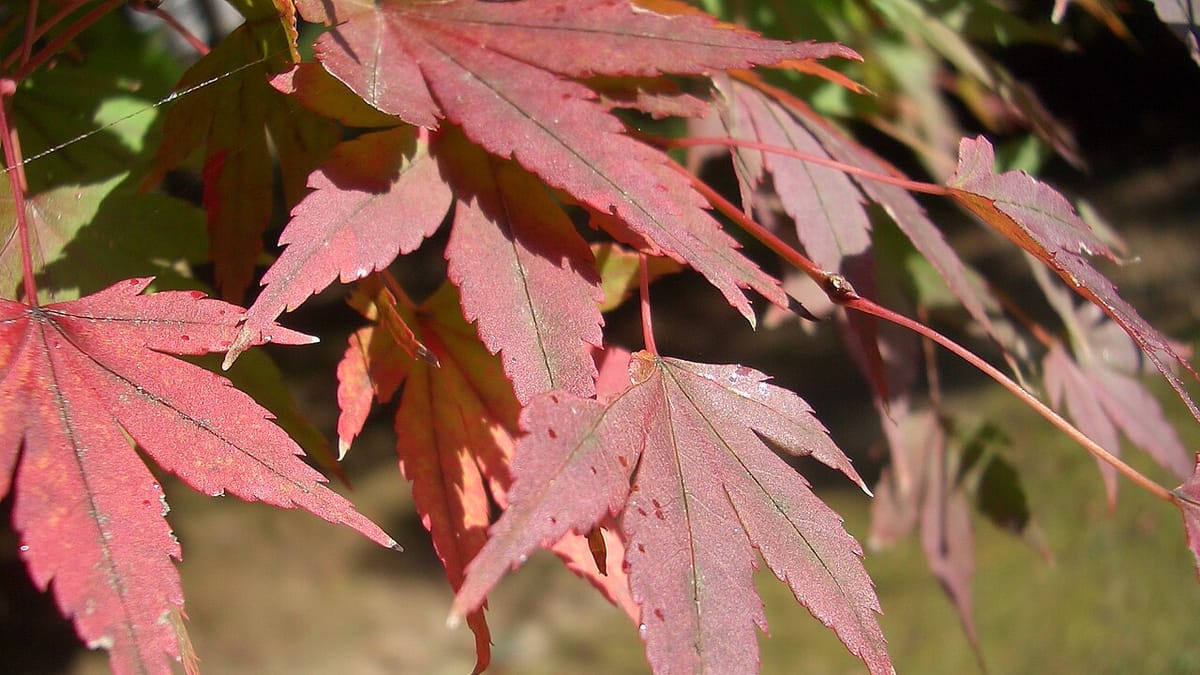
Every fall, the same quiet chemistry runs in millions of leaves at once. Pigments that were there all along get uncovered. A brand-new pigment gets built from scratch. And a tree methodically prepares to let go of the very organs that fed it all summer. Here is what is actually happening between the first cool night and the day a leaf drops.
The trigger isn't cold, it's light
Ask most people why leaves change color and they will say the cold did it. It's an understandable guess, but the real trigger is photoperiod: the steadily shrinking number of daylight hours as the planet tilts away from the sun. Leaves contain light-sensitive proteins that track day length with real precision, and once that count falls past a threshold, the tree begins shutting down chlorophyll production regardless of whether the afternoon feels like summer or already smells like winter.
That's why color starts on roughly the same rhythm every year even during a warm autumn, and it's why a freak early cold snap in August doesn't send a whole forest into color overnight. Temperature matters enormously to how the season plays out, but light is what opens the gate.
Unmasking the yellows and oranges
Chlorophyll is a chemical bully. It's so effective at absorbing red and blue light for photosynthesis, and reflecting green, that it drowns out every other pigment in the leaf all summer. But carotenoids (the same class of pigment that colors carrots and egg yolks) have been sitting in those leaf cells the entire time, quietly helping capture light the chlorophyll misses.
Once day length triggers the tree to stop manufacturing chlorophyll, the existing chlorophyll breaks down faster than it's replaced. As the green fades, the carotenoids that were there all along simply become visible. This is why birches, hickories, and aspens turn a reliable gold nearly every year: their yellow show doesn't depend on ideal weather, because the pigment was never manufactured in autumn at all. It was unmasked. If you want each pigment taken on its own (carotenoids, anthocyanins, and the rest), we cover the pigment chemistry in depth.
Reds are built, not revealed
Anthocyanins work completely differently, and they're the more interesting story. Unlike carotenoids, this pigment usually isn't present in the leaf during summer. It gets manufactured fresh, from scratch, in autumn, and only under the right conditions.
Here's the mechanism: as a leaf prepares to drop, the tree begins forming a corky abscission layer at the base of its stem, gradually restricting the flow of sugars out of the leaf. Sugar starts backing up in the leaf's cells. In bright sunlight, that trapped sugar triggers anthocyanin synthesis: researchers believe the pigment may act as a kind of sunscreen, protecting the leaf's remaining chlorophyll long enough to reclaim a bit more energy before the leaf falls. Because this reaction depends on direct sunlight, a maple's outer, sun-exposed leaves can flare brilliant crimson while leaves tucked in interior shade on the very same branch stay yellow or dull.
Why cool nights and sunny days make the reds pop
The best color years share a specific weather pattern: warm, sunny days paired with cool (not freezing) nights, repeated over several weeks. Sunny days maximize photosynthesis, loading leaves with sugar. Cool nights slow the movement of that sugar out through the stem, letting it accumulate exactly where anthocyanin production needs it. Put those two conditions together for a few weeks running and you get the saturated reds and oranges that make a hillside look lit from within.
Break that pattern and the show suffers. A string of warm, humid nights lets sugar drain out of the leaf before it can trigger much pigment. An abrupt hard freeze can kill leaf tissue outright before the color-change process finishes, skipping straight to a limp brown drop.
Why a drought year disappoints
Trees under drought stress are triaging, not performing. When soil moisture drops too low for too long, a stressed tree often forms its abscission layer early and sheds leaves before the carotenoid unmasking and anthocyanin synthesis have run their course. Drought-curled leaves frequently skip the vivid stage entirely and go straight to a dull, crisped brown.
The ideal season is a middle path: enough rain through summer to keep trees healthy, followed by a dry, sunny, cool-nighted autumn. Too little water and the show gets cut short; too little sun in autumn and the reds never fully develop even if the tree is perfectly healthy.
Why New England out-reds Europe
This comes down to which trees dominate the forest. New England's hillsides are thick with sugar maples and red maples, both prolific anthocyanin producers, mixed at close range with birch, oak, and aspen. It's a genuinely varied palette from ridge to ridge. Vermont's Green Mountains and the dense sugar maple stands of Québec owe their saturated reds directly to that species mix.
Much of lowland Europe, by contrast, is dominated by beech. Beech trees make very little anthocyanin. Their leaves transition from green to yellow to a russet, tannin-driven bronze rather than true red, handsome in its own right, but a fundamentally different chemical story. Walk the beech-covered slopes of the Black Forest in autumn and you'll see gold, copper, and rust rather than New England's crimson, not because the season is somehow lesser, but because beech and maple are running two different pigment programs entirely.
The abscission layer: how a tree lets go
The same structure driving the red-pigment story is also the tree's exit plan. Over several weeks, cells at the base of each leaf stem form a specialized abscission layer: part valve, part scar tissue in progress. It restricts sugar outflow, which feeds anthocyanin production, and it also severs the leaf's vascular connections one cell layer at a time.
Once that layer is complete, the leaf's connection to the branch is reduced to almost nothing, and a gust of wind or the leaf's own weight finishes the job. Underneath, the tree has already sealed the wound, protecting itself from moisture loss and disease all winter. A falling leaf isn't damage. It's the plan working exactly as intended, timed weeks in advance by a plant that started counting daylight hours back in summer.
Once you've watched this chemistry in your own backyard, it's worth seeing it at scale. Our field guide to fall foliage photography covers how to capture backlit leaves at their most translucent, and our favorite New England hikes put you directly under the reddest maple canopies described above.
Frequently asked
- Do all trees turn red in fall?
- No. Red requires anthocyanin, a pigment only some species manufacture in autumn: maples, sumac, dogwood, and a handful of oaks among them. Trees without that chemistry, like most birches, hickories, and beeches, go yellow, gold, or brown instead.
- Does cold weather cause leaves to change color?
- Not directly. Shortening daylight is the trigger that starts the process in every tree, on schedule, whether the weather is warm or cold. Temperature mostly affects how vivid the color gets and how long it lasts, not whether it happens.
- Why do some autumns look duller than others?
- Weather earlier in the season sets the stage. A summer drought, an early hard freeze, a stretch of warm cloudy nights, or a wind storm at the wrong moment can all mute color or end the season early, even though the underlying chemistry is the same every year.
- Why do some leaves on the same tree change before others?
- Individual leaves respond to their own light exposure and sugar production. Leaves in full sun on the south or west side of a canopy typically color first and most intensely; shaded interior leaves lag behind and often skip straight to brown.
Regions in this article
More in Leaf Science
Leaf Science
Anthocyanins, Carotenoids, and Chlorophyll: Leaf Pigments Explained
Yellow and orange leaves were hiding under the green all summer. Red is different: most trees build that pigment fresh every fall. Here's the chemistry behind both.
2026-07-17 · 4 min read
Leaf Science
Evergreen vs. Deciduous: Why Some Trees Keep Their Leaves
Dropping every leaf each fall looks wasteful, and keeping them through winter looks risky. Both strategies work, and the tradeoff comes down to leaf economics.
2026-07-17 · 4 min read
Leaf Science
How to Identify Trees by Their Fall Leaves
A field method for naming trees by autumn leaves: check the branching pattern first, then leaf shape, then color, and most common species sort themselves out fast.
2026-07-18 · 6 min read