When do the leaves change in Quebec City?
Old Québec under peak color is hard to beat: sugar maples ignite the Laurentians and Jacques-Cartier valley in late September, and the walled city's parks and the Plains of Abraham follow through the first week of October.
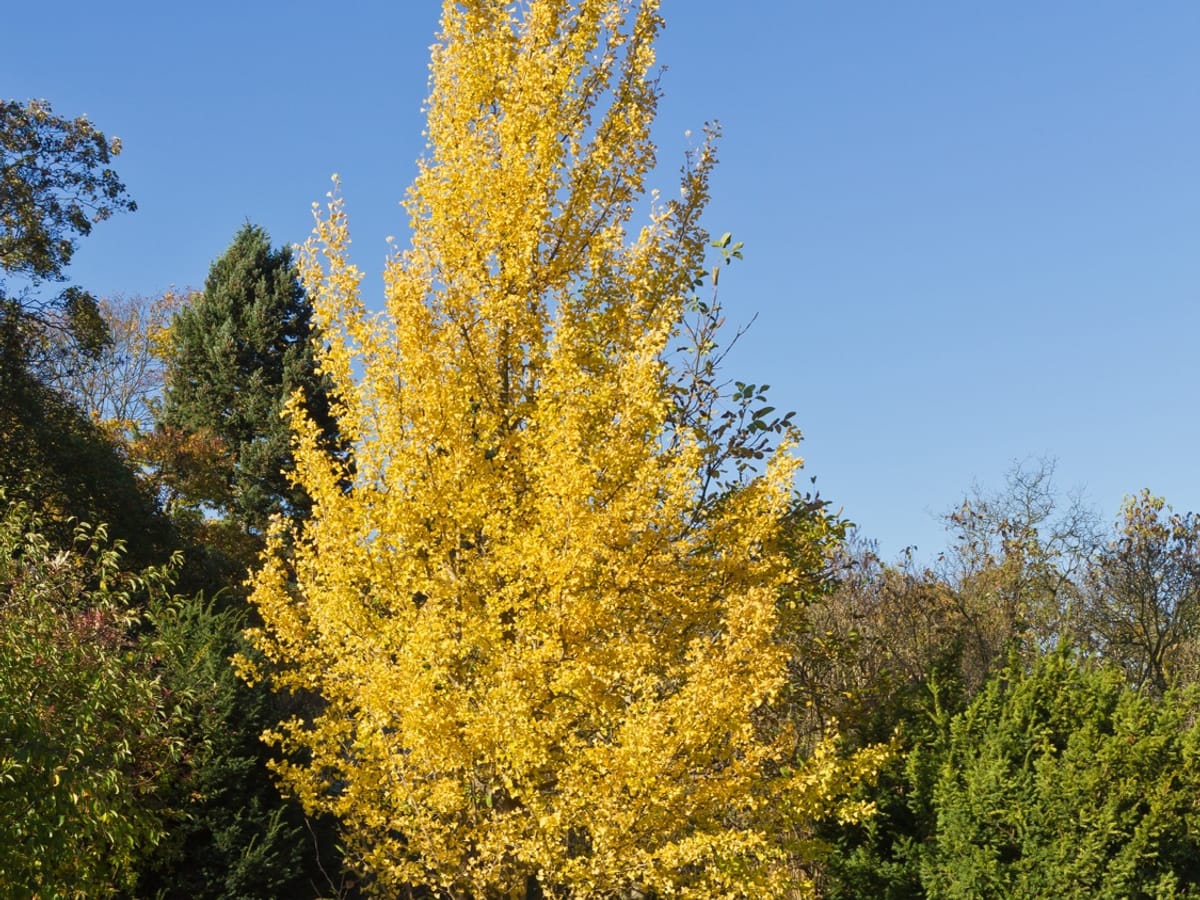
Peak: October 4–October 14
Color builds from September 24 · mostly bare by October 29
Sampled at Quebec City’s own coordinates rather than a regional average. Dates are computed for Quebec City itself at 51 m elevation. Street trees vary block to block, so check locally before you plan a weekend around it.
Québec — Laurentians & Eastern Townships is sampled at 359 weather points, with no published peak dates to correct it against yet. Québec — Laurentians & Eastern Townships is running 3 days earlier than its own average this year. Peak dates spread about 20 days inside Québec — Laurentians & Eastern Townships, so the high ground turns well before the valleys. How the forecast works
Fall activities in Quebec City
Drag the date slider to see when color moves through the country around Quebec City, or tap a pin for that stop’s own peak window.
Québec — Laurentians & Eastern Townships
579 kmPeak September 14
The Laurentians and Eastern Townships turn a deep, saturated red thanks to dense sugar maple stands, with Mont-Tremblant a hub for leaf-peeping drives and gondola rides.
New Brunswick
369 kmPeak October 12
Sugar maple ridges along the Saint John River and the Bay of Fundy coastline make New Brunswick one of Atlantic Canada's earliest and most reliable color shows.
Maine
231 kmPeak October 12
Maine's mix of maple, birch and coastal spruce gives Acadia National Park and the western mountains an early, crisp foliage season.
Vermont
327 kmPeak October 9
Vermont's sugar maples turn the Green Mountains red and gold, peaking in early-to-mid October along Route 100.
Where locals go
Quebec City Fall Foliage: Old City Color and Day Trips
Quebec City might be the best fall city in eastern North America. Sugar maples spill over stone ramparts and frame the Château Frontenac, a glacial valley of peak color sits under an hour north, and the whole season runs noticeably earlier than New England's, which catches southern visitors off guard every year.
Color over the ramparts
Old Quebec was built for defense and accidentally optimized for October. The fortification walls that ring the upper town carry a walkway along much of their length, and in season you look down from the grass-topped ramparts onto street trees and courtyard maples backed by mansard roofs. Dufferin Terrace, the long boardwalk beneath the Château Frontenac, hangs above the St. Lawrence with color running down the cliffside below; from its far end, the Governors' Promenade stair-steps along the cliff beneath the Citadelle toward the Plains of Abraham, and walking it at golden hour is the best free thing you can do in the city. For the wide shot, ride the ferry across to Lévis and back. The crossing takes minutes, costs little, and gives you the classic composition, the Château above a wall of autumn trees with the river in front, that no viewpoint inside the walls can.
The Plains of Abraham, the city's great lawn
The battlefield where New France effectively fell is now Battlefields Park, and it functions as Quebec City's Central Park: broad lawns rolling toward the river bluffs, allées of hardwoods, joggers and dog-walkers threading the old defensive towers. The maple stands along its edges turn hard and drop bright litter across the grass, and because the park is enormous relative to the old city, it absorbs peak-weekend crowds without ever feeling full. Keep walking west along the bluffs into Sillery and you reach Bois-de-Coulonge, a former lieutenant-governor's estate whose gardens and mature trees make it the locals' quieter alternative when the Plains are busy. Both parks are free, open dawn to dusk, and at their best in the first hours of light, when frost sometimes silvers the lawns while the canopy is still fully lit.
How early the season runs here
This is the planning fact that matters most: Quebec City's window is October 4–October 14, 2026 (forecast), and it lands ahead of nearly everywhere Americans usually chase leaves. The color wave that crosses New England in early and mid October passes through here first; if you time a Quebec trip by the long-weekend habits that work for a drive north from Boston, you will arrive to bare branches on the high ground. The gradient runs downhill and south: the boreal edge north of the city turns first, the Jacques-Cartier valley next, the city's parks after that, and the low farmland of Île d'Orléans last. Built into an itinerary, that gradient is a feature, since even a slightly mistimed week here usually has full peak somewhere within an hour of the ramparts.
The headline day trip: Jacques-Cartier's glacial valley
Parc national de la Jacques-Cartier is the reason to rent a car. Less than an hour's drive north, the highway climbs onto the Laurentian plateau and then the road into the park drops into a deep glacier-cut valley where the Jacques-Cartier River winds between walls of forest. The mix is what makes it: yellow birch and maple blazing against near-black spruce and fir, a two-tone palette you do not get further south, doubled in the river on calm mornings. The Les Loups trail is the marquee hike, a steady climb to ledges that look down the length of the valley, and canoe and kayak rentals on the river run into early fall for those who would rather see the walls from the water. Because the valley sits higher and further north, it peaks ahead of the city, so check September 4–September 24, 2026 (forecast) against your dates and put this day early in the trip. Mornings up here can start near freezing while afternoons stay mild, so pack like a shoulder-season hiker; the fall day-hike packing list covers the layering that this valley demands.
Montmorency Falls, then the bridge to Île d'Orléans
A short drive east of downtown, the Montmorency River drops over a cliff in a single sheer plunge taller than Niagara's, and in autumn the gorge around it fills with color. A cable car climbs one side, a long staircase climbs the other, and a suspension footbridge crosses directly over the crest, close enough to feel the spray on a windy day. The smart move is to pair it with Île d'Orléans, since the bridge to the island leaves from practically the falls' front door. The island is old rural Quebec preserved in amber: a ring road through six villages, and in fall the roadside stands come into their own, apples and fresh cider, squash, late berries, honey, chocolate in Sainte-Pétronille, and the island's celebrated ice cider from orchards that leave fruit hanging for the frost. Sainte-Pétronille's tip also gives you the view back across the water to the falls and the city skyline. Go hungry, bring cash for the smaller stands, and let the loop take the whole afternoon.
The Charlevoix direction
If the valley day lights a fire, Charlevoix is the escalation. Northeast of the city the Laurentians crowd right against the St. Lawrence, and the drive toward Baie-Saint-Paul rolls through big, tilted farmland with the river widening to an inland sea alongside. Baie-Saint-Paul itself is a gallery town with a strong food scene, and two national parks anchor the backcountry: Grands-Jardins, where taiga barrens meet hardwood slopes and the color comes very early, and Hautes-Gorges-de-la-Rivière-Malbaie, where sheer rock walls rise from a flat-bottomed river valley. A tourist train also hugs the shoreline from the base of Montmorency Falls toward Baie-Saint-Paul and La Malbaie, turning the transit itself into the viewing. Charlevoix works as a very long day trip, but it rewards an overnight, and its higher ground peaks ahead of the city, so treat it as an early-window destination.
Pointing the car east instead
Quebec City is also the hinge of a bigger road trip. Follow the south shore of the St. Lawrence east and you are in Bas-Saint-Laurent's farm-and-river country, from which the road bends toward New Brunswick and the long, maple-heavy valley of the Saint John River. Head due south instead and the highway crosses the border into the empty north woods of Maine, some of the least-trafficked big foliage country in the eastern United States. Both directions run on roughly Quebec's early schedule at the start and shade later as you drop south, which makes this one of the few places where a week-long foliage drive can stay near peak the entire way.
Eating the harvest
Fall eating here splits between the postcard and the real thing, and both are worth your time. In the Petit Champlain quarter and along rue Saint-Jean, restaurant menus tilt seasonal, with game, squash, and maple showing up everywhere from tasting menus to bistro plates. For the unfiltered version, the Grand Marché gathers producers from the island and Charlevoix under one roof: cheeses, cider and ice cider, berries, and syrup sold by people who made it. Maple is a year-round constant rather than a fall special, since sugaring season is spring, but autumn is when the rest of the harvest catches up to it. Reserve dinner ahead on peak weekends inside the walls; the old city is small and the tables go early.
Two days, shaped
Day one stays inside and under the walls: ramparts and Dufferin Terrace at first light, the ferry round trip to Lévis mid-morning, the Plains of Abraham and Bois-de-Coulonge in the afternoon, dinner in the lower town. Day two is Jacques-Cartier if the valley still has color, or the falls-and-island loop if the peak has slid downhill to the lowlands. With a third day, add Charlevoix or simply repeat the morning walk, because the light over the river never does the same thing twice.
Quebec City fall kit
- Warm layer and windproof shell for the terrace and the falls bridge
- Real walking shoes for cobbles, stairs, and wet leaves
- Cash for Île d'Orléans farm stands
- Park entry booked ahead for peak weekends
- Cooler bag if you plan to bring cheese and cider home
Pairing it with Montreal
The natural extension is downriver in reverse: Montreal peaks after Quebec City, sits a few hours away by train along the St. Lawrence, and swaps ramparts and glacial valleys for Olmsted's mountain park and one of the continent's great botanical gardens. Start here at peak, finish there at peak, and you will have ridden the color front across the province instead of gambling a whole trip on one week.
Things to do in fall in Quebec City
Orchards, cider, haunts, and harvest season. These are the iconic fall stops within a day trip of Quebec City.
Color nearby peaks October 10
Just downriver from Quebec City, Île d'Orléans has grown apples since the 17th century.
Cidrerie Verger Bilodeau
OrchardColor nearby peaks October 10
This Ile d'Orleans orchard and cidery grows ten apple varieties across six hectares of dwarf and semi-dwarf trees, fifteen minutes from…
Guides
2026 Fall Foliage Forecast: When Leaves Peak in Every State
Our 2026 fall foliage forecast for the US and Canada, region by region, built from ERA5 weather data and a phenology model, with live peak dates on the map.
The Best Fall Hikes in New England
Eight trail-tested fall hikes across Vermont, New Hampshire, Maine, and Massachusetts, from short overlooks to a full above-treeline ridge walk.
Frequently asked
- When do leaves peak in Quebec City in 2026?
- Peak color is predicted for October 4–October 14 (best estimate October 9). Color starts around September 24 and trees are mostly bare by October 29. These dates are computed for Quebec City itself, at 51 m elevation, using the same weather model as the tracker.
- When is fall foliage season in Quebec City?
- Quebec City colors during autumn (September to November). Counting from the first turn to bare branches that is about 35 days, and the best of it falls in the week either side of October 9.
- What's the best foliage near Quebec City?
- Québec — Laurentians & Eastern Townships (579 km, peak ~September 14); New Brunswick (369 km, peak ~October 12); Maine (231 km, peak ~October 12).
- What are the best things to do in fall in Quebec City?
- Beyond the leaves: Île d'Orléans, Apple Orchards (16 km); Cidrerie Verger Bilodeau (17 km). All of them are mapped on this page.
- When do the leaves change in Quebec City?
- Earlier than most visitors expect. Color starts in the highlands north of the city in mid September, the Jacques-Cartier valley typically peaks in late September, and the city's own parks follow from the end of September into early or mid October. Plan a week or two ahead of a comparable New England trip.
- Is Jacques-Cartier National Park worth visiting in the fall?
- It is the single best day trip from the city and one of the best foliage landscapes in eastern Canada: a deep glacial valley where birch and maple burn against dark spruce walls. It peaks earlier than the city itself, so go early in your trip rather than saving it for the last day.
- Can you visit Île d'Orléans without a car?
- A car is the practical answer, since the island is a loop of farm stands, orchards, and villages with no meaningful transit. Guided tours from the city cover the island and Montmorency Falls together in season if you would rather not drive.
- Is Quebec City or Montreal better for fall colors?
- They are different trips. Quebec City puts wild landscapes closer to town and runs earlier; Montreal has the bigger park and garden scene and peaks later. Chained together, starting in Quebec City, they stretch a single peak week into two.