When do the leaves change in Kansai — Kyōto & Nara?
Kyoto's temple gardens turn in a famously precise sequence each November, while Koyasan's cedar-maple mix and the Lake Biwa shoreline extend the region's color for weeks.
Forecast coming soon
Weather data for Kansai — Kyōto & Nara lands with the next model run. Meanwhile, explore the map.
Known for
Things to do in fall in Kansai — Kyōto & Nara
3 iconic stops, including scenic drives, farms, haunts, and the views locals plan their October around.
Arashiyama
Historic townKyoto's western district pairs a famous bamboo grove with maple-lined temple grounds.
Tofuku-ji
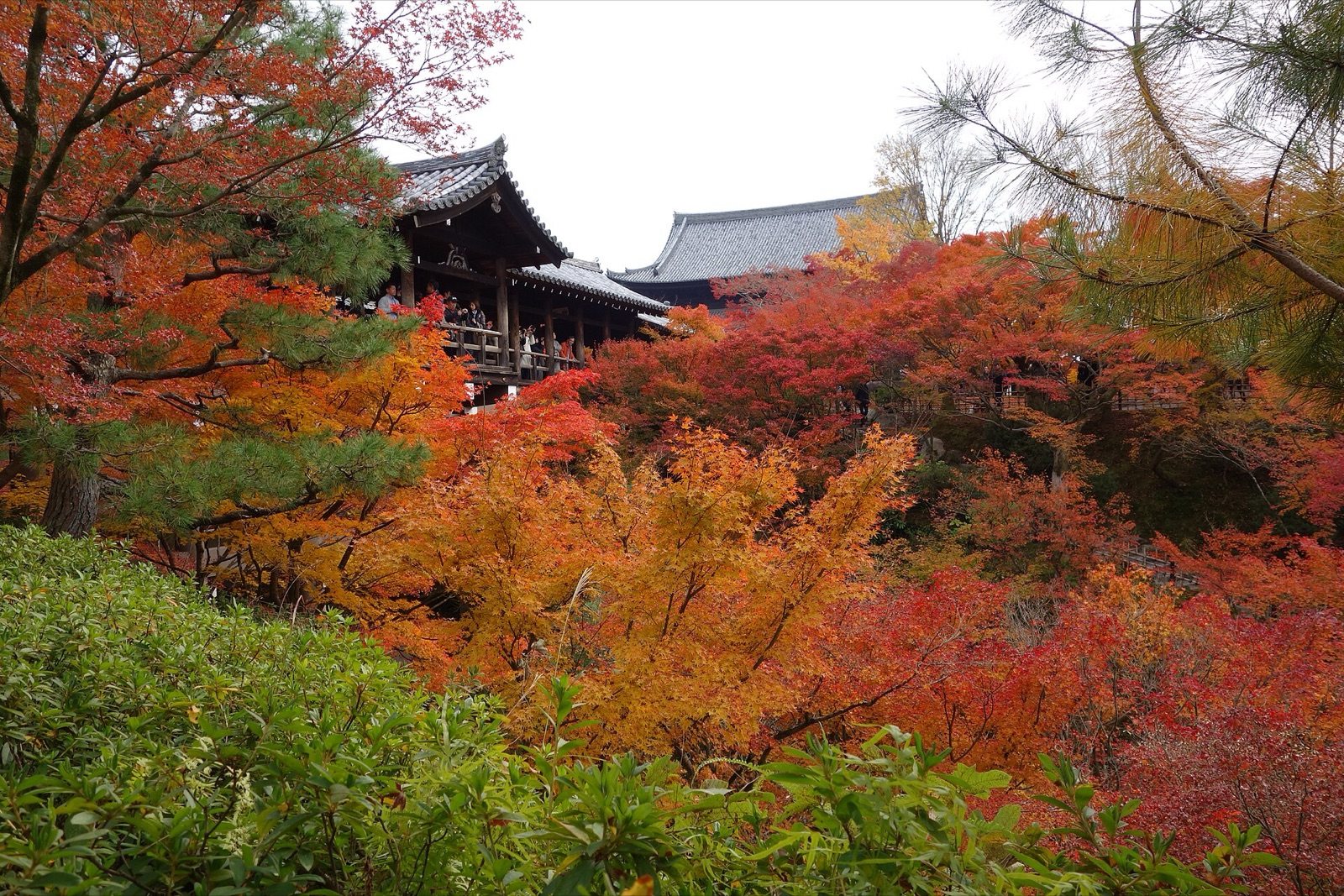
GardenKyoto's largest Zen temple complex hides a maple-choked ravine crossed by the wooden Tsutenkyo bridge, the shot that anchors most magazine…
Kiyomizu-dera
GardenThe wooden veranda of this UNESCO temple juts over a hillside of maples above Kyoto, lit for night viewing during peak color in mid-to-late…
Kyoto & Kansai in Autumn: The Complete Guide
Kyoto in autumn is Japan's most photographed season in its most photographed city: centuries-old temple gardens built specifically to frame maple color against raked gravel, still water, and weathered wood. Kansai adds Nara's deer parks, Koyasan's cedar-maple forests, and Lake Biwa to the loop.
What koyo and momijigari actually mean
Koyo (紅葉) is the general word for autumn leaf color, the seasonal counterpart to sakura. Momijigari, literally "maple hunting," is the specific cultural practice of traveling out to view it, a tradition with roots in Heian-era court poetry that predates leaf-peeping as a Western concept by close to a thousand years. In Kansai this isn't a casual afterthought to a trip; it is the reason many travelers build their itinerary around a single week. Temples that get little attention in spring or summer, when cherry blossoms and green moss carry the gardens, become the main event once the momiji (Japanese maple) turns. Garden designers at places like Tofukuji planted maples specifically for this moment, arranging them in valleys and along streams so the color reflects and doubles in still water. Understanding this history changes how you look at the crowds: you are not competing with tourists for a photo op, you are participating in a viewing ritual that Kyoto has been perfecting since before Kyoto was the capital of anything. Locals track the koyo front the same way they track the sakura front in spring, watching daily updates as color moves down from the mountains, and seasonal menus, sweets, and even train announcements shift to acknowledge it. Treat it with the same seriousness the city does and the crowds start to feel less like an obstacle and more like evidence you picked the right week.
The essential Kyoto temple maples, roughly in turning order
No two temples peak on exactly the same day, which is part of what makes a multi-day Kyoto stay worthwhile instead of a single frantic afternoon.
Tofukuji is usually the headline stop and among the earliest of the big-name gardens to turn. Its Tsutenkyo Bridge crosses a ravine, the Tsutenkyo Valley, absolutely packed with maples, and the view from the bridge down into that ravine is the single most reproduced image of Kyoto autumn. Arrive at opening to get the bridge without a shoulder-to-shoulder crowd.
Eikando (Zenrin-ji) built its reputation on quantity and drama. Roughly three thousand maples cover the temple grounds, and during peak weeks it runs night illuminations, when the trees are lit from below and the reflecting pond turns them into mirror images. The night session requires a separate ticket and closes daytime visitors out earlier than usual, so check the schedule before you plan your afternoon.
Kiyomizu-dera, on its hillside stage of wooden pillars above eastern Kyoto, gives you the wide shot: the temple's veranda looks out over a valley of maples with the city beyond. It also runs night illuminations during peak color, and the walk up through Higashiyama's preserved streets at dusk is worth the trip on its own.
Arashiyama, on the western edge of the city, pairs its famous bamboo grove with maple-lined hillsides along the Hozugawa river. The Togetsukyo Bridge crossing and a slow boat ride on the river both frame the color well, and Arashiyama tends to hold color a little later into the season than the eastern temples, which makes it a useful second stop if you're staying more than a few days. Tenryu-ji's garden, right at the entrance to the bamboo grove, borrows the hillside behind it as part of its own composition, and the hilltop villa and garden at Okochi Sanso, a short climb above the grove, gives a quieter view back over the valley for the cost of an extra half hour.
Kansai — Kyōto & NaraTiming your trip against the rest of Japan
Kyoto sits in a basin that traps summer heat late into the year, which delays its maples relative to the mountains and northern prefectures. If you've read up on foliage further north, in the Japanese Alps or up in Tōhoku, expect Kansai to lag those regions by several weeks. The same basin effect puts Kyoto noticeably behind Tokyo's parks and gardens too: the koyo front that starts in the mountains and works its way south and downhill reaches Kyoto's city temples toward the tail end of the national season, with Kyushu and western Japan trailing even further behind. If your dates are fixed and you're choosing between a Kyoto-first or Tokyo-first itinerary, building in that lag matters more than any other planning decision you'll make. Kansai — Kyōto & Nara reflects the current season model for the city temples specifically; gardens at higher elevation nearby will turn earlier than that window.
Nara's deer park and the Koyasan detour
Nara, a 45-minute train ride from Kyoto Station, pairs its famous free-roaming deer with Nara Park's own maple and gingko color and the covered approach to Todaiji's Great Buddha Hall. The deer are unfazed by camera crowds and will approach for the rice crackers sold throughout the park, though they do occasionally nip at anything sticking out of a bag, so hold food up and away rather than at hip level. Kasuga Taisha, a walk beyond Todaiji through forest that turns amber around the shrine's approach, lines its paths with thousands of stone and bronze lanterns, a striking backdrop that gets a fraction of the foot traffic the deer photo spots do. It's an easy half-day trip and pairs naturally with a Kyoto base.
Koyasan, the mountaintop temple complex and headquarters of Shingon Buddhism, is a longer commitment but a genuinely different experience. Getting there involves a train transfer to a cable car up the mountainside, and the reward is a forest of towering cedars mixed with maples around Okunoin, the temple's vast cemetery, where moss-covered stone lanterns and monuments stretch for over a kilometer under the canopy. Because of the elevation, Koyasan's color turns meaningfully earlier than Kyoto's city temples, so it's worth checking separately rather than assuming it tracks the city. Many visitors stay overnight in a temple lodging (shukubo), which includes a vegetarian kaiseki-style dinner and an early-morning fire ceremony, and it's the single best way to experience the mountain without the day-trip crowds that arrive by mid-morning and thin out by late afternoon.
Lake Biwa: a longer, calmer season
Japan's largest lake sits just northeast of Kyoto, and its shoreline and surrounding hills extend the region's color well past the city's peak weeks. Hieizan, the mountain rising from the lake's southwestern shore and home to the temple complex of Enryakuji, gives you elevation-driven early color and views back down over the water. The lake's relative distance from central Kyoto keeps its shoreline towns and parks far quieter than the marquee temples, which makes it a good pressure-release valve on a trip that otherwise feels like a queue-management exercise.
A crowd strategy that actually works
Kyoto's autumn crowds are not a minor inconvenience; they are the defining logistical fact of the season, and pretending otherwise leads to a miserable trip. Three things help.
Go at dawn. Most major temples open around sunrise or shortly after, and the difference between an 8am arrival and a 10am arrival at Tofukuji is the difference between an open bridge and a shuffling line. Morning light also happens to be the best light for photographing maples against gravel and water.
Build in lesser-known temples deliberately, not as a backup plan. Genko-an, in northern Kyoto, is known for two round windows, one cut square to represent confusion and one circular to represent enlightenment, both framing a small maple garden, and it draws a fraction of Tofukuji's crowds despite being just as photogenic. Seek out temples like this rather than treating your itinerary as a checklist of the five most famous names. Weekday visits also help more than most travelers expect, since domestic tourism from Osaka and beyond spikes hard on weekends during peak weeks, and shifting a marquee-temple visit from a Saturday to a Tuesday can be worth more than any early alarm.
Split your week between the city and the surrounding hills. Days that alternate a marquee temple in the morning with a quieter destination, Lake Biwa, Ohara, or the Sagano bamboo path outside peak hours, in the afternoon keep the trip from feeling like a single long line. For general strategies on shooting color without fighting a crowd for your angle, the site's fall foliage photography guide has technique notes that apply well beyond New England.
Kyoto autumn day-trip kit
- IC card loaded with extra fare
- Cash for temple entry fees (many are cash-only)
- Compact tripod-free camera setup for crowded viewpoints
- Light layers for a cold morning, warm midday
- Advance tickets for night illuminations
Temple etiquette worth knowing before you go
Most Kyoto temples charge a modest entry fee, paid at the gate, and expect quiet, unhurried movement through the grounds rather than the loud enthusiasm that's normal at outdoor scenic overlooks elsewhere. Remove shoes wherever there's a raised wooden floor, photograph respectfully around anyone actively praying, and stay on marked paths through moss gardens, which are far more fragile than they look and take decades to recover from foot traffic. Drones are banned at essentially every temple in the city. None of this is unusual to Kyoto specifically, but the volume of autumn visitors makes lapses more noticeable and more disruptive than they'd be in a quieter month.
Getting around: IC cards, passes, and buses
For a Kansai-only autumn trip, a rechargeable IC card (Icoca, issued locally, or any of the mutually compatible cards like Suica) covers trains, subways, and most city buses with a simple tap, and it's the easiest option if you're not also traveling to other regions of Japan. If your trip extends beyond Kansai, price out a national JR Pass against point-to-point tickets before buying; the pass's economics have shifted and it no longer pays for itself on shorter regional loops the way it once did. Regional options, like a Kansai-area rail pass, often work out cheaper for a Kyoto-Nara-Osaka-Koyasan circuit specifically. Kyoto's city buses get seriously congested during peak color, especially on routes serving Kiyomizu-dera and Arashiyama, so build extra time into any bus-dependent afternoon and default to the subway or a short walk where a route allows it. Central Kyoto is also flatter and more walkable than its temple map suggests; the Higashiyama district linking Kiyomizu-dera down toward Gion covers on foot in under an hour what looks like a multi-bus itinerary on paper, and walking it means you can duck into whichever side street or smaller temple happens to be glowing that afternoon.
Kaiseki season
Autumn is prime kaiseki season in Kyoto, the multi-course, ingredient-driven style of dining that treats each course as a reflection of the moment: matsutake mushroom, chestnut, persimmon, and the season's first sansai greens all show up on menus specifically because they're at their best in October and November. Many kaiseki restaurants built around temple or garden views time their seating to daylight so you're eating with a maple garden in frame, which turns dinner into as much of a foliage-viewing event as the temple visits earlier in the day. Reservations for well-known kaiseki restaurants during peak weeks fill weeks in advance, so this is worth booking before you land rather than improvising once you're in the city. Budget travelers shouldn't feel locked out of the seasonal eating, either: obanzai, Kyoto's home-style small-plates tradition, runs the same seasonal ingredients through a far more casual and affordable format, and plenty of counter-seat obanzai spots take walk-ins even during the busiest weeks. If you're building out a broader itinerary before the trip, the site's piece on why leaves change color is a useful primer for explaining the biology behind what you're seeing to anyone traveling with you who wants the science along with the scenery.
Kansai rewards a slower trip more than almost anywhere else on this site: the temples aren't going anywhere, the crowds thin predictably at the edges of the day, and the region's layered elevation, from Lake Biwa's shoreline up through the city basin to Koyasan's mountaintop, means there's rarely a bad week to be here between the first color in the hills and the last leaves falling in the city gardens.
Understand the season in Kansai — Kyōto & Nara
Short explainers on why and when the color arrives here.
Traditions Around the World
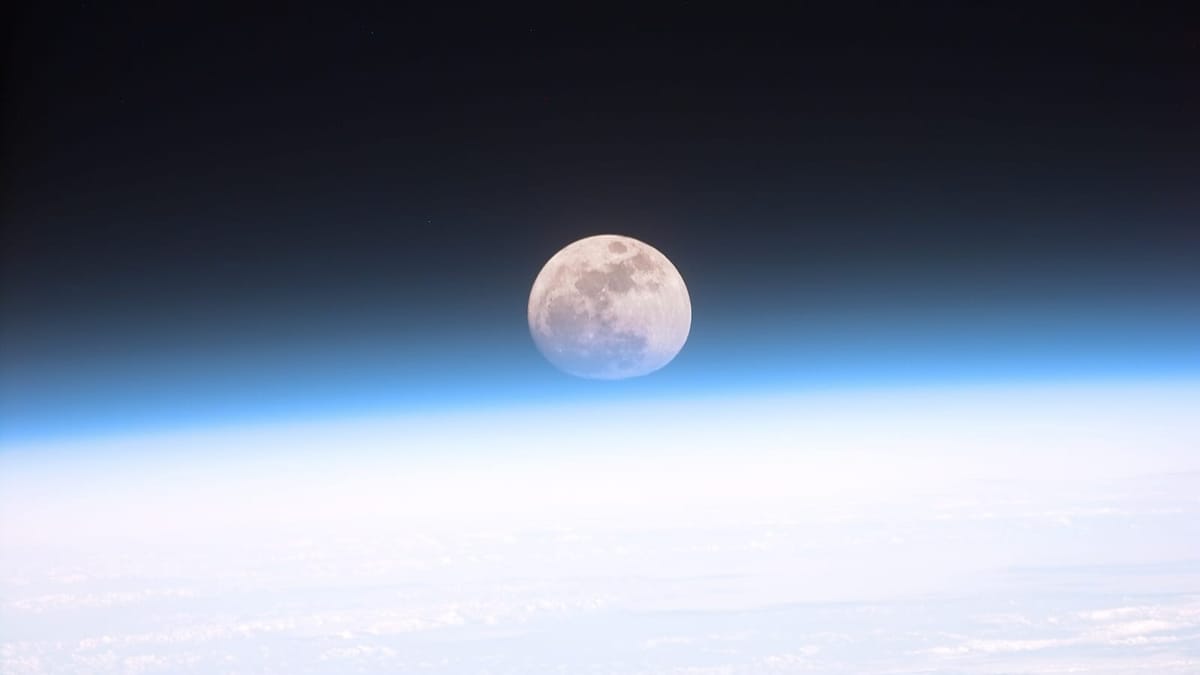
Tsukimi: Japan's Autumn Moon-Viewing Tradition
Tsukimi is Japan's autumn tradition of watching the harvest moon, marked with rice dumplings, pampas grass, and a lunar calendar that shifts the date every year.
2026-07-18 · 5 min read
Traditions Around the World
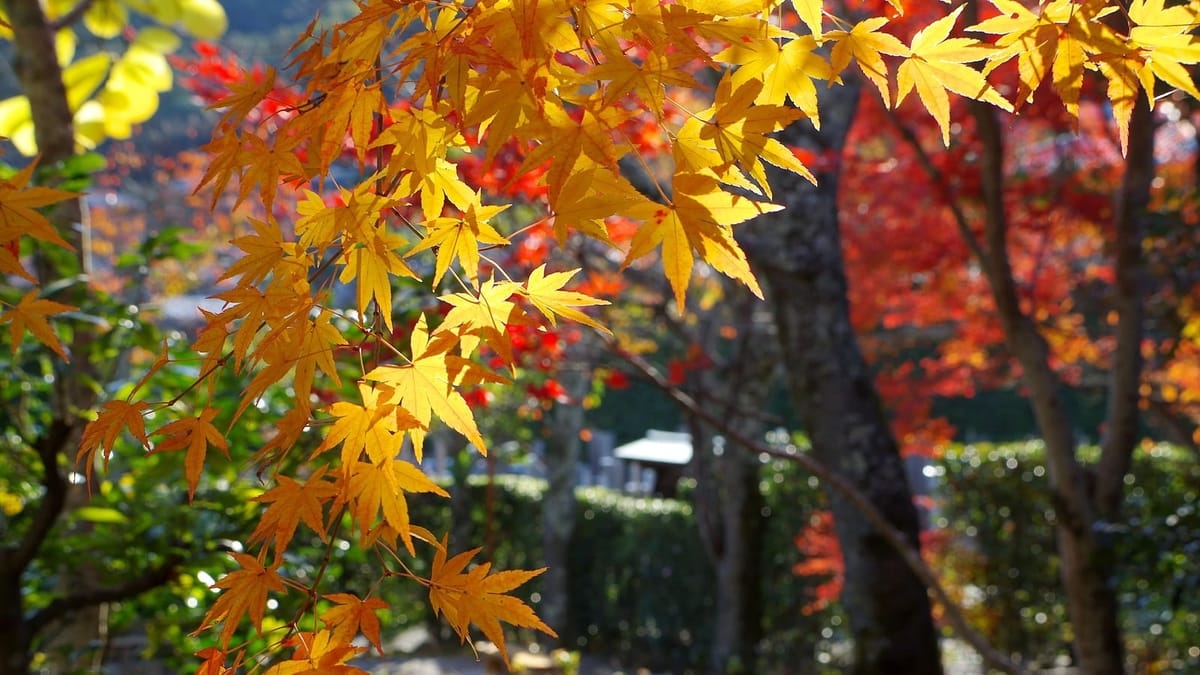
Momijigari: Japan's Thousand-Year Art of Leaf Hunting
Momijigari is Japan's centuries-old custom of autumn leaf viewing, from Heian court poetry to modern forecast maps and Kyoto's temple gardens.
2026-07-17 · 7 min read
Frequently asked
- What are the best things to do in fall in Kansai — Kyōto & Nara?
- The iconic stops: Arashiyama, Tofuku-ji, Kiyomizu-dera. Every one is mapped on this page with its peak-color timing.
- When does koyo season peak in Kyoto?
- Kyoto's temple maples typically turn from late November into early December, later than most of the rest of Japan because the city sits in a low, warm basin. Higher-elevation spots like Koyasan and the northern hills color a few weeks earlier.
- Is Kyoto autumn foliage better than Tokyo's?
- They are different seasons more than a better-or-worse comparison. Kyoto's basin geography and dense concentration of maple-planted temple gardens produce a more saturated, curated color show, but it also arrives later and draws heavier crowds than Tokyo's parks.
- How many days do I need for Kyoto and Nara in autumn?
- Four full days in Kyoto plus one day trip to Nara is a comfortable minimum. Add two more days if you want to include Koyasan or a loop around Lake Biwa without rushing.
- Do I need a JR Pass for a Kansai autumn trip?
- Only if you are also traveling beyond the region, since national JR Passes stopped being the cheap option for Kansai-only itineraries. A regional Kansai-area pass or a simple IC card covers Kyoto, Nara, Osaka and Koyasan more affordably.
- Can I see illuminated maples at night in Kyoto?
- Yes. Several temples, including Eikando and Kiyomizu-dera, run special night illumination periods during peak color with separate evening admission, and they are markedly less crowded than the same gardens at midday.
Nearby & similar
Cities in Kansai — Kyōto & Nara
Local peak timing and things to do in fall, computed for each city.