Foliage Timing & Seasons
When Does Fall Start? Equinox, Meteorological, and Real Autumn
By Benjamin Janes · Published
· 7 min read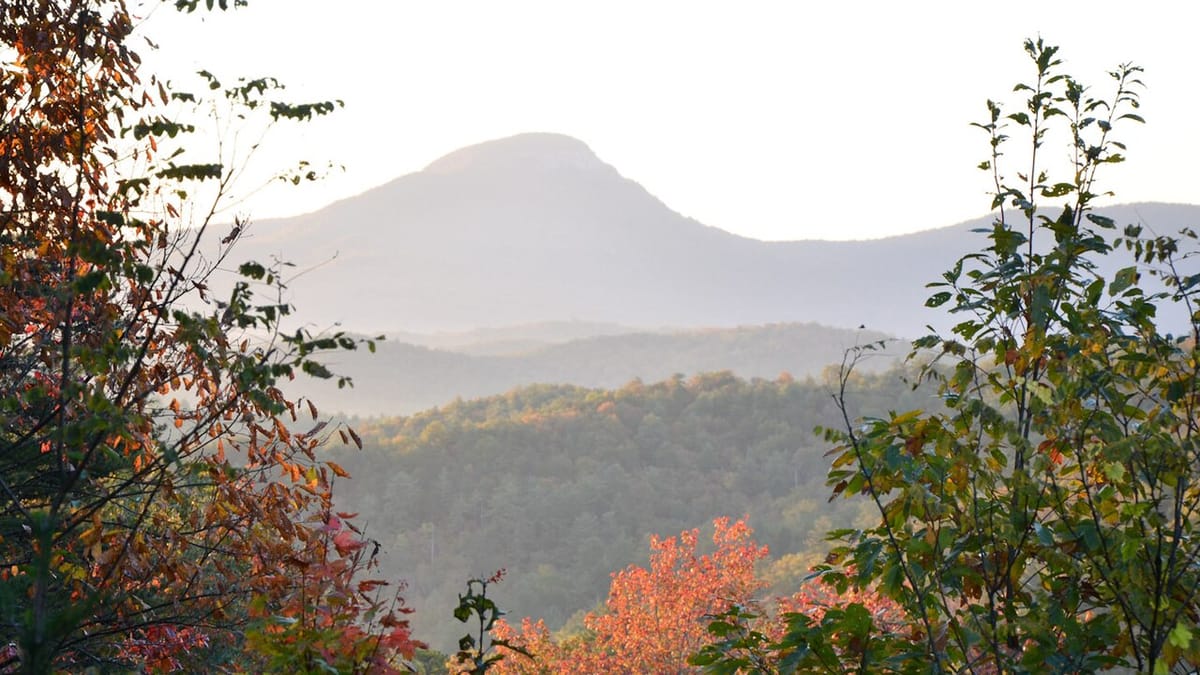
Ask when fall starts and you get three different, correct answers: one from an astronomer, one from a meteorologist, and one from the maple outside your window. Only one of those three actually decides when a hillside turns, and it is not the one printed on your calendar app.
Three calendars, one season
Most of the confusion around "when does fall start" comes from mixing up three separate systems that all happen to use the word fall. Astronomers mark the season by the tilt of the earth relative to the sun, a fixed point in Earth's orbit. Meteorologists mark it by the calendar, in neat three-month blocks, because that makes year-over-year weather statistics easier to compare. And the leaves on the actual trees answer to neither of those. They respond to how much darkness falls each night at their specific latitude and elevation, a signal that has nothing to do with a date on a wall calendar. All three answers are legitimate for what they are measuring. Only the third one tells you anything about when a hillside is about to turn, which is presumably the answer you actually came here for.
The equinox: fall by the sun
The astronomical definition is the one most people learn in school. Fall begins at the September equinox, the point in Earth's orbit when the sun sits directly over the equator and day and night run to nearly the same length everywhere on the planet. It is a precise, physical event tied to orbital mechanics rather than convenience, which is why the exact moment shifts by roughly a day from year to year instead of landing on a fixed date the way a national holiday does. It is also a genuinely global instant: the equinox happens at the same second whether you are standing in Vermont or at the southern tip of South America, even though it means something different in each hemisphere. What it is not is a signal any tree receives. A maple does not know or care that the sun has crossed the equator. It cares about the length of its own local night, which has been creeping longer for weeks by the time the equinox actually arrives.
Meteorological fall: a tidier box for statisticians
Meteorologists use a different, purely administrative definition, and it exists for reasons that have nothing to do with foliage. To make climate records easier to compare, they divide the year into four three-month blocks that align with the calendar rather than the sun: fall runs from the start of September through the end of November. That boundary is bookkeeping, invented so a climatologist can compare this fall's average temperature to last fall's without adjusting for the equinox's slight yearly drift. It is genuinely useful for tracking things like regional temperature trends across decades. It has zero connection to when trees turn. A place can sit deep in meteorological fall for weeks with every tree on the ridge still fully green, especially somewhere well south where the night-length trigger has not arrived yet, or already look like the middle of a hard winter by the time the meteorological season officially ends.
Real autumn: the date the trees keep
The definition that actually matters for a foliage trip is neither of those. Trees run on photoperiod, the length of uninterrupted darkness each night, and they begin shutting down once that darkness crosses a threshold specific to their species and their latitude. That threshold has nothing to do with a fixed calendar date. It arrives earlier the farther north or the higher up a mountain you climb, and later toward the equator and down at sea level. That is why a ridge in a far northern region can already be showing real color while the meteorological calendar has barely started, and why the same species two states south might not begin for weeks yet. The mechanics behind that trigger, and why it runs on darkness rather than temperature, are worth understanding in their own right; how trees know it's autumn walks through the whole process, down to the pigment that does the counting.
Why the three answers rarely agree
Because two of these three definitions are fixed to the calendar and the third moves with latitude, elevation, and weather, they only line up by coincidence. In much of interior Vermont, real color can be well underway before the meteorological calendar's opening week is even finished. Farther south, meteorological fall can run its whole three months with little happening until the very end of it. Neither gap is a flaw in any of the three systems. They are three different questions that happen to share a name. When does the sun cross the equator, how do we bucket the calendar for statistics, and when will I actually see color on this specific ridge are not the same question, and only the last one is any use for planning a trip.
This is also why two people can argue past each other about whether "fall is late this year." One is thinking about the calendar date they remember color starting on last time. The other is standing on a ridge that simply hasn't logged enough long nights yet, on a schedule that had nothing to do with last year's weather. Neither is wrong about what they're seeing. They're just measuring against different baselines, and only one of those baselines moves.
The wave that actually crosses the map
Real autumn does not arrive everywhere at once, even within a single region. It moves, sweeping south as the night grows longer and dropping down mountainsides as elevation adds a second version of the same effect on a much shorter distance. In New Hampshire, a ridge can already sit deep in color while a valley twenty minutes below is still full summer green. The mechanics of that progression, both the latitude wave and the elevation shortcut that compresses it, get their own full treatment in why fall color moves south and downhill. The short version worth remembering here: treat real autumn less like a date and more like a front moving across a map. The interactive map is built to track exactly that front, region by region, as it works its way through the season.
What peak adds to the picture
Once real autumn has started somewhere, "started" and "looks its best" are two separate milestones, and travelers usually care more about the second one. A ridge can cross its color threshold and still take a week or two to reach the fullest, most saturated version of the display, and how quickly and how well it gets there depends heavily on the weather that follows. October 7–October 11, 2026 (forecast) gives the forecast window for that second milestone specifically, not just the start of the process. What a forecast is actually measuring when it calls a window "peak," and how weather can make or wreck the display once the season is underway, get their own full articles: what is peak foliage covers the definition, and the weather that makes or ruins a foliage year covers the conditions that decide whether a given autumn turns out vivid or muddy.
When color jumps the gun
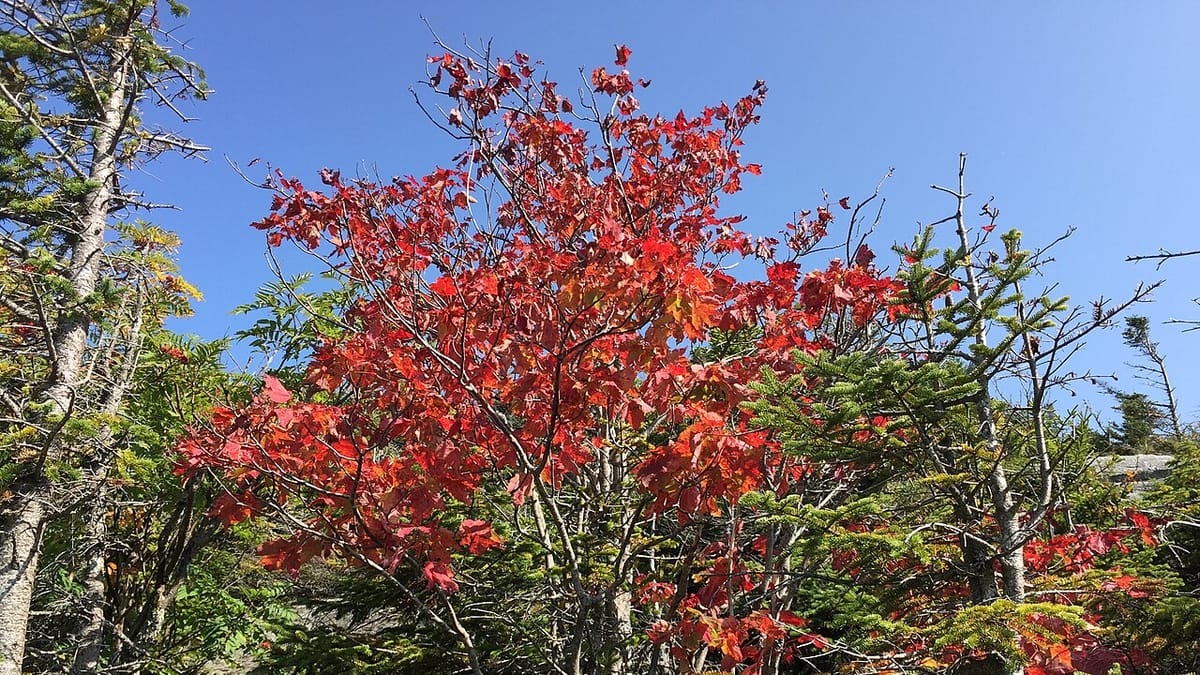
Every year, someone spots a red branch in late summer heat and asks whether fall started early. Usually it did not. A single tree turning color weeks ahead of its neighbors is almost always reacting to drought, root damage, or disease rather than to the night-length trigger that drives the real season everywhere around it. The giveaway is usually isolation: one stressed tree standing out against a whole hillside of the same species that is still green, rather than a coordinated shift across many trees at once. That distinction, and how to tell a stressed tree apart from a genuinely early species that turns ahead of the pack every year without anything being wrong with it, is the subject of false fall. It is worth knowing before you rearrange a trip around one roadside maple that turned red in late summer for reasons that have nothing to do with the season actually arriving.
Fall starts twice on the same planet
There is one more wrinkle worth knowing if your travel plans stretch beyond one hemisphere: the equinox that opens fall north of the equator marks the opening of spring south of it, and the reverse happens again in March. A trip to see turning leaves in Patagonia or the highlands of southeastern Australia runs on a calendar roughly six months offset from a trip through New England, even though both trips are chasing the exact same biological process in trees built the same way. Someone planning a single year of foliage chasing could, in theory, catch a real autumn twice, once in each hemisphere, without either trip overlapping the other's season. The full rundown on how that timing works, and when to plan a Southern Hemisphere season around it, is in the southern hemisphere autumn guide.
Using the real calendar instead of the printed one
None of this makes the equinox or the meteorological calendar useless. They answer real questions, just not the one you're actually asking when you want to know if it's worth booking a flight yet. For travel planning, the only calendar worth trusting is the one the trees keep: night length first, then the weather that follows, then the specific ridge or valley you're headed toward. Check a live forecast for your destination rather than counting weeks from the equinox, and let the map show you where the front currently sits instead of guessing from a date on the wall. The trees started planning this months ago. You can catch up in a few minutes on the map.
Frequently asked
- When does fall officially start?
- It depends which official you mean. The astronomical calendar marks it at the September equinox, when day and night run nearly equal. Meteorologists start fall at the beginning of September for tidy record keeping. Foliage itself follows neither calendar; it starts once a location's nights grow long enough to trigger the trees.
- Is the equinox the same as the first day of fall for foliage?
- No. The equinox is an astronomical marker tied to Earth's tilt, the same moment worldwide. Foliage timing is a biological response to night length that varies by latitude and elevation, so color can begin well before or after the equinox depending on where you are standing.
- Why do meteorologists use a different start date than astronomers?
- Meteorologists group the year into four three-month blocks aligned to the calendar because it produces cleaner statistics for comparing one year's weather to the next. That convenience-driven boundary has nothing to do with sun angle or with when trees actually respond to shortening nights.
- Does fall start on the same day everywhere?
- The equinox happens at the same instant worldwide, but it marks opposite seasons on opposite sides of the equator. Real, tree-driven autumn runs on a rolling schedule that begins earlier at high latitudes and high elevations, and later toward the equator and down at sea level.
- How can I tell when real fall has started where I live?
- Watch the trees, not the calendar. Sustained color beginning on ridgelines and at northern latitudes first is the clearest sign. A live progression map beats any fixed date, since the actual trigger runs on local night length rather than a printed calendar.
Regions in this article
More in Foliage Timing & Seasons
Foliage Timing & Seasons
False Fall: Why Some Leaves Turn in Late Summer
Red leaves in late summer usually aren't an early fall. They're almost always a stressed tree reacting to drought, damage, or disease.
2026-07-17 · 5 min read
Foliage Timing & Seasons
How Fall Foliage Forecasts Actually Work
Fall color forecasts combine a fixed seasonal trigger with weather that has to be estimated. Here's how the underlying model actually predicts a peak.
2026-07-18 · 6 min read
Foliage Timing & Seasons
The Weather That Makes (or Ruins) a Great Foliage Year
Warm days, cool nights, and just enough rain make a vivid fall. Drought, wind, and an early hard freeze can flatten the same season fast.
2026-07-17 · 5 min read