When do the leaves change in Queenstown?
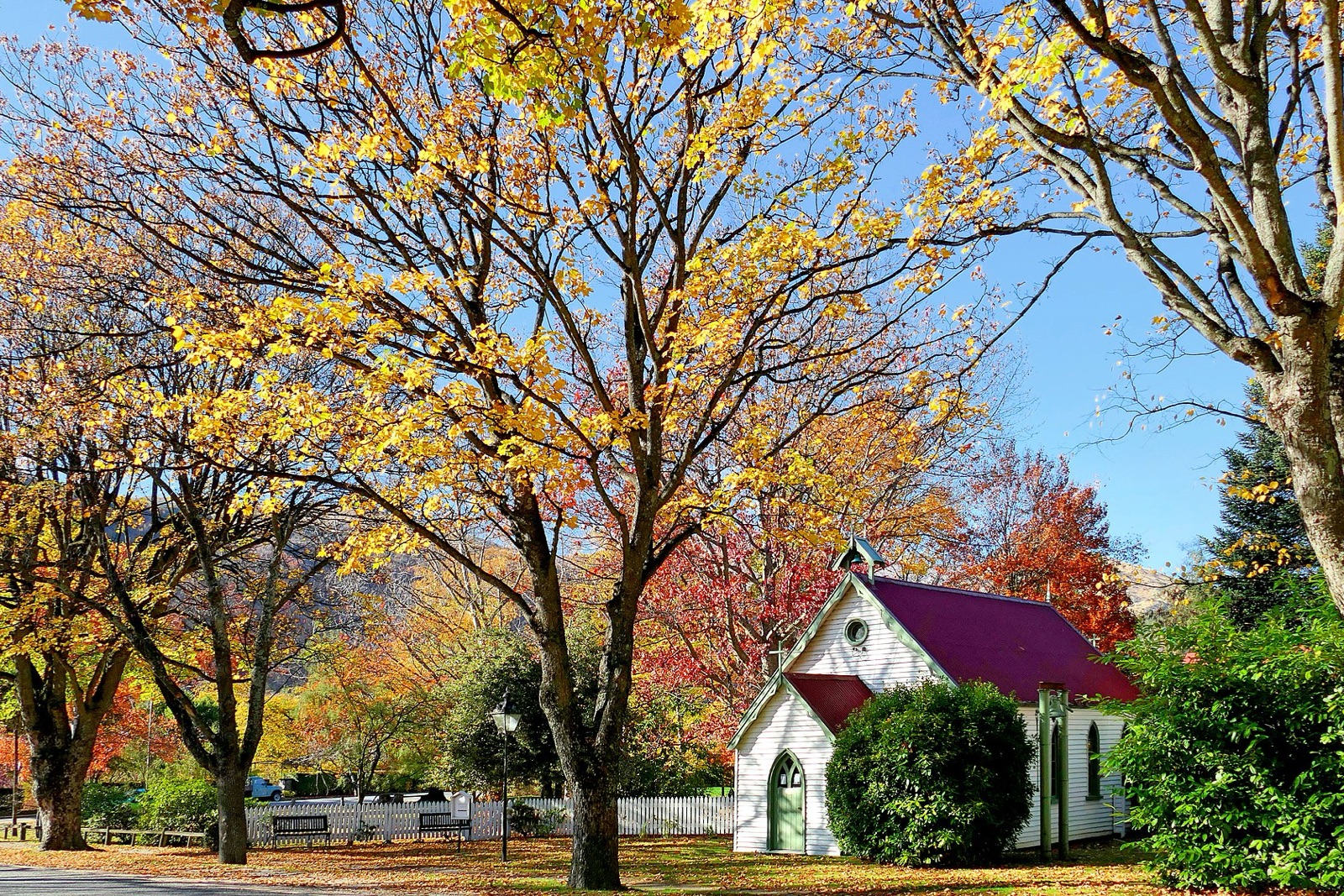
The Southern Hemisphere flips the calendar, so Queenstown's autumn arrives in April, when poplars and willows turn molten gold against Lake Wakatipu's deep blue and fresh snow on the Remarkables. Nearby Arrowtown, a gold-rush village under sycamores and oaks, is New Zealand's signature fall scene.
Peak: April 15–May 5
Climatological window from published records. The weather model doesn’t cover New Zealand yet, so this is the long-run normal rather than a season-specific forecast.
Fall activities in Queenstown
Central Otago & Queenstown
29 kmRegion guide & timing
Golden poplars and willows planted by 19th-century gold miners line the Arrow and Shotover rivers, turning Arrowtown and Queenstown gold through April into May.
Canterbury & Mackenzie Country
249 kmRegion guide & timing
Poplar and willow shelterbelts across the Canterbury Plains and Mackenzie Basin turn gold in April, framing braided rivers under Aoraki/Mount Cook's crisp high-country light.
Where locals go
Queenstown in Autumn: Arrowtown Gold, Lakes, and Harvest
Queenstown's autumn is imported and all the better for admitting it: poplars, willows, and larches planted in the gold-rush era turn Lake Wakatipu's shoreline and Arrowtown's streets deep gold through April and May. This guide covers the town, the drives, vineyard harvest season, and how to shape two or three days around the color.
An honest note about the trees
New Zealand's native bush is evergreen. The beech forest on the ranges around Wakatipu holds its leaves all year, and no native tree here performs the seasonal die-off that lights up Vermont or Japan. Every gold leaf you see around Queenstown in autumn descends from something planted: Lombardy poplars as windbreaks and boundary markers, willows along the rivers, sycamores, rowans, and oaks in the towns, larches on the hillsides. The planters were mostly gold miners and the settlers who followed them, homesick Europeans putting familiar trees into an unfamiliar landscape, and a century and a half later their plantings have matured into avenues and river corridors with real scale. The honest framing is also the interesting one: this is a heritage landscape, autumn as an artifact of the gold rush, and the color concentrates exactly where people settled, along rivers, roads, and town streets, with evergreen mountains behind it for contrast. That contrast is the region's signature image. Your timing anchor for the season is April 15–May 5 in a typical year, with the gold generally holding later in the season down at lake level than it does up the valleys.
Arrowtown: the headline
Arrowtown, twenty minutes from Queenstown by road, is the single best autumn townscape in the Southern Hemisphere and the reason photographers fly here in April. The gold-rush cottages and shopfronts along Buckingham Street sit under an almost unbroken canopy of mature deciduous trees, the hillside above the town turns wall-to-wall amber, and the Arrow River runs through corridors of gold willows and poplars a short walk from the shops. Do the full circuit: Buckingham Street early, before the tour vans; the restored Chinese settlement beside Bush Creek, a sobering and worthwhile stop from the mining era; then the riverside trail along the Arrow, where the light comes through the canopy sideways in the morning. For the overview shot, walk up Tobins Track from the edge of the village, a steady climb to a bench-and-gate view back across the golden basin toward the Wakatipu ranges. The town's autumn festival in late April is a genuine local event with parades and market stalls rather than a manufactured one, and it is worth experiencing once, but color-first visitors get more from the quieter days on either side of it.
Queenstown itself: gardens, gondola, lakefront
The town's own color concentrates in walkable places. Queenstown Gardens, on the small peninsula beside the town center, holds the area's best collection of mature exotic trees, and its loop path gives you gold overhead, the lake on three sides, and the Remarkables across the water in a spare half-hour. The lakefront willows along Wakatipu go bronze and amber right against the water, and the beech-dark slopes behind town make all of it read more saturated than the same trees would at home. For altitude, ride the gondola up Bob's Peak or walk the Queenstown Hill track: from above, the pattern of the season is laid out plainly, gold tracing the shoreline, the river mouths, and the old settlement lines, evergreen everywhere else. It is the clearest illustration you will get of the settler-planted story, and it happens to be a spectacular view regardless.
The Glenorchy road
The lakeside road from Queenstown to Glenorchy, at the head of Wakatipu, is the region's most cinematic drive in any season and gains poplar gold in autumn: stands around Glenorchy itself and in the farm valleys beyond, set against big glacial mountains. It works as a half-day with stops at the marked lookouts along the way and at Bob's Cove, whose short lakeshore trail is a quiet counterpoint to the busier viewpoints near town. Glenorchy village earns a slow lap on foot, its wharf and red shed sitting under the poplars, and drivers comfortable on gravel can continue into the farmland toward Paradise, where the plantings thin out and the mountains take over. Moke Lake, up its own side valley off the Glenorchy road, is the local secret for still-water reflections on a frosty morning. Go early, when the lake is most likely to be calm and the light comes down the valley toward you.
Central Otago: harvest in the vines
Autumn around Queenstown is not only foliage, it is harvest. The Gibbston valley, a short drive from town through the Kawarau Gorge, is the nearest cellar-door cluster, and deeper into Central Otago, around Bannockburn and Cromwell, the world's southernmost serious pinot noir country brings in its fruit while the vine rows themselves turn yellow-gold. Visiting during harvest means the region is working: pickers in the rows, bins on trailers, the smell of ferment around the sheds, and cellar doors that are pouring the previous vintages while the next one comes in the door. Book tastings ahead where possible, sort a designated driver or a tour van from Queenstown, and pair the day's tasting with the drive itself, since the roads through the gorge and around the Cromwell basin run past some of the best vine-and-poplar color in the country. The timing for the wider region runs with Central Otago & Queenstown, and the color in the higher valleys generally moves ahead of the lakefront trees back in Queenstown.
Wanaka and the Crown Range
The Crown Range road between the Wakatipu basin and Wanaka is the classic autumn day trip, climbing in hairpins above Arrow Junction to open tussock country before dropping through the Cardrona valley, where poplars line the river flats and the Cardrona Hotel's historic facade does its best work of the year framed in gold leaves. Wanaka itself spreads along its own lake with willows and poplars right on the waterfront, and the famous lone willow standing in the shallows draws a sunrise crowd every calm autumn morning; go at first light if you want the reflection, or skip the scrum and walk the lakefront instead, which is nearly as good and entirely unpeopled. Looping back to Queenstown through the Kawarau Gorge past the Gibbston vines makes a natural circuit and turns the day into color, harvest, and mountains in one tank of fuel. Respect the season on the Crown Range: it is high, shaded in places, and frosty on autumn mornings, so check conditions after cold nights and let the sun work on the road before you drive it.
The light does half the work
Autumn light in this latitude band is the photographer's real subject. The sun stays low and warm-angled for much of the day, frost mornings produce mist on the Arrow River and dead-calm reflections on Wakatipu and Wanaka, and golden hour genuinely lasts. The working rhythm is simple: rivers and lakefronts at dawn, town streets and gardens through the morning, big-view drives in the afternoon, and a west-facing viewpoint at the end of the day. Overcast days push you into the tree canopies, where flat light makes the golds glow instead of burning them out. The techniques in the site's fall foliage photography guide transfer directly, six months out of phase.
Farther afield: larch country in the Mackenzie
If your route continues north, the larch plantings of the Mackenzie country, around the turquoise lakes under the Southern Alps, run the same settler-planted logic at bigger scale, gold conifers against glacial water. It is a long day's drive from Queenstown and better treated as the next leg of a South Island loop than a day trip, but autumn is the season that argues hardest for making the loop, and the route north through the Cromwell basin and over the Lindis Pass stacks vineyard gold, river willows, and tussock country into a single unhurried travel day.
Two days or three, shaped honestly
With two days: give the first morning to Arrowtown early, while the frost mist is still on the river, walk Tobins Track before lunch, and spend the afternoon at the Gibbston cellar doors with a driver sorted. Spend the second day on Queenstown itself, gardens and lakefront at first light, the gondola mid-morning for the overview, and the Glenorchy road after lunch, timed so you are driving back along the lake as the light goes long. With three days, add the Crown Range and Wanaka as a full middle day: sunrise at the Wanaka lakefront if you are ambitious, the town and its willows through the morning, Cardrona and the hotel on the return, and the Kawarau Gorge loop home if daylight allows. Eat well without ceremony, since this is a town where the season's best pairing is a harvest-time pinot noir and whatever the kitchen does with the first Bluff oysters of autumn. Wet-day swaps are respectable here too: wine tasting, Arrowtown's museum and pubs, and the low-cloud moodiness that suits the river corridors better than sun does.
The quiet gap, and the other southern flagship
Autumn sits in Queenstown's brief gap between the summer crowds and the ski season, and it shows in the practicalities: accommodation eases, restaurants take walk-ins again, and trailhead parking stops being a competitive sport. The trade is shortening daylight and real frost, which mostly means planning drives for the middle of the day and packing warmer layers than the brochure photos suggest. Queenstown's only true peer in this season is Bariloche, its Andean mirror image: native beech forest at landscape scale there, settler-planted gold at valley scale here, chocolate and lager there, pinot noir and Bluff oysters coming into season here. Doing both in one southern autumn is the kind of trip this site exists to encourage.
Queenstown autumn day kit
- Warm layers for frost mornings and mild afternoons
- Windproof shell for exposed lakefront viewpoints
- Ice scraper and a slow-start plan for rental-car mornings
- Polarizer for low sun off the lakes
- Booking confirmations for harvest-season tastings
Things to do in fall in Queenstown
Orchards, cider, haunts, and harvest season. These are the iconic fall stops within a day trip of Queenstown.
Arrowtown
Historic townA former gold-rush town near Queenstown planted thick with European poplars, oaks, and sycamores that turn gold through April.
Guides
Frequently asked
- When do leaves peak in Queenstown?
- In a typical year, Queenstown peaks around April 15–May 5. A computed forecast for Queenstown arrives when the model's coverage expands beyond the US.
- When is fall foliage season in Queenstown?
- Queenstown colors during autumn (March to June), and in a typical year the window lands around April 15–May 5. That comes from https://www.queenstownnz.co.nz/stories/post/the-best-places-to-see-autumn-colours/ rather than the weather model, which does not sample this city yet.
- When is autumn in Queenstown?
- Autumn runs March through May in New Zealand, with the strongest color around Queenstown and Arrowtown typically from mid-April into early May, when the poplars, willows, and larches turn gold against the evergreen mountainsides.
- Are Queenstown's autumn colors natural?
- The trees are real but not native. New Zealand's native bush is almost entirely evergreen, so the gold comes from poplars, willows, sycamores, and larches planted by gold miners and settlers. A century and a half on, they are a genuine landscape in their own right.
- Is Arrowtown worth visiting during its autumn festival?
- Yes, with eyes open. The festival, held in late April, is the town at its most alive, but it is also the one week when parking and cafés genuinely strain. Visit early in the morning or on the shoulder days around the festival for the same color with fewer people.
- Do you need a car in Queenstown in autumn?
- For the town, gardens, and gondola, no. For Arrowtown, the Gibbston cellar doors, Glenorchy, and the Crown Range to Wanaka, a car transforms the trip. Autumn mornings bring frost and occasional ice on shaded bends, so build in a slow start after cold nights.
- Is autumn a good time for Central Otago wineries?
- It is the most interesting time. Harvest runs through autumn, so cellar doors pour while pickers work the rows outside and the vines themselves turn gold. Book tastings ahead where you can, since harvest is also the busiest season on the working side of the vineyards.