Traditions Around the World
Oktoberfest and the Autumn Harvest Tradition
By Benjamin Janes · Published
· 5 min read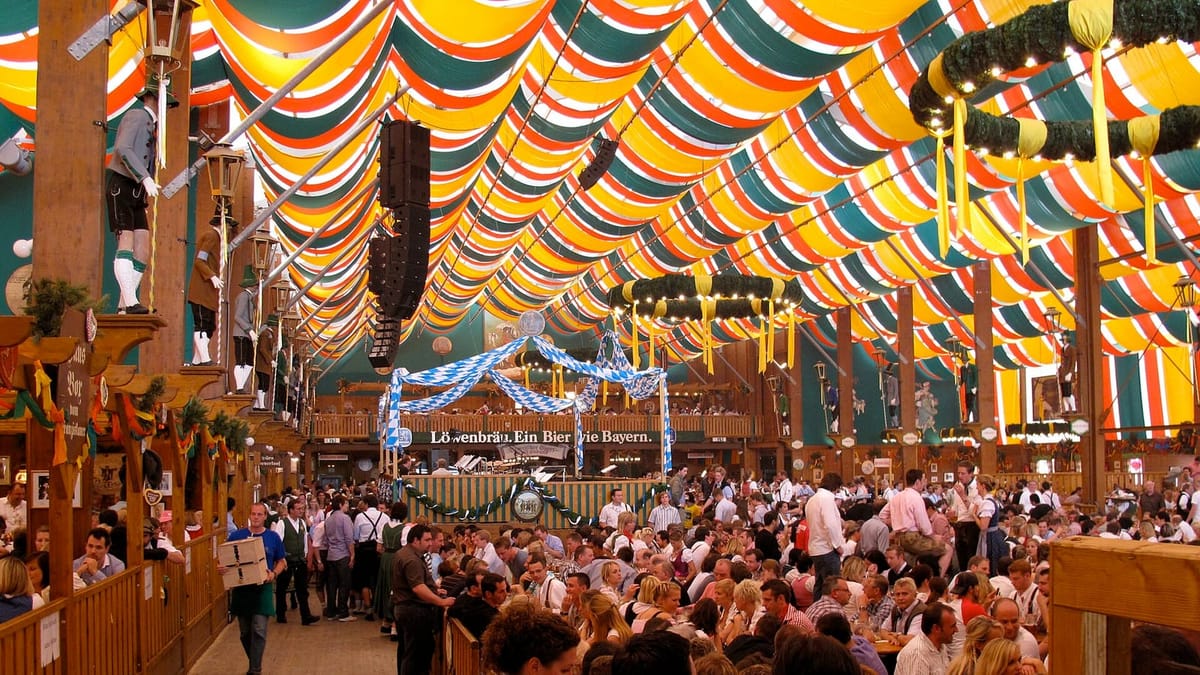
Oktoberfest looks like a beer festival, and mostly it is one now. But it started as a royal wedding party, gained a farming fair almost by accident, and still lands in autumn for reasons tied directly to Bavaria's harvest calendar.
A wedding on the fields outside Munich
The first Oktoberfest wasn't a festival at all in the modern sense. In the early nineteenth century, Crown Prince Ludwig of Bavaria married Princess Therese of Saxe-Hildburghausen, and the citizens of Munich were invited to a horse race held on open fields just outside the city gates to mark the occasion. The fields were named Theresienwiese, "Therese's meadow," in the bride's honor, a name Munich locals still shorten to "die Wiesn" when they talk about the festival grounds. The wedding party was popular enough that the city decided to repeat the horse race the following year, and what began as a one-time celebration slowly hardened into an annual date on Munich's calendar.
The harvest fair hidden inside the party
The part of Oktoberfest's history most visitors never hear about is the one that ties it to the season it's named for. Within a few years of that first horse race, Bavarian agricultural organizers added a livestock and produce show to the festival grounds, an effort to promote farming and breeding standards across the region at a moment when much of Bavaria's population still worked the land. That show, the Central Agricultural Festival, still runs periodically on the Theresienwiese alongside the modern event, though it draws a fraction of the attention the beer tents do now. The timing wasn't an accident, either. Munich sits within reach of the Hallertau, the world's largest contiguous hop-growing region, and the local hop harvest wraps up right around when the festival tents start filling, which means the beer poured each fall is brewed close to the same fields that grew it.
Why an "October" festival runs mostly in September
Anyone who plans a trip around the festival's name alone usually gets the timing wrong. Over the nineteenth century, Munich's organizers gradually shifted the festival earlier in the calendar, chasing the longer, milder evenings of early autumn before the region's real cold set in. The modern event now runs from late September into the first days of October, closing on the first weekend of that month, so most of its roughly two and a half weeks actually happen before the month it's named for even starts. The name stuck anyway, a holdover from the original date that nobody bothered to update once the schedule moved.
Beer, bread, and a table built for the season
Oktoberfest's food and drink rules are stricter than they look from outside. Only beer brewed within Munich's city limits by one of the traditional Oktoberfest breweries can be served in the festival tents, and the style poured has shifted over the festival's history, from a dark, stronger lager historically brewed in March and cellared through summer toward the lighter, golden beer most visitors now expect. Opening day still follows a fixed ritual: the mayor of Munich taps the first keg in front of a packed tent and declares "O'zapft is," it's tapped, and no beer is served anywhere on the grounds until that moment. The food leans just as traditional. Pretzels, roast chicken, and sausages served with sauerkraut cover most menus, and the roast chicken in particular, called Hendl, is as central to the festival as the beer itself. Many visitors and plenty of locals wear Tracht, traditional Bavarian dress: lederhosen for men, a dirndl for women, both descended from older rural working clothes rather than costume built purely for the occasion.
Oktoberfest at a glance
- Began in the early nineteenth century as a royal wedding celebration in Munich
- Gained an agricultural show within a few years, still held periodically today
- Runs from late September into the first days of October, not October itself
- Only beer brewed within Munich city limits is served in the festival tents
- Traditional dress is lederhosen for men and a dirndl for women
Almabtrieb: the mountain half of the same season
While Munich fills its beer tents, a very different autumn ritual is playing out in the high country of Germany and Austria. Almabtrieb is the seasonal cattle drive down from summer's high Alpine pastures to the valley floor, timed to arrive before the first heavy snow closes the mountain passes for winter. Herders walk the cows straight through the middle of town, often behind a brass band, and if a herd made it through the whole grazing season without a serious injury or loss, the animals are decorated with elaborate flower headdresses and the loudest bells the farm owns for the descent. It's not the same event as Oktoberfest and it isn't trying to be, but the two customs share a calendar for the same underlying reason: autumn is when the mountains and the fields both have to be brought in before the weather turns.
Part of a much older harvest family
Strip away the beer tents and the horse race, and Oktoberfest sits inside a much wider European pattern of marking the turn from a working season to winter. Germany and Austria both keep Erntedank, a harvest thanksgiving built around a church service and a woven crown of grain, and Alpine wine regions run their own version of the same instinct timed to the grape harvest rather than the cattle drive. Our guide to Alpine and European autumn traditions covers those customs in more depth, and the broader history of harvest festivals traces just how far back, and how widely, that same basic impulse runs across farming cultures everywhere.
Where to find it today
Munich's Theresienwiese remains the original and largest home of the festival, and it stays the reference point every other version measures itself against. Cities with strong German immigrant communities, from Cincinnati to towns across Ontario, hold their own Oktoberfest celebrations on the same rough autumn schedule, built around the same beer, food, and Tracht traditions even where the local details differ from Munich's. If a fall trip through Bavaria or Austria is on the calendar, our interactive foliage map is a useful way to check how color is moving through the Alps around the same weeks the festival tents and the cattle drives are both underway.
What's easy to miss under the beer and the brass bands is how much of Oktoberfest's shape still comes from its two accidental origins: a wedding that got repeated until it became tradition, and a farming show that got added almost as an afterthought. Neither one had anything to do with modern beer culture. Both still explain why the festival looks the way it does, and why autumn was always the season it belonged to.
Frequently asked
- Is Oktoberfest a harvest festival?
- Not originally. It began in the early nineteenth century as a royal wedding celebration in Munich. Within a few years, though, organizers added an agricultural show to promote Bavarian farming, and that show still runs periodically alongside the beer tents today, giving the festival a real, if secondary, harvest identity.
- Why is Oktoberfest mostly held in September?
- Munich's organizers moved the festival earlier in the calendar during the nineteenth century to take advantage of longer, milder evenings before autumn cold set in. Today's festival runs from late September into the first days of October, closing on the first weekend of that month.
- What beer is served at Oktoberfest?
- Only beer brewed within Munich's city limits by one of the traditional Oktoberfest breweries can be poured in the festival tents. The style served has shifted over time, from a dark March-brewed lager toward the lighter, golden beer most visitors associate with the festival now.
- What is Almabtrieb?
- Almabtrieb is the seasonal drive of cattle down from high Alpine pastures to the valley floor before mountain passes close for winter, celebrated across Germany and Austria at roughly the same time of year as Oktoberfest. Herds that made it through summer without a serious loss are often decorated with flower headdresses and heavy bells for the descent.
- What do people wear to Oktoberfest?
- Traditional Bavarian dress, known as Tracht, is common festival attire: lederhosen for men and a dirndl for women. Both garments have older roots in rural working clothes, though the versions worn to the festival today are closer to folk costume than everyday farmwear.
Regions in this article
More in Traditions Around the World
Traditions Around the World
Bonfire Night and Conkers: Britain's Autumn Rituals
From playground conker matches to fire festivals and the fifth of November, how Britain marks the end of the harvest and the start of the dark months.
2026-07-17 · 4 min read
Traditions Around the World
Chuseok: Korea's Autumn Thanksgiving
Chuseok is Korea's biggest holiday: ancestral rites, half-moon rice cakes, and a nationwide trip home timed to the harvest moon.
2026-07-17 · 4 min read
Traditions Around the World
Harvest Festivals Through History: From Lammas to the County Fair
How England's Lammas bread and corn dollies evolved into Harvest Home suppers and, eventually, the modern American county fair.
2026-07-17 · 4 min read