Fulufjället National Park
National park · Sweden
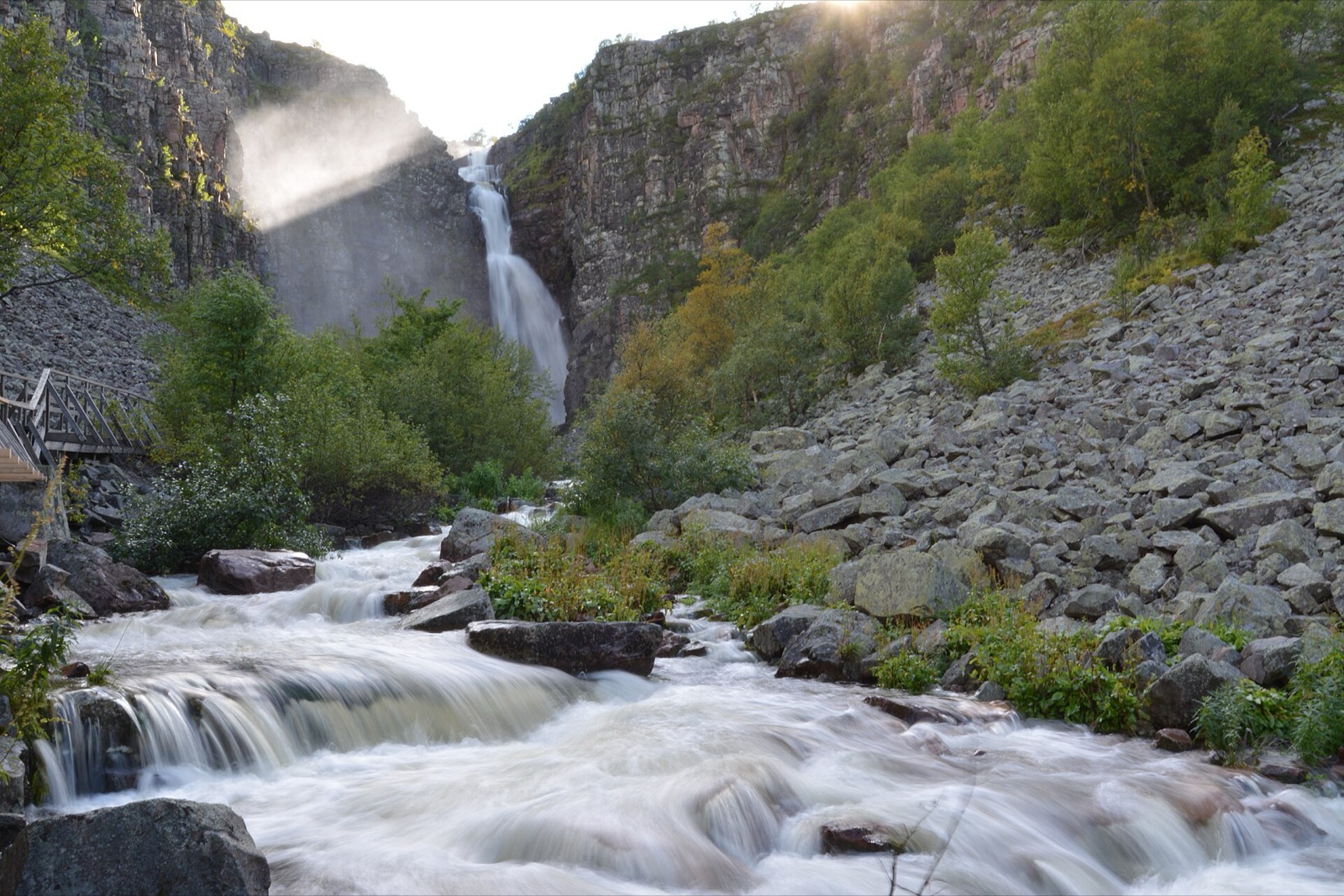
Njupeskär's 93-meter drop, Sweden's tallest waterfall, cuts through a gorge below a birch-covered plateau in northern Dalarna. Mountain birch clinging to the rock, some barely shrub height and bent by wind, turns gold and rust through September; nearby grows Old Tjikko, a roughly 9,550-year-old spruce considered one of the world's oldest living trees.
Don’t miss
Peak: September 4–September 21
Climatological window from published records. The weather model’s elevation extrapolation isn’t reliable on this terrain, so this is the long-run normal rather than a season-specific forecast.
When to go to Fulufjället National Park
Peak usually arrives somewhere between September 4 and September 21. It sits at 926 m, high enough to turn before the valleys do.
Fulufjället National Park on the map
Drag the date slider to see when color reaches this corner of Sweden, or tap a pin for that stop’s own peak window.
More things to do in Sweden
Frequently asked
- When does Fulufjället National Park peak?
- In a typical year, color peaks around September 4–September 21. The weather model's elevation extrapolation isn't reliable on this terrain, so this is a climatological window (source: https://www.sverigesnationalparker.se/park/fulufjallets-nationalpark/besoksinformation/nar-ska-du-besoka-parken/) rather than a season-specific forecast.
Own or manage Fulufjället National Park? Update your listing or get in touch.