When do the leaves change in Iceland?

Iceland has little native forest, but its downy birch scrub and planted rowan turn gold in Þórsmörk and Skaftafell by mid-September, a short, crisp prelude to the country's long winter.
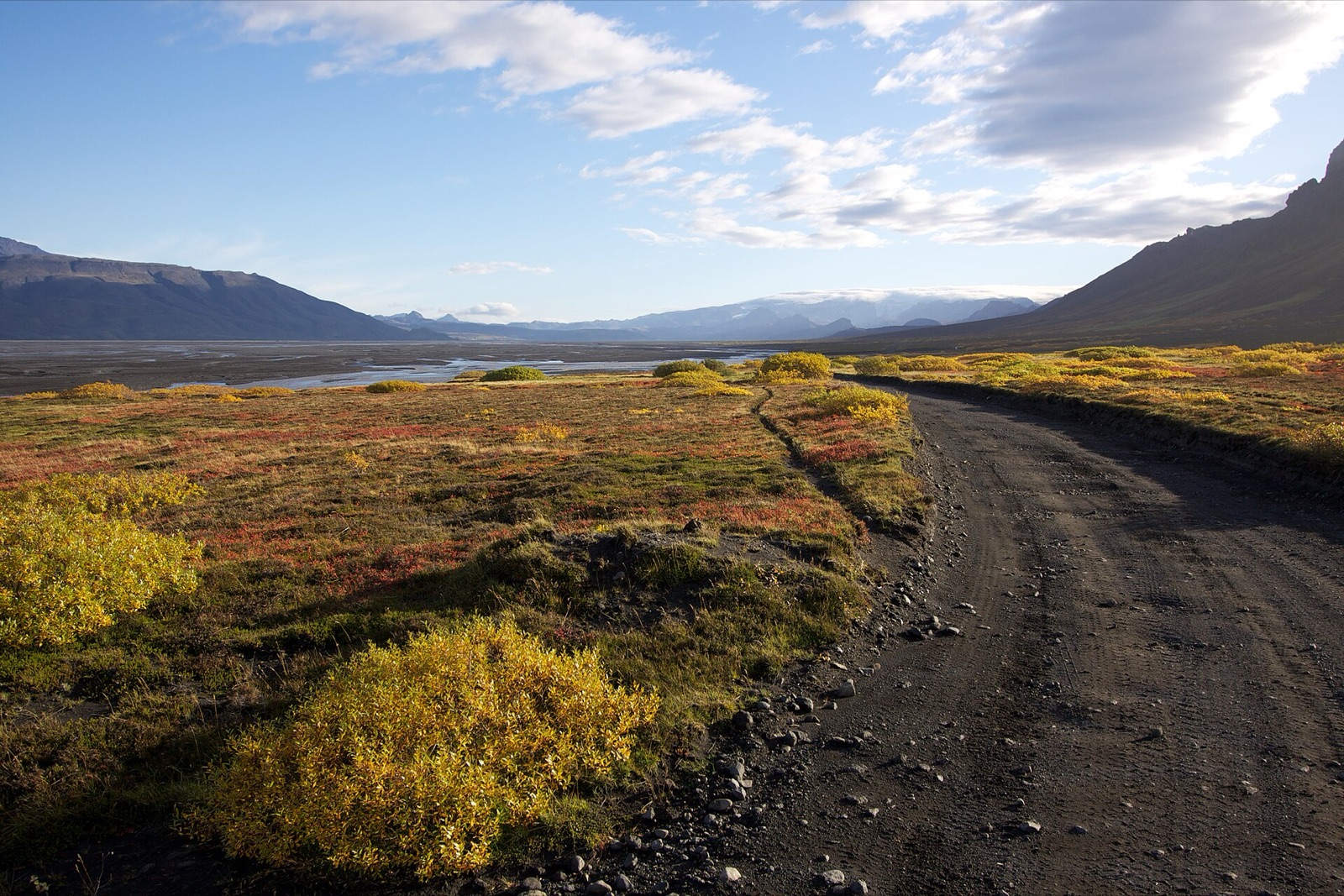
Autumn foliage at Þórsmörk
📍 Þórsmörk, Iceland· Photo: Boaworm / Wikimedia Commons, CC BY-SA 3.0

Forecast coming soon

Weather data for Iceland lands with the next model run. Meanwhile, explore the map.

Known for

  • Þórsmörk birch valley
  • Skaftafell, Vatnajökull National Park
  • Hallormsstaður forest

Things to do in fall in Iceland

4 iconic stops — scenic drives, farms, haunts, and the views locals plan their October around.

Þórsmörk

Forest

Typically September 15October 5

A highland river valley walled in by three glaciers, Eyjafjallajökull, Tindfjallajökull and Mýrdalsjökull, warm enough in its own pocket microclimate to grow downy birch scrub that most of interior Iceland can't support. Reached by unbridged river crossings or the last F-road buses of the season, usually running through mid-September, right as the birch and dwarf willow turn gold and rust.

Don’t miss: Stakkholtsgjá canyon side-trip · southern end of the Laugavegur trek · birch and willow turning gold by mid-September

Skaftafell

National park

Typically September 15October 5

Iceland's tallest native birch grows in Bæjarstaðarskógur, a stand inside Vatnajökull National Park reached by a rough 16km round-trip trail across the Morsá river footbridge. Closer to the visitor center, the short climb to Svartifoss passes through more accessible birch woods that gold up through September against black basalt columns and the Skaftafellsjökull glacier tongue.

Don’t miss: Bæjarstaðarskógur's tall birch stand, 16km round trip · Svartifoss basalt-column waterfall walk · birch gold against the Skaftafellsjökull glacier tongue

Hallormsstaðaskógur

Forest

Typically September 15October 12

Iceland's first protected forest, set aside in 1905 along the Lagarfljót river in the Eastfjords. Native birch and rowan color the 740-hectare reserve alongside an 85-species arboretum of introduced larch, spruce and pine, with color often holding into October longer than anywhere else in the country.

Don’t miss: 1905 arboretum with 85 introduced tree species · 40km of forest trails along Lagarfljót · color holds into October

Vaglaskógur

Forest

Typically September 1September 15

Iceland's straightest, tallest native birch grows here in Fnjóskadalur valley near Akureyri, some trunks over 12 meters where most Icelandic birch stays shrubby. A dozen kilometers of forest trails and campsites reward an easy walk, and North Iceland's colder interior climate turns the canopy gold earlier than the south, typically through the first half of September.

Don’t miss: Iceland's tallest native birch stand · 12km of marked forest trails · colors peak in the first half of September

Frequently asked

What are the best things to do in fall in Iceland?
The iconic stops: Þórsmörk, Skaftafell, Hallormsstaðaskógur, Vaglaskógur. Every one is mapped on this page with its peak-color timing.
What are the best things to do in autumn in Iceland?
Autumn — autumn (September–November) — is peak season here. Pair the color with Þórsmörk, Skaftafell, Hallormsstaðaskógur, Vaglaskógur; each is on the map above with the window to catch it.

Nearby & similar